
Catalogue Search | MBRL


Are you sure you want to remove the book from the shelf?

{{itemTitle}}
53
result(s) for
"Africa, East -- Antiquities"
Sort by:

China and East Africa : ancient ties, contemporary flows
'China and East Africa' marks the culmination of a new round of archaeological and historical research on the relations between China and Africa, from the origins to the present. Africa and Asia have always been in constant contact, through land and seas. The contributors to this volume debate and present the results of their research on the very complex and intricate networks of connections that crisscrossed the Indian Ocean and surrounding lands linking Africa to East Asia.
Book
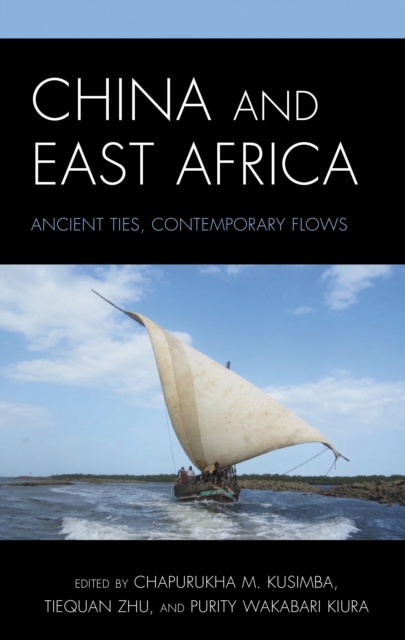
China and East Africa : ancient ties, contemporary flows
China and East Africa: Ancient Ties and Contemporary Flows marks the culmination of a new round of archaeological and historical research on the relations between China and Africa, from the origins to the present.Africa and Asia have always been in constant contact, through land and seas.
eBook


A material culture : consumption and materiality on the coast of precolonial East Africa
This book explores the importance of objects in Swahili society. The archaeology of the east coast of Africa has provided a wealth of information on the complex ways that objects were bound up with social identities, power negotiations, and concepts of wealth, and how these have changed over time.
eBook

South-Eastern Mediterranean Peoples Between 130,000 and 10,000 Years Ago
The Upper Pleistocene era encompassed a period of dramatic cultural developments in the south-eastern Mediterranean basin. This book highlights and synthesizes the latest research and current scientific debate on the archaeology of this time period in North Africa and the Near East. Recent archaeological research in North Africa has meant this region now plays a decisive role in scientific debate. After decades of neglect, the archaeological record from North Africa has now been seen to parallel in significance that of the Near East. This book offers an opportunity to observe the Afro-Asian side of the Mediterranean basin as an uninterrupted land, as it was for its Upper Pleistocene inhabitants. Areas of focus include the Out-of-Africa movement of anatomically modern humans (Homo sapiens) into the Levant and the transition from the Middle Palaeolithic/Middle Stone Age to the Upper Palaeolithic/Later Stone Age, during which a change of lifestyle took place, based on plant cultivation and animal husbandry. These topics are of crucial interest to anyone studying human evolution, prehistoric archaeology, anthropology, and palaeo-environmental studies. This volume brings together data as well as perspectives from various scholars, often separated by their areas of interest and location. This volume is complementary to The Mediterranean from 50,000 to 25,000 BP: Turning Points and New Directions edited by M. Camps and C. Szmidt (Oxbow Books, 2009).
eBook

EVOSHEEP: the makeup of sheep breeds in the ancient Near East
The EVOSHEEP project combines archaeozoology, geometric morphometrics and genetics to study archaeological sheep assemblages dating from the sixth to the first millennia BC in eastern Africa, the Levant, the Anatolian South Caucasus, the Iranian Plateau and Mesopotamia. The project aims to understand changes in the physical appearance and phenotypic characteristics of sheep and how these related to the appearance of new breeds and the demand for secondary products to supply the textile industry.
Journal Article


Beyond the Royal Gaze
Winner of the 2011 African Studies Association Herskovits Award
Beyond the Royal Gazeshifts the perspective from which we view early African politics by asking what Buganda, a kingdom located on the northwest shores of Lake Victoria in present-day Uganda, looked like to people who were not of the center but nevertheless became central to its functioning. Drawing on insights from a variety of disciplines-history, historical linguistics, archaeology, and anthropology-Neil Kodesh argues that the domains of politics and public healing were intimately entwined in Buganda from the sixteenth through the early nineteenth centuries. Drawing on extensive fieldwork conducted throughout Buganda, Kodesh demonstrates how efforts to ensure collective prosperity and perpetuity-usually expressed in the language of health and healing-lay at the heart of community-building processes in Buganda. Kodesh's work offers a novel approach to the use of oral sources and opens up new possibilities for researching and writing histories of more distant periods in Africa's past.Beyond the Royal Gazewill appeal to students and scholars of health and healing, political complexity, and the production of knowledge in places where limited documentary evidence exists.
eBook

Every Traveller Needs a Compass
A varied and charming collection of 17 papers that bring something new about the people from many countries and backgrounds who traveled to, from and within Egypt and the Near East, either singly or as a group, and explored, observed and recorded, or stayed for a short period of time to improve their health or simply to enjoy the experience. While some travelers kept a diary or journal that has survived until today, others did not. Their travels have to be extracted from the wide range of manuscript sources that are thankfully retained in libraries and archives, or which still remain with their descendants. Sometimes, the name of a traveler is only contained in a few words within a single piece of correspondence or journal entry, yet from such small beginnings and through detective work to link the chance meetings between travelers with a location, or news of a shared event, it is often possible to chart part of a traveler’s journey and bring to life a person who has long been forgotten. These minor characters and their travails often bring a new perspective to well-known places and events.
eBook

Migration in the Medieval Mediterranean
Migration in the Medieval Mediterranean argues that the cross-Mediterranean movement of peoples was a central aspect of the medieval world. Medieval people migrated in search of safety after regime change, secure life amongst coreligionists, and prosperous careers. This kind of travel between Muslim and Christian regions demonstrates the mutual influences, interconnections, and communications linking them, surpassing the differences between the two civilizations.
eBook