
Catalogue Search | MBRL


Are you sure you want to remove the book from the shelf?

{{itemTitle}}
16
result(s) for
"Africa, North Description and travel."
Sort by:
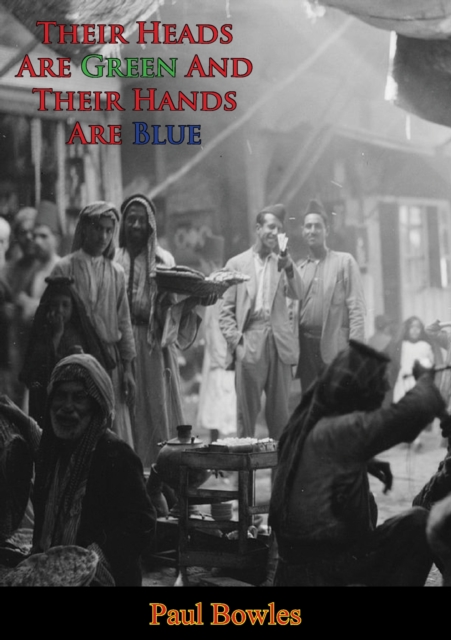
Their Heads Are Green And Their Hands Are Blue
In the nineteenth century there flourished a peculiar breed of Englishmen—often the second sons of the aristocracy, or ambitious men from a lower class—who as soldiers, consuls and tea planters, were largely responsible for making England a great colonial power. Save for the fact that he is a staunch anticolonialist, Paul Bowles resembles these men in many respects. Like them, he appears to be happiest away from civilization as we know it; like them, he thrives when the traveling is hardest, the food ghastly or infrequent, water scarce, heat intolerable, or mosquitoes abundant. This engaging collection of eight travel essays by the author of such noted fiction as The Sheltering Sky and The Delicate Prey deals largely with places in the world that few Westerners have ever heard of, much less seen—places as yet unencumbered by the trappings, luxuries, and corruptions of modern civilization. Except for one essay on Central America, all of these pieces are concerned with remote spots in the Hindu, Buddhist, or Mohammedan worlds. The author is a sympathetic and discerning interpreter of these alien cultures, and his eyes and ears are especially alert both to what is bizarre and what is wise in the civilizations in which he settles. He is also acutely aware of the transitions occurring on the fringes of many of these regions, and he is disturbed and indignant about the corrosive effect of Western culture on the non-Christian way of life. Above all, however, Paul Bowles is a superb and observant traveler—born wanderer who finds pleasure in the inaccessible and who cheerfully endures the concomitant hardships matter-of-factly and with humor. These essays provide us with Paul Bowles's characteristic insightfulness and bring us closer to a world we frequently hear about, but often find difficult to understand.
eBook
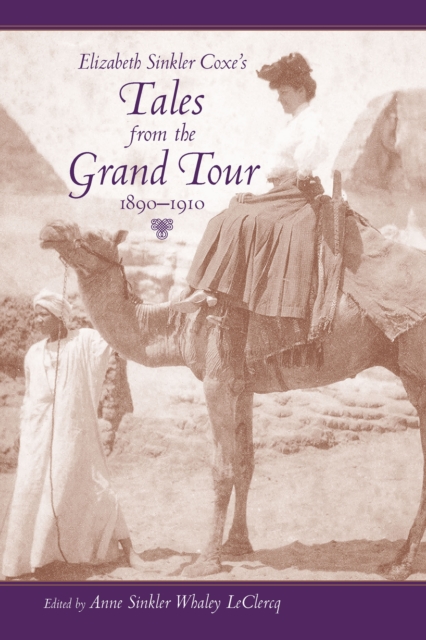
Elizabeth Sinkler Coxe's Tales from the Grand Tour, 1890-1910
The international adventures of a southern widow turned patron of historical discovery, Elizabeth Sinkler Coxe's Tales from the Grand Tour, 1890–1910 is a travelogue of captivating episodes in exotic lands as experienced by an intrepid American aristocrat and her son at the dawn of the twentieth century. A member of the prominent Sinkler family of Charleston and Philadelphia, Elizabeth \"Lizzie\" Sinkler married into Philadelphia's wealthy Coxe family in 1870. Widowed just three years later, she dedicated herself to a lifelong pursuit of philanthropy, intellectual endeavor, and extensive travel. Heeding the call of their dauntless adventuresome spirits, Lizzie and her son, Eckley, set sail in 1890 on a series of odysseys that took them from the United States to Cairo, Luxor, Khartoum, Algiers, Istanbul, Naples, Vichy, and Athens. The Coxes not only visited the sites and monuments of ancient civilizations but also participated in digs, funded entire expeditions, and ultimately subsidized the creation of the Coxe Wing of Ancient History at the University of Pennsylvania Museum. A prolific correspondent, Lizzie conscientiously recorded her adventures abroad in lively prose that captures the surreal exhilarations and harsh realities of traversing the known and barely known worlds of Africa and the Middle East. She journeyed through foreign lands with various nieces in tow to expose them to the educational and social benefits of the Grand Tour. Her letters and recollections are complemented by numerous photographs and several original watercolor paintings.
eBook



Mutual Othering
For the first time, readings of Moroccan travel writing in Arabic
are juxtaposed with French and British writing about Morocco in a
critical exploration of nineteenth-century concepts of modernity.
Ahmed Idrissi Alami investigates the complex dynamics concerning
colonial expansion, military conflict, and societal values.
Mutual Othering sets out to rethink generally accepted
concepts of European modernity by critically examining its
production and contestation within a subaltern context in which the
native other-in this case, religious scholars or imams
accompanying political missions to Paris and London-presents
aspects of European culture to elite members of the Moroccan
imperial court. This work also connects the arguments of these
texts to the rethinking of tradition and modernity, the rhetoric of
reform, democracy and the Arab state, and the compatibility of
Islam with the West and secular values in the post-9/11 world. The
inclusion of citations in the original French and Arabic, alongside
English translations, allows a range of readers to enjoy this
critical addition to the fields of literature, travel writing,
North African studies, history, international relations, and
philosophy, as well as cultural and religious studies.
eBook

