
Catalogue Search | MBRL


Are you sure you want to remove the book from the shelf?

{{itemTitle}}
65
result(s) for
"Africa, North Politics and government 21st century."
Sort by:

The lure of authoritarianism : the Maghreb after the Arab Spring
The works collected in The Lure of Authoritarianism consider the normative appeal of authoritarianism in light of the 2011 popular uprisings in the Middle East. Despite what seemed to be a popular revolution in favor of more democratic politics, there has instead been a slide back toward authoritarian regimes that merely gesture toward notions of democracy. In the chaos that followed the Arab Spring, societies were lured by the prospect of strong leaders with firm guiding hands. The shift toward normalizing these regimes seems sudden, but the works collected in this volume document a gradual shift toward support for authoritarianism over democracy that stretches back decades in North Africa. Contributors consider the ideological, socioeconomic, and security-based justifications of authoritarianism as well as the surprising and vigorous reestablishment of authoritarianism in these regions. With careful attention to local variations and differences in political strategies, the volume provides a nuanced and sweeping consideration of the changes in the Middle East in the past and what they mean for the future.
BOOK

Routledge Handbook of Citizenship in the Middle East and North Africa
This comprehensive Handbook gives an overview of the political, social, economic and legal dimensions of citizenship in the Middle East and North Africa from the nineteenth century to the present.
The terms citizen and citizenship are mostly used by researchers in an off-hand, self-evident manner. A citizen is assumed to have standard rights and duties that everyone enjoys. However, citizenship is a complex legal, social, economic, cultural, ethical and religious concept and practice. Since the rise of the modern bureaucratic state, in each country of the Middle East and North Africa, citizenship has developed differently. In addition, rights are highly differentiated within one country, ranging from privileged, underprivileged and discriminated citizens to non-citizens. Through its dual nature as instrument of state control, as well as a source of citizen rights and entitlements, citizenship provides crucial insights into state-citizen relations and the services the state provides, as well as the way citizens respond to these actions.
This volume focuses on five themes that cover the crucial dimensions of citizenship in the region:
Historical trajectory of citizenship since the nineteenth century until independence
Creation of citizenship from above by the state
Different discourses of rights and forms of contestation developed by social movements and society
Mechanisms of inclusion and exclusion
Politics of citizenship, nationality and migration
Covering the main dimensions of citizenship, this multidisciplinary book is a key resource for students and scholars interested in citizenship, politics, economics, history, migration and refugees in the Middle East and North Africa.
eBook

Islamists of the Maghreb
In 2011, the Maghreb occupied a prominent place in world headlines when Sidi Bouzid, Tunisia, became the birthplace of the so-called Arab Spring. Events in Tunisia sparked huge and sometimes violent uprisings. Longstanding dictatorships fell in their wake. The ensuing democratic reforms resulted in elections and the victory of several Islamist political parties in the Arab world. This book explores the origins, development and rise of these Islamist parties by focusing on the people behind them. In doing so, it provides readers with a concise history of Sunni Islam in North Africa, the violent struggles against European colonial occupation, and the subsequent quest for an affirmation of Muslim identities in its wake. Exploring Islamism as an identity movement rooted in the colonial experience, this book argues that votes for Islamist parties after the Arab Spring reflected a universal human need for an authentic sense of self. This view contrasts with the popular belief that support for Islamists in North Africa reflects a dangerous \"fundamentalist\" view of the world that seeks to simply impose archaic religious laws on modern societies. Rather, the electoral success of Islamists in the Maghreb, like Tunisia's Ennahdha party, is rooted in a reaffirmation of the Arab-Islamic identities of the Maghreb states, long delayed by dictatorships that mimicked Western models and ideologies (e.g., Socialism). Ultimately, however, it is argued that this affirmation is a temporary phenomenon that will give way in time to the fundamental need for good governance, accountability, and a stable growing economy in these countries.
BOOK

Amazigh Politics in the Wake of the Arab Spring
On television, the Arab Spring took place in Cairo, Tunis, and
the city-states of the Persian Gulf. Yet the drama of 2010, and the
decade of subsequent activism, extended beyond the cities-indeed,
beyond Arabs. Bruce Maddy-Weitzman brings to light the sustained
post-Arab Spring political movement of North Africa's Amazigh
people.
The Amazigh movement did not begin with the Arab Spring, but it
has changed significantly since then. Amazigh Politics in the
Wake of the Arab Spring details the increasingly material
goals of Amazigh activism, as protest has shifted from the arena of
ethnocultural recognition to that of legal and socioeconomic
equality. Amazigh communities responded to the struggles for
freedom around them by pressing territorial and constitutional
claims while rejecting official discrimination and neglect. Arab
activists, steeped in postcolonial nationalism and protective of
their hegemonic position, largely refused their support, yet
flailing regimes were forced to respond to sharpening Amazigh
demands or else jeopardize their threadbare legitimacy. Today the
Amazigh question looms larger than ever, as North African
governments find they can no longer ignore the movement's
interests.
eBook

Communist parties in the Middle East : 100 years of history
The book has been designed to offer a unique, updated and comprehensive study of Communist parties in the Middle East, based on a theoretical framework of analysis, substantial empirical research and archive documentation.
Book

Governance in the Middle East and North Africa
Governance in the Middle East is a major topic of interest to scholars, activists and policy-makers. The purpose of this volume is to shed light on the contemporary challenges of governance in the Middle East and North Africa (MENA) and to provide an up-to-date account in historical perspective of the political changes currently under way in the region. With analysis of issues including resources and governance, women's rights, radicalization and political economy, and with the inclusion of country case studies looking at the democratic process unfolding in Iraq, the debate over reform in Iran, the South-North conflict in Yemen and the question of political transition in Egypt and Libya, this book is invaluable to those interested in Middle Eastern affairs. It aims to present the first comprehensive framework of the question of governance in the Middle East in its various forms and manifestations.
The Handbook consists of two parts:
Part I provides a theoretical and thematic framework for the mutual influence between governance factors such as economics, trade, culture, social conditions, religion and the status of women.
Part II examines individual case studies in 19 countries and territories of the Middle East. Each case study is written by a leading regional expert and sheds light on the particular challenges to governance in the country in question.
The chapters in this volume follow a variety of research methodologies, depending on the topic of each chapter and the contributor's field of research. This volume offers the most comprehensive and timely reading in the field of MENA governance, and will be an invaluable resource for students, researchers and policy-makers, and for those with a general interest in the region.
eBook

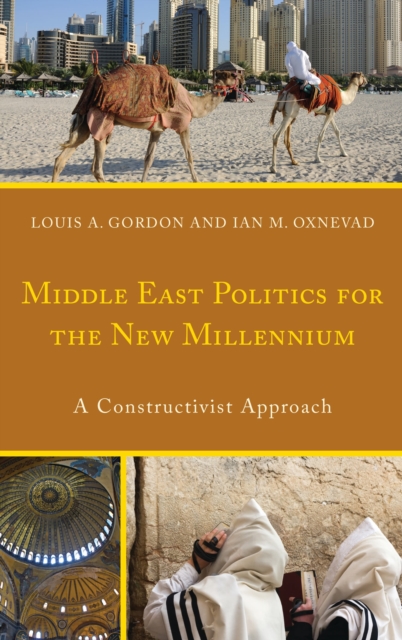
Middle East Politics for the New Millennium
This book explores the domestic and international relations of countries in the Middle East and North Africa using the focus of ideas and repeat interactions employed by constructivism. This book incorporates rich history and analyses of political trends and figures of the region to develop a deeper understanding of Middle East politics.
eBook


The Countries of North Africa
Intro -- THE COUNTRIES OF NORTH AFRICA: BACKGROUND AND ISSUES -- THE COUNTRIES OF NORTH AFRICA: BACKGROUND AND ISSUES -- LIBRARY OF CONGRESS CATALOGING-IN-PUBLICATION DATA -- CONTENTS -- PREFACE -- Chapter 1 ALGERIA: CURRENT ISSUES* -- SUMMARY -- GOVERNMENT AND POLITICS -- TERRORISM3 -- COUNTER TERRORISM -- HUMAN RIGHTS -- ECONOMY -- FOREIGN AFFAIRS -- RELATIONS WITH THE UNITED STATES -- End Notes -- Chapter 2 COUNTRY PROFILE: ALGERIA* -- COUNTRY -- HISTORICAL BACKGROUND -- GEOGRAPHY -- SOCIETY -- ECONOMY -- TRANSPORTATION AND TELECOMMUNICATIONS -- GOVERNMENT AND POLITICS -- NATIONAL SECURITY -- Chapter 3 EGYPT: BACKGROUND AND U.S. RELATIONS* -- SUMMARY -- LATEST DEVELOPMENTS -- CURRENT ISSUES IN U.S.-EGYPTIAN RELATIONS -- Presidential Succession: Who Will Follow Hosni Mubarak? -- Egypt and the Israeli-Palestinian Conflict -- Overview -- Current Egyptian Mediation Efforts -- The Smuggling Tunnels -- U.S. Border Monitoring and Tunnel Detection Assistance -- The Economy and U.S-Egyptian Trade and Investment -- U.S.-Egyptian Trade -- Qualified Industrial Zones -- Human Rights, Religious Freedom, and Women's Rights -- Religious Freedom -- Women's Rights -- Quota for Women in Parliament -- GOVERNMENT STRUCTURE -- The Role of the Military in Egyptian Society -- The National Democratic Party (NDP)41 -- The Judiciary -- POLITICAL OPPOSITION AND CIVIL SOCIETY -- The Muslim Brotherhood49 -- Civil Society in Egypt -- Organized Labor -- U.S. FOREIGN ASSISTANCE TO EGYPT -- Overview -- The Debate over U.S. Assistance to Egypt -- Promoting Democracy in Egypt: Differing Perspectives -- Economic Aid -- The Endowment -- Military Aid -- Recent Arms Sales Notifications -- APPENDIX. HISTORICAL BACKGROUND -- Egypt during the Colonial Era -- The Constitutional Monarchy and the British -- Nasser and Egypt during the Cold War -- Egypt-Israeli Peace.
eBook