
Catalogue Search | MBRL


Are you sure you want to remove the book from the shelf?

{{itemTitle}}
50
result(s) for
"Africa, West History 18th century."
Sort by:

Realm between empires : the second Dutch Atlantic, 1680-1815
\"The Dutch Atlantic during an era (following the imperial moment of the seventeenth century) in which Dutch military power declined and Dutch colonies began to chart a more autonomous path. A revisionist history of the eighteenth-century Atlantic world, a counterpoint to the more widely known British and French Atlantic histories\"-- Provided by publisher.
Book

Domingos Álvares, African Healing, and the Intellectual History of the Atlantic World
Between 1730 and 1750, Domingos Alvares traversed the colonial Atlantic world like few Africans of his time--from Africa to South America to Europe. By tracing the steps of this powerful African healer and vodun priest, James Sweet finds dramatic means for unfolding a history of the eighteenth-century Atlantic world in which healing, religion, kinship, and political subversion were intimately connected.Alvares treated many people across the Atlantic, yet healing was rarely a simple matter of remedying illness and disease. Through the language of health and healing, Alvares also addressed the profound alienation of warfare, capitalism, and the African slave trade. As a result, he and other African healers frequently ran afoul of imperial power brokers. Nevertheless, even the powerful suffered isolation in the Atlantic world and often turned to African healers for answers. In this way, healers simultaneously became fierce critics of Atlantic imperialism and expert translators of it, adapting their therapeutic strategies in order to secure social relevance and even power. By tracing Alvares' frequent uprooting and border crossing, Sweet illuminates how African healing practices evolved in the diaspora, contesting the social and political hierarchies of imperialism while also making profound impacts on the intellectual discourse of the \"modern\" Atlantic world.
eBook

Ship of Death : a Voyage That Changed the Atlantic World
\" It is no exaggeration to say that the Hankey, a small British ship that circled the Atlantic in 1792 and 1793, transformed the history of the Atlantic world. This extraordinary book uncovers the long-forgotten story of the Hankey, from its altruistic beginnings to its disastrous end, and describes the ship's fateful impact upon people from West Africa to Philadelphia, Haiti to London. Billy G. Smith chased the story of the Hankey from archive to archive across several continents, and he now brings back to light a saga that continues to haunt the modern world. It began with a group of high-minded British colonists who planned to establish a colony free of slavery in West Africa. With the colony failing, the ship set sail for the Caribbean and then North America, carrying, as it turned out, mosquitoes infected with yellow fever. The resulting pandemic as the Hankey traveled from one port to the next was catastrophic. In the United States, tens of thousands died in Philadelphia, New York, Boston, and Charleston. The few survivors on the Hankey eventually limped back to London, hopes dashed and numbers decimated. Smith links the voyage and its deadly cargo to some of the most significant events of the era-the success of the Haitian slave revolution, Napoleon's decision to sell the Louisiana Territory, a change in the geopolitical situation of the new United States-and spins a riveting tale of unintended consequences and the legacy of slavery that will not die\"-- Provided by publisher.
Book

Where the Negroes are masters : an African port in the era of the slave trade
Annamaboe was the largest slave trading port on the eighteenth-century Gold Coast, and it was home to successful, wily African merchants whose unusual partnerships with their European counterparts made the town and its people an integral part of the Atlantic's webs of exchange.
eBook

Power and state formation in West Africa : Appolonia from the sixteenth to the eighteenth century
\"This study looks at the political and social history of the Gold Coast in West Africa from the early 16th century to the second half of the 18th. It mainly focuses on the western extreme of the Gold Coast, the region known as Nzema, which today has been divided between Ghana and the Ivory Coast. In linguistic, cultural, historical, and political terms, Nzema is part of the Akan world, a larger formation of societies sharing many common elements. The book examines the logic behind the manner in which political entities in Nzema were structured territorially, as well as the formation of ruling groups and aspects of their political, economic, and military actions, while placing all these in the wider regional context. The object is to give historical substance to the shift from a politically fragmented situation to the territorially and institutionally unified Kingdom of Appolonia, marked by a considerable concentration of power in the hands of a select few, who controlled the institutions and trade with Europe\"-- Provided by publisher.
Book
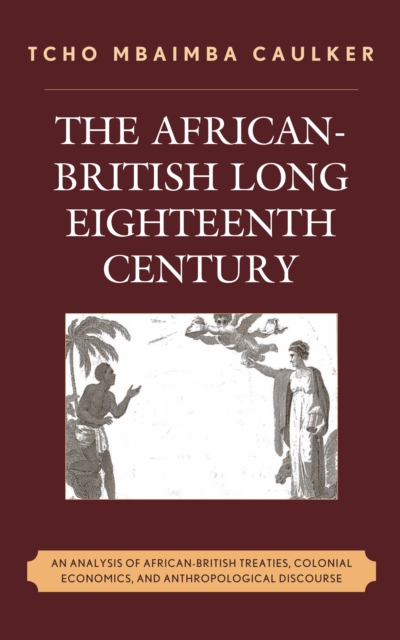
The African-British long eighteenth century
Tracing the development of British colonial administration in West Africa over the course of the long eighteenth century, Caulker illuminates the solidification of the administration as it goes through a learning process of power. This book analyzes the documents and treaties that the indigenous peoples of eighteen-century Sierra Leone made with their future British colonizers, and compares them with the writings of Adam Smith to uncover a colonial philosophy linking European economic success with the process of civilizing Africa through moral education. A discussion of other archival materials demonstrates the ways that an emerging anthropological science and pseudo-scientific methodology contributed to colonial ventures and exploration. The book concludes with an analysis of the postcolonial novel The Last Harmattan of Alusine Dunbar, demonstrating that the study of this long eighteenth-century archive has as much to do with the present postcolonial era as it does with the period of African colonization.
eBook

Ship of Death
It is no exaggeration to say that theHankey, a small British ship that circled the Atlantic in 1792 and 1793, transformed the history of the Atlantic world. This extraordinary book uncovers the long-forgotten story of theHankey, from its altruistic beginnings to its disastrous end, and describes the ship's fateful impact upon people from West Africa to Philadelphia, Haiti to London.
Billy G. Smith chased the story of theHankeyfrom archive to archive across several continents, and he now brings back to light a saga that continues to haunt the modern world. It began with a group of high-minded British colonists who planned to establish a colony free of slavery in West Africa. With the colony failing, the ship set sail for the Caribbean and then North America, carrying, as it turned out, mosquitoes infected with yellow fever. The resulting pandemic as theHankeytraveled from one port to the next was catastrophic. In the United States, tens of thousands died in Philadelphia, New York, Boston, and Charleston. The few survivors on theHankeyeventually limped back to London, hopes dashed and numbers decimated. Smith links the voyage and its deadly cargo to some of the most significant events of the era-the success of the Haitian slave revolution, Napoleon's decision to sell the Louisiana Territory, a change in the geopolitical situation of the new United States-and spins a riveting tale of unintended consequences and the legacy of slavery that will not die.
eBook

Deep roots : rice farmers in West Africa and the African diaspora
Mangrove rice farming on West Africa's Rice Coast was the mirror image of
tidewater rice plantations worked by enslaved Africans in 18th-century South
Carolina and Georgia. This book reconstructs the development of rice-growing
technology among the Baga and Nalu of coastal Guinea, beginning more than a
millennium before the transatlantic slave trade. It reveals a picture of dynamic
pre-colonial coastal societies, quite unlike the static, homogenous pre-modern
Africa of previous scholarship. From its examination of inheritance, innovation, and
borrowing, Deep Roots fashions a theory of cultural change that encompasses the
diversity of communities, cultures, and forms of expression in Africa and the
African diaspora.
eBook

Freedom's Debt
In the years following the Glorious Revolution, independent slave traders challenged the charter of the Royal African Company by asserting their natural rights as Britons to trade freely in enslaved Africans. In this comprehensive history of the rise and fall of the RAC, William A. Pettigrew grounds the transatlantic slave trade in politics, not economic forces, analyzing the ideological arguments of the RAC and its opponents in Parliament and in public debate. Ultimately, Pettigrew powerfully reasons that freedom became the rallying cry for those who wished to participate in the slave trade and therefore bolstered the expansion of the largest intercontinental forced migration in history.Unlike previous histories of the RAC, Pettigrew's study pursues the Company's story beyond the trade's complete deregulation in 1712 to its demise in 1752. Opening the trade led to its escalation, which provided a reliable supply of enslaved Africans to the mainland American colonies, thus playing a critical part in entrenching African slavery as the colonies' preferred solution to the American problem of labor supply.
eBook

Slavery and the birth of an African city : Lagos, 1760-1900
As the slave trade entered its last, illegal phase in the 19th century,
the town of Lagos on West Africa's Bight of Benin became one of the most important
port cities north of the equator. Slavery and the Birth of an African City explores
the reasons for Lagos's sudden rise to power. By linking the histories of
international slave markets to those of the regional suppliers and slave traders,
Kristin Mann shows how the African slave trade forever altered the destiny of the
tiny kingdom of Lagos. This magisterial work uncovers the relationship between
African slavery and the growth of one of Africa's most vibrant cities.
eBook