
Catalogue Search | MBRL


Are you sure you want to remove the book from the shelf?

{{itemTitle}}
208
result(s) for
"Africa Emigration and immigration Social aspects."
Sort by:

Migration and agency in a globalizing world : Afro-Asian encounters
A collection of case studies covering Southern and East Africa, China, India, Japan, South Korea and Southeast Asia, this book offers insights into the nature of social exchanges between Africa and Asia. In the age of the 'Rise of the South', it documents the entanglements and the lived experiences of African and Asian people on the move.
Book

Migration and National Identity in South Africa, 1860–2010
An extraordinary outbreak of xenophobic violence in May 2008 shocked South Africa, but hostility toward newcomers has a long history. Democratization has channeled such discontent into a non-racial nationalism that specifically targets foreign Africans as a threat to prosperity. Finding suitable governmental and societal responses requires a better understanding of the complex legacies of segregation that underpin current immigration policies and practices. Unfortunately, conventional wisdoms of path dependency promote excessive fatalism and ignore how much South Africa is a typical settler state. A century ago, its policy makers shared innovative ideas with Australia and Canada, and these peers, which now openly wrestle with their own racist past, merit renewed attention. As unpalatable as the comparison might be to contemporary advocates of multiculturalism, rethinking restrictions in South Africa can also offer lessons for reconciling competing claims of indigeneity through multiple levels of representation and rights.
eBook

Competition or co-operation? : South African and migrant entrepreneurs in Johannesburg
\"Debates about international migration in South Africa often center on the role of international migrant entrepreneurs who are seen to be more successful than their South African counterparts, squeezing them out of entrepreneurial spaces, particularly in townships. This report explores and compares the experiences of international and South African migrant entrepreneurs operating informal sector businesses in Johannesburg\"-- Provided by publisher.
Book

Translocality
Drawing on case studies mostly from Asia and Africa, this book reconsiders the increasing interconnectedness between world regions from a perspective of 'translocality'. It suggests a more comprehensive reading of processes often simplified as 'global', very recent, unidirectional, and 'Western'-dominated.
eBook


Affective circuits : African migrations to Europe and the pursuit of social regeneration
The influx of African migrants into Europe in recent years has raised important issues about changing labor economies, new technologies of border control, and the effects of armed conflict. But attention to such broad questions often obscures a fundamental fact of migration: its effects on ordinary life. Affective Circuits brings together essays by an international group of well-known anthropologists to place the migrant family front and center. Moving between Africa and Europe, the book explores the many ways migrants sustain and rework family ties and intimate relationships at home and abroad. It demonstrates how their quotidian efforts—on such a mass scale—contribute to a broader process of social regeneration.
The contributors point to the intersecting streams of goods, people, ideas, and money as they circulate between African migrants and their kin who remain back home. They also show the complex ways that emotions become entangled in these exchanges. Examining how these circuits operate in domains of social life ranging from child fosterage to binational marriages, from coming-of-age to healing and religious rituals, the book also registers the tremendous impact of state officials, laws, and policies on migrant experience. Together these essays paint an especially vivid portrait of new forms of kinship at a time of both intense mobility and ever-tightening borders.
eBook


Congolese social networks
Congolese Social Networks: Living on the Margins in Muizenberg, Cape Town is a closely researched ethnography that focuses predominantly on the lives of three Congolese transmigrants (self-identified as such).This monograph situates them in a cosmopolitan South African space amongst dissimilar South African others, and similar national others.
eBook
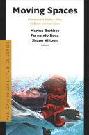
Moving spaces : creolisation and mobility in Africa, the Atlantic and Indian Ocean
\"Moving Spaces: Creolisation and Mobility in Africa, the Atlantic and Indian Ocean addresses issues of creolisation, mobility, and migration of ideas, songs, stories, and people, as well as plants, in various parts of Africa, the Atlantic and the Indian Ocean worlds. It brings together Anglophone, Francophone and Lusophone specialists from various fields - anthropology, geography, history, language & literary studies - from Africa, Brazil, Europe, and the Indo-Pacific. It is a book which, while opening new perspectives, also intriguingly suggests that languages are essential to all processes of creolisation, and that therefore the latter cannot be understood without reference to the former. Its strength therefore lies in bringing together studies from different language domains, particularly Afrikaans, Creole, English, French, Portuguese, and Sanskrit. Contributors include Andrea Acri, Joaze Bernardino, Marina Berthet, Alain Kaly, Uhuru Phalafala, Haripriya Rangan, Fernando Rosa, Antâonio Tomâas and Shaun Viljoen\"-- Provided by publisher.
Book

Diverse Pathways
Africans are among the fastest-growing immigrant groups in the United States. Although they are racially and ethnically diverse, few studies have examined how these differences affect their patterns of incorporation into society. This book is the first to highlight the role of race and ethnicity, Arab ethnicity in particular, in shaping the experiences of African immigrants. It demonstrates that American conceptions of race result in significant inequalities in the ways in which African immigrants are socially integrated. Thomas argues that suggestions that Black Africans are model-minorities who have overcome the barriers of race are misleading, showing that Black and Arab-ethnicity Africans systematically experience less favorable socioeconomic outcomes than their White African counterparts. Overall, the book makes three critical arguments. First, historical and contemporary constructions of race have important implications for understanding the dynamics of African immigration and settlement in the United States. Second, there are significant racial inequalities in the social and economic incorporation of contemporary African immigrants. Finally, Arab ethnicity has additional implications for understanding intra-racial disparities in incorporation among contemporary African immigrants. In general, these arguments are foundational for understanding the diversity of African immigrant experiences.
eBook