
Catalogue Search | MBRL


Are you sure you want to remove the book from the shelf?

{{itemTitle}}
6,217
result(s) for
"African American abolitionists."
Sort by:


Women's Rights and Transatlantic Antislavery in the Era of Emancipation
Two epochal developments profoundly influenced the history of the Atlantic world between 1770 and 1870-the rise of women's rights activism and the drive to eliminate chattel slavery. The contributors to this volume, eminent scholars from a variety of disciplines, investigate the intertwining histories of abolitionism and feminism on both sides of the Atlantic during this dynamic century of change. They illuminate the many ways that the two movements developed together and influenced one another.Approaching a wide range of transnational topics, the authors ask how conceptions of slavery and gendered society differed in the United States, France, Germany, and Britain; how women's activism reached across national boundaries; how racial identities affected the boundaries of women's activism; and what was distinctive about African-American women's participation as activists. Their thought-provoking answers provide rich insights into the history of struggles for social justice across the Atlantic world.
eBook


William Still
The first full-length biography of William Still, one of
the most important leaders of the Underground
Railroad.
William Still: The Underground Railroad and the Angel at
Philadelphia is the first major biography of the free black
abolitionist William Still, who coordinated the Eastern Line of the
Underground Railroad and was a pillar of the Railroad as a whole.
Based in Philadelphia, Still built a reputation as a courageous
leader, writer, philanthropist, and guide for fugitive slaves. This
monumental work details Still's life story beginning with his
parents' escape from bondage in the early nineteenth century and
continuing through his youth and adulthood as one of the nation's
most important Underground Railroad agents and, later, as an early
civil rights pioneer. Still worked personally with Harriet Tubman,
assisted the family of John Brown, helped Brown's associates escape
from Harper's Ferry after their famous raid, and was a rival to
Frederick Douglass among nationally prominent African American
abolitionists. Still's life story is told in the broader context of
the anti-slavery movement, Philadelphia Quaker and free black
history, and the generational conflict that occurred between Still
and a younger group of free black activists led by Octavius
Catto.
Unique to this book is an accessible and detailed database of
the 995 fugitives Still helped escape from the South to the North
and Canada between 1853 and 1861. The database contains twenty
different fields-including name, age, gender, skin color, date of
escape, place of origin, mode of transportation, and literacy-and
serves as a valuable aid for scholars by offering the opportunity
to find new information, and therefore a new perspective, on
runaway slaves who escaped on the Eastern Line of the Underground
Railroad. Based on Still's own writings and a multivariate
statistical analysis of the database of the runaways he assisted on
their escape to freedom, the book challenges previously accepted
interpretations of the Underground Railroad. The audience for
William Still is a diverse one, including scholars and
general readers interested in the history of the anti-slavery
movement and the operation of the Underground Railroad, as well as
genealogists tracing African American ancestors.
eBook

Awakening to Justice
\"O where are the sympathies of Christians for the slave and where are their exertions for their liberation? . . . It seems as if the church were asleep.\"
David Ingraham, 1839
In 2015, the historian Chris Momany helped discover a manuscript that had been forgotten in a storage closet at Adrian College in Michigan. He identified it as the journal of a nineteenth-century Christian abolitionist and missionary, David Ingraham. As Momany and a fellow historian Doug Strong pored over the diary, they realized that studying this document could open new conversations for twenty-first-century Christians to address the reality of racism today. They invited a multiracial team of fourteen scholars to join in, thus launching the Dialogue on Race and Faith Project.
Awakening to Justice presents the groundbreaking work of these scholars. In addition to reflecting on Ingraham's journal, chapters also explore the life and writings of two of Ingraham's Black colleagues, James Bradley and Nancy Prince. Appendixes feature writings by all three abolitionists so readers can engage the primary sources directly.
Through considering connections between the revivalist, holiness, and abolitionist movements; the experiences of enslaved and freed people; abolitionists' spiritual practices; various tactics used by abolitionists; and other themes, the authors offer insight and hope for Christians concerned about racial justice. They highlight how Christians associated with Charles Finney's style of revivalism formed intentional, countercultural communities such as Oberlin College to be exemplars of interracial cooperation and equality.
Christians have all too often compromised with racism throughout history, but that's not the whole story. Hearing the prophetic witness of revivalist social justice efforts in the nineteenth century can provide a fresh approach to today's conversations about race and faith in the church.
eBook

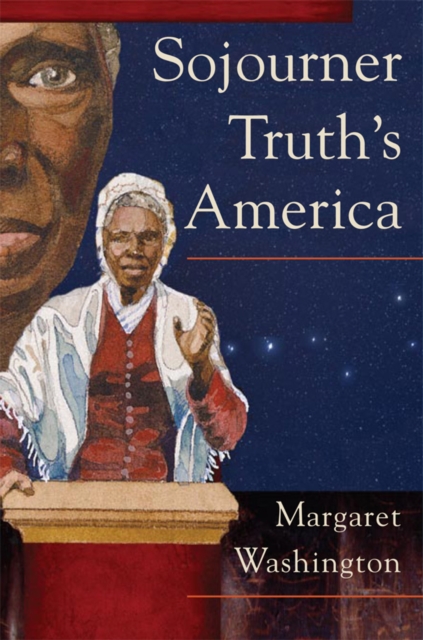
Sojourner Truth's America
This fascinating biography tells the story of nineteenth-century America through the life of one of its most charismatic and influential characters: Sojourner Truth. In an in-depth account of this amazing activist, Margaret Washington unravels Sojourner Truth's world within the broader panorama of African American slavery and the nation's most significant reform era. _x000B__x000B_Born into bondage among the Hudson Valley Dutch in Ulster County, New York, Isabella was sold several times, married, and bore five children before fleeing in 1826 with her infant daughter one year before New York slavery was abolished. In 1829, she moved to New York City, where she worked as a domestic, preached, joined a religious commune, and then in 1843 had an epiphany. Changing her name to Sojourner Truth, she began traveling the country as a champion of the downtrodden and a spokeswoman for equality by promoting Christianity, abolitionism, and women's rights._x000B__x000B_Gifted in verbal eloquence, wit, and biblical knowledge, Sojourner Truth possessed an earthy, imaginative, homespun personality that won her many friends and admirers and made her one of the most popular and quoted reformers of her times. Washington's biography of this remarkable figure considers many facets of Sojourner Truth's life to explain how she became one of the greatest activists in American history, including her African and Dutch religious heritage; her experiences of slavery within contexts of labor, domesticity, and patriarchy; and her profoundly personal sense of justice and intuitive integrity._x000B__x000B_Organized chronologically into three distinct eras of Truth's life, Sojourner Truth's America examines the complex dynamics of her times, beginning with the transnational contours of her spirituality and early life as Isabella and her embroilments in legal controversy. Truth's awakening during nineteenth-century America's progressive surge then propelled her ascendancy as a rousing preacher and political orator despite her inability to read and write. Throughout the book, Washington explores Truth's passionate commitment to family and community, including her vision for a beloved community that extended beyond race, gender, and socioeconomic condition and embraced a common humanity. For Sojourner Truth, the significant model for such communalism was a primitive, prophetic Christianity._x000B__x000B_Illustrated with dozens of images of Truth and her contemporaries, Sojourner Truth's America draws a delicate and compelling balance between Sojourner Truth's personal motivations and the influences of her historical context. Washington provides important insights into the turbulent cultural and political climate of the age while also separating the many myths from the facts concerning this legendary American figure.
eBook


The Gospel of Freedom
Wilbur H.Siebert published his landmark study of the Underground Railroad in 1898, revealing a secret system of assisted slave escapes.Siebert's research relied on the accounts of northern white male abolitionists, and while useful in understanding the northern boundaries of the journey, his work omits the complicated narrative of assistance.
eBook