
Catalogue Search | MBRL


Are you sure you want to remove the book from the shelf?

{{itemTitle}}
2,837
result(s) for
"African American intellectuals"
Sort by:

Bury my heart in a free land : black women intellectuals in modern U.S. history
\"This book rejects the notion that black women were at the margin of American intellectual life. Black women as preachers, abolitionists, creative writers, and civil rights activists are examined here to illustrate the fundamental position that black women intellectuals occupied in modern U.S. history, while at the same time demonstrating how these women used the public sphere and writing as an attempt at self-articulation. For these women, writing and speaking served simultaneously as acts of self-articulation and as calls to action. The art of testimony and confession was utilized by black women in their campaigns of social reform and beyond. Michel Foucault argues that \"power is exercised from innumerable points, in the interplay of non-egalitarian and mobile relations.\" African American women despite living in an unequal society operationalized their voices in the quest for universal human rights throughout U.S. history as traditional, public, and organic intellectuals. This volume is divided into five major sections to illustrate this history.\"--Provided by publisher.
Book

The Sovereignty of Quiet
African American culture is often considered expressive, dramatic, and even defiant. InThe Sovereignty of Quiet, Kevin Quashie explores quiet as a different kind of expressiveness, one which characterizes a person's desires, ambitions, hungers, vulnerabilities, and fears. Quiet is a metaphor for the inner life, and as such, enables a more nuanced understanding of black culture.The book revisits such iconic moments as Tommie Smith and John Carlos's protest at the 1968 Mexico City Olympics and Elizabeth Alexander's reading at the 2009 inauguration of Barack Obama. Quashie also examines such landmark texts as Gwendolyn Brooks'sMaud Martha, James Baldwin'sThe Fire Next Time, and Toni Morrison'sSulato move beyond the emphasis on resistance, and to suggest that concepts like surrender, dreaming, and waiting can remind us of the wealth of black humanity.
eBook

James Baldwin : challenging authors
The recognition and study of African American (AA) artists and public intellectuals often include Martin Luther King, Jr., and occasionally Booker T. Washington, W.E.B. DuBois, and Malcolm X. The literary canon also adds Ralph Ellison, Richard White, Langston Hughes, and others such as female writers Zora Neale Hurston, Maya Angelou, and Alice Walker. Yet, the acknowledgement of AA artists and public intellectuals tends to skew the voices and works of those included toward normalized portrayals that fi t well within foundational aspects of the American myths refl ected in and perpetuated by traditional schooling. Further, while many AA artists and public intellectuals are distorted by mainstream media, public and political characterizations, and the curriculum, several powerful AA voices are simply omitted, ignored, including James Baldwin. This edited volume gathers a collection of essays from a wide range of perspectives that confront Baldwin's impressive and challenging canon as well as his role as a public intellectual. Contributors also explore Baldwin as a confrontational voice during his life and as an enduring call for justice.
Book

Blacks, Reds, and Russians
One of the most compelling, yet little known stories of race relations in the twentieth century is the account of blacks who chose to leave the United States to be involved in the Soviet Experiment in the 1920s and 1930s. Frustrated by the limitations imposed by racism in their home country, African Americans were lured by the promise of opportunity abroad. A number of them settled there, raised families, and became integrated into society. The Soviet economy likewise reaped enormous benefits from the talent and expertise that these individuals brought, and the all around success story became a platform for political leaders to boast their party goals of creating a society where all members were equal.In Blacks, Reds, and Russians, Joy Gleason Carew offers insight into the political strategies that often underlie relationships between different peoples and countries. She draws on the autobiographies of key sojourners, including Harry Haywood and Robert Robinson, in addition to the writings of Claude McKay, W.E.B. Du Bois, and Langston Hughes. Interviews with the descendents of figures such as Paul Robeson and Oliver Golden offer rare personal insights into the story of a group of emigrants who, confronted by the daunting challenges of making a life for themselves in a racist United States, found unprecedented opportunities in communist Russia.
eBook


A Faithful Account of the Race
The civil rights and black power movements expanded popular awareness of the history and culture of African Americans. But, as Stephen Hall observes, African American authors, intellectuals, ministers, and abolitionists had been writing the history of the black experience since the 1800s. With this book, Hall recaptures and reconstructs a rich but largely overlooked tradition of historical writing by African Americans.Hall charts the origins, meanings, methods, evolution, and maturation of African American historical writing from the period of the Early Republic to the twentieth-century professionalization of the larger field of historical study. He demonstrates how these works borrowed from and engaged with ideological and intellectual constructs from mainstream intellectual movements including the Enlightenment, Romanticism, Realism, and Modernism. Hall also explores the creation of discursive spaces that simultaneously reinforced and offered counternarratives to more mainstream historical discourse. He sheds fresh light on the influence of the African diaspora on the development of historical study. In so doing, he provides a holistic portrait of African American history informed by developments within and outside the African American community.
eBook

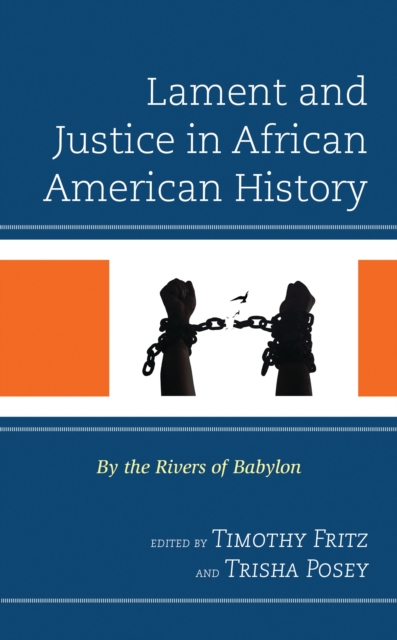
Lament and Justice in African American History
For African Americans who have experienced the trauma of colonization, displacement, enslavement, and race-based violence, lament has long been a form of cultural expression that creates space to process these experiences.
eBook

W.E.B. Du Bois : a life in American history
\"This book provides a new interpretation of the life of W.E.B. Du Bois, one of the most important African-American scholars and thinkers of the twentieth century\"-- Provided by publisher.
Book

X-The Problem of the Negro as a Problem for Thought
X: The Problem of the Negro as a Problem for Thought offers an original account of matters African American, and by implication the African diaspora in general, as an object of discourse and knowledge. It likewise challenges the conception of analogous objects of study across dominant ethnological disciplines (e.g., anthropology, history, and sociology) and the various forms of cultural, ethnic, and postcolonial studies. With special reference to the work of W. E. B. Du Bois, Chandler shows how a concern with the Negro is central to the social and historical problematization that underwrote twentieth-century explorations of what it means to exist as an historical entity referring to their antecedents in eighteenth-century thought and forward into their ongoing itinerary in the twenty-first century. For Du Bois, \"the problem of the color line\" coincided with the inception of a supposedly modern horizon. The very idea of the human and its avatars the idea of race and the idea of culture emerged together with the violent, hierarchical inscription of the so-called African or Negro into a horizon of commonness beyond all natal premises, a horizon that we can still situate with the term global. In ongoing struggles with the idea of historical sovereignty, we can see the working out of then new concatenations of social and historical forms of difference, as both projects of categorical differentiation and the irruption of originary revisions of ways of being. In a word, the world is no longer and has never been one. The world, if there is such from the inception of something like \"the Negro as a problem for thought\" could never be, only, one. The problem of the Negro in \"America\" is thus an exemplary instance of modern historicity in its most fundamental sense. It renders legible for critical practice the radical order of an ineluctable and irreversible complication at the heart of being its appearance as both life and history as the very mark of our epoch.
eBook