
Catalogue Search | MBRL


Are you sure you want to remove the book from the shelf?

{{itemTitle}}
2,002
result(s) for
"African American jazz musicians"
Sort by:

Duke Ellington : legendary composer and bandleader
Celebrates the life of a musical genius, detailing hundreds of his compostions and uncountable concert appearances.
Book

Paris blues : African American music and French popular culture, 1920 - 1960
The Jazz Age. The phrase conjures images of Louis Armstrong holding court at the Sunset Cafe in Chicago, Duke Ellington dazzling crowds at the Cotton Club in Harlem, and star singers like Bessie Smith and Ma Rainey. But the Jazz Age was every bit as much of a Paris phenomenon as it was a Chicago and New York scene.
In Paris Blues, Andy Fry provides an alternative history of African American music and musicians in France, one that looks beyond familiar personalities and well-rehearsed stories. He pinpoints key issues of race and nation in France's complicated jazz history from the 1920s through the 1950s. While he deals with many of the traditional icons—such as Josephine Baker, Django Reinhardt, and Sidney Bechet, among others—what he asks is how they came to be so iconic, and what their stories hide as well as what they preserve. Fry focuses throughout on early jazz and swing but includes its re-creation—reinvention—in the 1950s. Along the way, he pays tribute to forgotten traditions such as black musical theater, white show bands, and French wartime swing. Paris Blues provides a nuanced account of the French reception of African Americans and their music and contributes greatly to a growing literature on jazz, race, and nation in France.
eBook


Celebrating Bird
Within days of Charlie \"Bird\" Parker's death at the age of thirty-four, a scrawled legend began appearing on walls around New York City: Bird Lives. Gone was one of the most outstanding jazz musicians of any era, the troubled genius who brought modernism to jazz and became a defining cultural force for musicians, writers, and artists of every stripe. Arguably the most significant musician in the country at the time of his death, Parker set the standard many musicians strove to reach-though he never enjoyed the same popular success that greeted many of his imitators. Today, the power of Parker's inventions resonates undiminished; and his influence continues to expand. Celebrating Bird is the groundbreaking and award-winning account of the life and legend of Charlie Parker from renowned biographer and critic Gary Giddins, whom Esquire called \"the best jazz writer in America today.\" Richly illustrated and drawing primarily from original sources, Giddins overturns many of the myths that have grown up around Parker. He cuts a fascinating portrait of the period, from Parker's apprentice days in the 1930s in his hometown of Kansas City to the often difficult years playing clubs in New York and Los Angeles, and reveals how Parker came to embody not only musical innovation and brilliance but the rage and exhilaration of an entire generation. Fully revised and with a new introduction by the author, Celebrating Bird is a classic of jazz writing that the Village Voice heralded as \"a celebration of the highest order\"-a portrayal of a jazz virtuoso whose gargantuan talent was haunted by his excesses and a view into the ravishing art of one of jazz's most commanding and remarkable figures.
eBook

That's Got 'Em
William C. Sweatman (1882-1961) is one of the most truly important, yet unheralded, African American musicians involved in the transition of ragtime into jazz in the early twentieth century. InThat's Got 'Em!, Mark Berresford tracks this energetic pioneer over a seven-decade career. His talent transformed every genre of black music before the advent of rock and roll--\"pickaninny\" bands, minstrelsy, circus sideshows, vaudeville (both black and white), night clubs, and cabarets. Sweatman was the first African American musician to be offered a long-term recording contract, and he dazzled listeners with jazz clarinet solos before the Original Dixieland Jazz Band's so-called \"first jazz-records.\"
Sweatman toured the vaudeville circuit for over twenty years and presented African American music to white music lovers without resorting to the hitherto obligatory \"plantation\" costumes and blackface makeup. His bands were a fertile breeding ground of young jazz talent, featuring such future stars as Duke Ellington, Coleman Hawkins, and Jimmie Lunceford. Sweatman subsequently played pioneering roles in radio and recording production. His high profile and sterling reputation in both the black and white entertainment communities made him a natural choice for administering the estate of Scott Joplin and other notable black performances and composers.
That's Got 'Em!is the first full-length biography of this pivotal figure in black popular culture, providing a compelling account of his life and times.
eBook

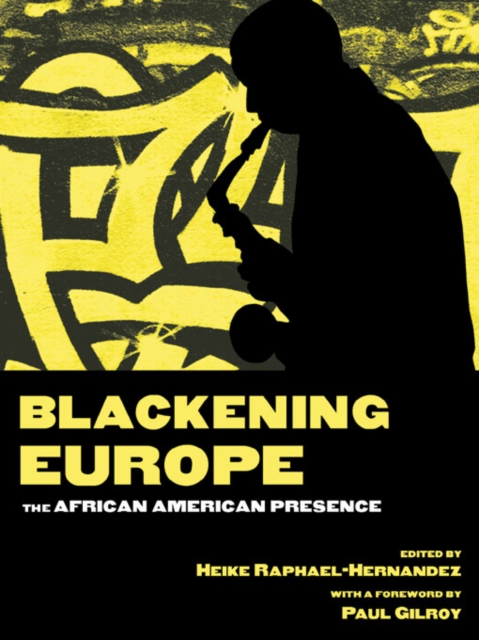
Blackening Europe
Traditional Scholars have often looked at African American studies through the lens of European theories, resulting in the secondarization of the African American presence in Europe and its contributions to European culture. Blackening Europe reverses this pattern by using African American culture as the starting point for a discussion of its influences over traditional European structures. Evidence of Europe's blackening abound, form French ministers of Hip-hop and British incarnations of \"Shaft\" to slavery memorial in the Netherlands and German youth sporting dreadlocks. Collecting essays by scholars from both sides of the Atlantic and fields as diverse as history, literature, politics, social studies, art, film and music, Blackening Europe explores the implications of these cultural hybrids and extends the growing dialogues about Europe's fascination with African America.
eBook

Louis Armstrong : the soundtrack of the American experience
The life story of this great instrumentalist, bandleader, and entertainer illustrates much of the black entertainer's impact on American culture and illuminates how popular culture often intersects with politics and economics.
Book
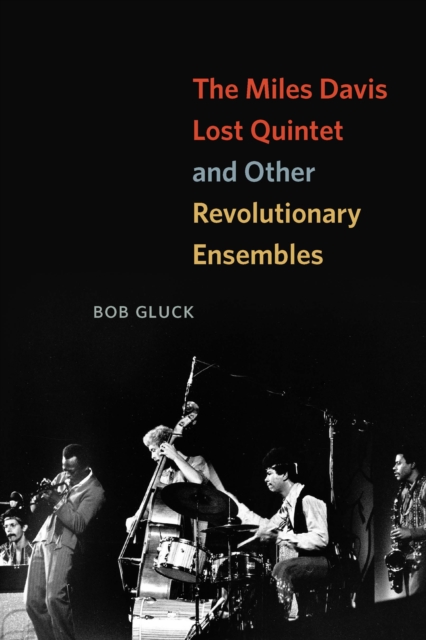
The Miles Davis Lost Quintet and Other Revolutionary Ensembles
Miles Davis's Bitches Brew is one of the most iconic albums in American music, the preeminent landmark and fertile seedbed of jazz-fusion. Fans have been fortunate in the past few years to gain access to Davis's live recordings from this time, when he was working with an ensemble that has come to be known as the Lost Quintet. In this book, jazz historian and musician Bob Gluck explores the performances of this revolutionary group—Davis's first electric band—to illuminate the thinking of one of our rarest geniuses and, by extension, the extraordinary transition in American music that he and his fellow players ushered in.
Gluck listens deeply to the uneasy tension between this group's driving rhythmic groove and the sonic and structural openness, surprise, and experimentation they were always pushing toward. There he hears—and outlines—a fascinating web of musical interconnection that brings Davis's funk-inflected sensibilities into conversation with the avant-garde worlds that players like Ornette Coleman and John Coltrane were developing. Going on to analyze the little-known experimental groups Circle and the Revolutionary Ensemble, Gluck traces deep resonances across a commercial gap between the celebrity Miles Davis and his less famous but profoundly innovative peers. The result is a deeply attuned look at a pivotal moment when once-disparate worlds of American music came together in explosively creative combinations.
eBook