
Catalogue Search | MBRL


Are you sure you want to remove the book from the shelf?

{{itemTitle}}
37
result(s) for
"African American preaching"
Sort by:

Preaching to the chickens : the story of young John Lewis
\"Critically acclaimed author Jabari Asim and Caldecott Honor-winning illustrator E. B. Lewis give readers a fascinating glimpse into the boyhood of Civil Rights leader John Lewis. John wants to be a preacher when he grows up a leader whose words stir hearts to change, minds to think, and bodies to take action. But why wait? When John is put in charge of the family farm's flock of chickens, he discovers that they make a wonderful congregation! So he preaches to his flock, and they listen, content under his watchful care, riveted by the rhythm of his voice. Celebrating ingenuity and dreaming big, this inspirational story, featuring Jabari Asim's stirring prose and E. B. Lewis's stunning, light-filled impressionistic watercolor paintings, includes an author's note about John Lewis, who grew up to be a member of the Freedom Riders, chairman of the Student Nonviolent Coordinating Committee, and demonstrator on the Edmund Pettus Bridge in Selma, Alabama, and is now a Georgia congressman\"-- Provided by publisher.
Book

A pursued justice : Black preaching from the great migration to Civil Rights
The narrative of Civil Rights often begins with the prophetic figure of Martin Luther King Jr. in the 1960s. City squares became a church, the body politic a congregation, and sermons a jeremiad of social change—or so the story goes. In A Pursued Justice , Kenyatta Gilbert instead traces the roots of King’s call for justice to African American prophetic preaching that arose in an earlier moment of American history.
In the wake of a failed Reconstruction period, widespread agricultural depression, and the rise of Jim Crow laws, and triggered by America’s entry into World War I, a flood of southern Blacks moved from the south to the urban centers of the North. This Great Migration transformed northern Black churches and produced a new mode of preaching—prophetic Black preaching—which sought to address this brand new context.
Black clerics such as Baptist pastor Reverend Adam Clayton Powell Sr., A.M.E. Bishop Reverdy Cassius Ransom, and A.M.E. Zion pastor Florence Spearing Randolph rose up within these congregations. From their pulpits, these pastors proclaimed truth and power for hope across racial, ethnic, and class lines both within their congregations and between the Black community and the wider culture.
A Pursued Justice profiles these three ecclesiastically inventive clerics of the first half of the twentieth century whose strident voices gave birth to a distinctive form of prophetic preaching. Their radical sermonic response to injustice and suffering, both in and out of the Black church, not only captured the imaginations of participants in the largest internal mass migration in American history but also inspired the homiletical vision of Martin Luther King Jr. and subsequent generations of preachers of revolutionary hope and holy disobedience.
eBook
Introduction to the Practice of African American Preaching
The Introduction to African American Preaching is an important,groundbreaking book. This book acknowledges African American preachingas an academic discipline, and invites all students and preachers into ascholarly, dynamic, and useful exploration of the topic.AuthorFrank Thomas opens with a \"bus tour\" study of African Americanpreaching. He shows how African American preaching has gradually movedfrom an almost exclusively oral to an oral/written tradition. Readerswill gain insight into the history of the study of the African Americanpreaching tradition, and catch the author's enthusiasm for it.NextThomas traces the relationship between homiletics and rhetoric inWestern preaching, demonstrating how African American preaching isinherently theological and rhetorical.He then explores thequestion, \"what is black preaching?\" Thomas introduces the reader tomethods of \"close reading\" and \"ideological criticism.\" And thendemonstrates how to use these methods, using a sermon by Gardner CalvinTaylor as his example.The next chapter considers the question, \"what is excellence in black preaching?\"Thenext chapter seeks to create bridges and dialogue within the field ofhomiletics, and in particular, the Euro-American homiletic tradition.The goal of this chapter is to clearly demonstrate connections betweenthe African American preaching tradition and the field of homiletics.Thomasnext turns to questions about the relevancy of the church to theMillennial generation. Specifically, how will the African Americanchurch remain relevant to this generation, which is so deeply concernedwith social justice?
eBook

Black Contemplative Preaching
Stereotypical images of African American Christian spirituality eclipse the profound diversity of Black preaching. As a result, contemplative preaching has become one of the most overlooked streams of gospel proclamation in Black Protestant contexts. Far from a new phenomenon, contemplative preaching consists of a robust tradition of orators, theologians, prophets, mystics, and pastors. In different ways, these proclaimers embody a life-giving, boundary-crossing, contemplative vision that fosters spiritual and social transformation.
In Black Contemplative Preaching, E. Trey Clark expands our understanding of Black religiosity by drawing attention to the rich history of contemplative preaching in the Black church. Clark brings this hidden history to light by examining the life and preaching ministry of three twentieth-century African American religious leaders: Howard Thurman, Martin Luther King Jr., and the late Bishop Barbara Harris. In addition, the book discusses the contemplative proclamation of contemporary spiritual leaders such as Ineda Pearl Adesanya, Veronica R. Goines, Luke A. Powery, and Frank A. Thomas, as well as poet and activist Amanda Gorman.
Black Contemplative Preaching challenges monolithic portraits of Black spirituality and ministry through an evaluation of these influential figures. The uncovering of this rich, yet neglected, history of mystical activism among Christian preachers sheds light on the creative synthesis of spirituality, social justice, and proclamation in the Black church. Ultimately, the book presents Black contemplative preaching as a historic and enduring source of theological wisdom that speaks to the political, ecological, and spiritual challenges of our times.
eBook
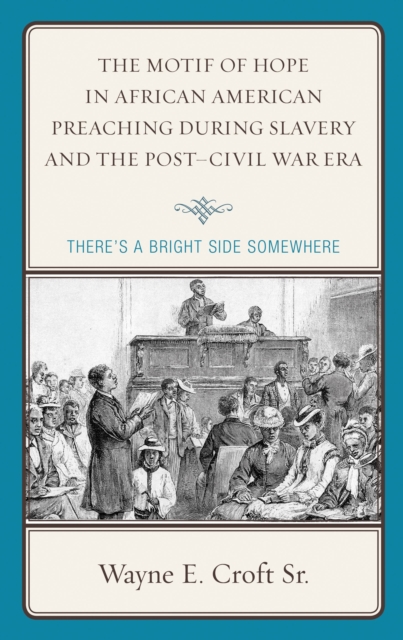
The motif of hope in African American preaching during slavery and the Post-Civil War Era
This book explores the use of the motif of hope within African American preaching during slavery (1803-1865) and the post-Civil War era (1865-1896). It discusses the presentation of the motif of hope from a historical perspective and how often this motif changed, though in some instances it remained the same despite the changing of its historical context. Futhermore, this discussion illuminates a realty that hope has been a theme of importance throughout the history of African American preaching.
eBook
Rethinking Celebration
\"This book is a clarion call for African American preachers to think more deeply about the aims and ends of their preachingnamely to stop putting so much emphasis on celebratory endings to our sermons and focus more on the substantive content in our sermons. Our so-called celebratory preaching, designed to excite the congregation into action through a highly emotional closing of the sermon, has had the opposite effect. Rather than inducing action, it has lulled generations of black congregants to sleep. While we are jumping up and down, shouting, and waving our hands in the air every Sunday during the worship hour, we seem not to notice the growing number of churched and unchurched alike who are becoming powerfully alienated from any form of institutional religion.\"
from the introduction
\"Celebration\" is a term that has long been used to describe African American preaching, characterized by content that affirms the goodness and powerful intervention of God as well as style that builds from quiet beginnings to an emotionally rich crescendo in conclusion. Cleophus J. LaRue argues that while celebration is one of African American preaching's greatest gifts to the larger church, too many black preachers have become content with the form of celebrationvolume, vocabulary, pitch, speed, rhythm, and the liketo the neglect of its essencethe proclamation of the mighty acts of God in the lives of their congregations and communities. This kind of preaching, LaRue contends, fails to address the ongoing problems of the African American community and is powerless to prevent the growing disaffection of black America with the black church. In words both prophetic and practical, LaRue suggests ways to improve black preaching that honor both the form and the power of the African American homiletical practice of celebration. Preachers will learn how to use celebration more selectively and as part of a fully formed preaching practice rather than as a means of distracting the congregation from pressing social and theological questions. The book includes six illustrative sermons from LaRue as well as Paschal Sampson Wilkinson Sr., Brian K. Blount, and Claudette Anderson Copeland.
eBook
Exodus Preaching
Exodus Preaching is the first of its kind. It is an exploration of the African American prophetic rhetorical traditions in a manner that makes features of these traditions relevant to a broad audience beyond the African American traditions. It provides readers a composite picture of the nature, meaning, and relevance of prophetic preaching as spoken Word of justice and hope in a society of growing pluralism and the world-shaping phenomenon of racial, economic and cultural diversity.African American preachers have distinctively invested great symbolic significance in the Exodus story, the messianic witness of Jesus, and the prophetic literature for developing and shaping prophetic sermons. Kenyatta Gilbert demonstrates how four distinctive features of discourse can shape sermon preparation, for effective preaching in a period of intense social change, racial unrest, and violence.Gilbert includes dozens of practical suggestions and five practical exercises to equip the reader for preaching in new ways and in new environments. He offers an holistic approach, fully equipping the reader with the theological and practical resources needed to preach prophetically.
eBook
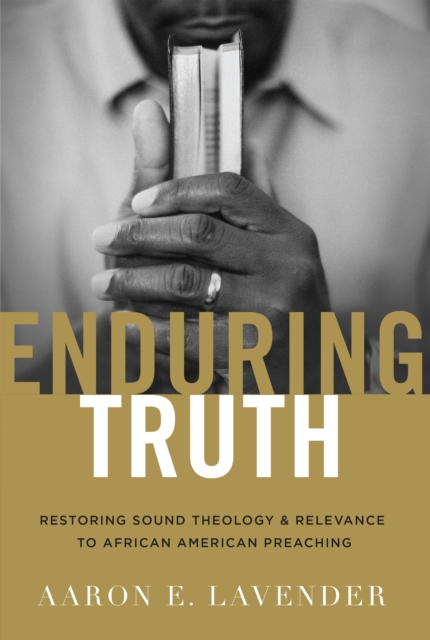
Enduring Truth
Enduring Truth argues that faithfulness to Scripture is the solution to a \"crisis\" among African American preaching. Though misinterpreting God's Word is not restricted to one race or culture, author Aaron Lavender identifies three factors that have precipitated the decline of black preaching specifically: racial segregation, black liberation theology, and prosperity theology. The book's first chapter recounts the history of the crisis, noting how discrimination in theological education led black ministers to liberal colleges and seminaries that prophetically confronted Jim Crow but taught the social gospel and other forms of theological error. Such schools ultimately were harmful to the spiritual health of black churches.
Subsequent chapters discuss the role of biblical exegesis in preaching, develop a theology of preaching, and suggest preaching methods for the postmodern world. Every biblical text has one meaning, according to Lavender. The preacher's job is to determine and communicate that meaning, then show its relevance in the cultural context of his hearers. Proof-texting and relativism, Lavender writes, are two great enemies of biblical preaching.
While focused on the African American context, this volume addresses topics relevant to all preachers. Enduring Truth is suited both for ministry practitioners and preaching courses. It will help readers elevate the Word of God over the worldly allures of any ministry setting.
eBook
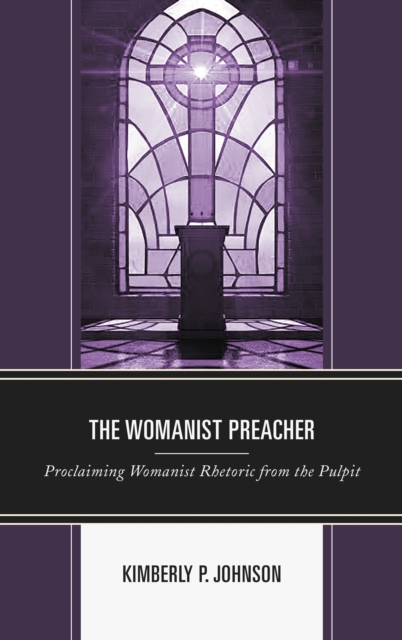
The womanist preacher
The Womanist Preacher: Proclaiming Womanist Rhetoric from the Pulpit performs a close textual analysis of five womanist sermons to answer the question: how does womanist preaching attempt to transform/adapt the tenets of womanist thought to make it rhetorically viable in the church? And what is gained and lost in this? The sermons come from five women who are considered exemplars of womanist preaching: Elaine M. Flake, Gina M. Stewart, Cheryl Kirk-Duggan, Melva L. Sampson, and Claudette A. Copeland. This book takes the first step in womanist scholarship to dissect what is rhetorically going on in womanist preaching, to categorize womanist sermons under the four tenets of womanist preaching, and to then create four rhetorical models that reflect the rhetorical attributes of the four different categories or phrased tenets that Stacey Floyd-Thomas uses to represent Alice Walker’s “womanist” definition.
eBook

Charisma, Diversity, and Religion in the American City— A Reflection
The faith leaders of North American cities actively engage in the civic affairs of their urban communities. Religious leadership, charismatic preaching, and, possibly, reputation of prophetic powers, continue to play important roles especially in the African American civic leaders’ rise to public authority. The article reflects on the twenty-first-century significance of Max Weber’s concept of “charisma” in interpreting the civic involvement of urban religious leaders in one city in particular, Baltimore. The article suggests that within the context of Baltimore’s dramatic challenges associated with urban poverty, violence, and racial and socio-economic health disparities, charismatic religious leadership continues as a recognized form of communal authority especially among the city’s African Americans. The article suggests that the gender dynamics of contemporary charismatic leadership appears strikingly similar to another time period and place, also analyzed by Weber—namely, medieval Europe. Just as an intense personal faith granted some medieval religious women authority and position they would not have had in the institutions reserved for men, so too the religious leadership and personal experiences of faith support the urban advocacy of African American women leaders.
Journal Article