
Catalogue Search | MBRL


Are you sure you want to remove the book from the shelf?

{{itemTitle}}
2,474
result(s) for
"African American women Abuse of."
Sort by:
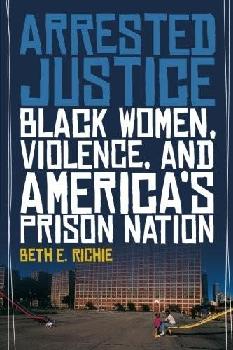

Arrested Justice
Black women in marginalized communities are uniquely at risk of battering, rape, sexual harassment, stalking and incest. Through the compelling stories of Black women who have been most affected by racism, persistent poverty, class inequality, limited access to support resources or institutions, Beth E. Richie shows that the threat of violence to Black women has never been more serious, demonstrating how conservative legal, social, political and economic policies have impacted activism in the U.S.-based movement to end violence against women. Richie argues that Black women face particular peril because of the ways that race and culture have not figured centrally enough in the analysis of the causes and consequences of gender violence. As a result, the extent of physical, sexual and other forms of violence in the lives of Black women, the various forms it takes, and the contexts within which it occurs are minimized-at best-and frequently ignored.Arrested Justicebrings issues of sexuality, class, age, and criminalization into focus right alongside of questions of public policy and gender violence, resulting in a compelling critique, a passionate re-framing of stories, and a call to action for change.
eBook

No mercy here : gender, punishment, and the making of Jim Crow modernity
\"In the late nineteenth and early twentieth centuries imprisoned black women faced wrenching forms of gendered racial terror and heinous structures of economic exploitation. Exposed to violence and rape, subjugated on chain gangs and as convict laborers, and forced to serve additional time as domestic workers before they were allowed their freedom, black women faced a pitiless system of violence, terror, and debasement. Drawing upon black feminist criticism and a diverse array of archival materials, Sarah Haley uncovers imprisoned women's brutalization in local, county, and state convict labor systems, while also illuminating the prisoners' acts of resistance and sabotage, challenging ideologies of racial capitalism and patriarchy and offering alternative conceptions of social and political life\"-- Provided by publisher.
Book

Battle Cries
Contrary to the stereotype of the strong Black woman, African American women are more plagued by domestic violence than any other racial group in the United States. In fact, African American women experience intimate partner violence at a rate 35% higher than white women and about two and a half times more than women of other races and ethnicities. This common portrayal can hinder black women seeking help and support simply because those on the outside don't think help is needed. Yet, as Hillary Potter argues in Battle Cries: Black Women and Intimate Partner Abuse, this stereotype often helps these African American women to resist and to verbally and physically retaliate against their abusers. Thanks to this generalization, Potter observes, black women are less inclined to label themselves as \"victims\" and more inclined to fight back.Battle Cries is an eye-opening examination of African American women's experiences with intimate partner abuse, the methods used to contend with abusive mates, and the immediate and enduring consequences resulting from the maltreatment. Based on intensive interviews with 40 African American women abused by their male partners, Potter's analysis takes into account variations in their experiences based on socioeconomic class, education level, and age, and discusses the common abuses and perceptions they share. Combining her remarkable findings with black feminist thought and critical race theory, Potter offers a unique and significant window through which we can better understand this understudied though rampant social problem.
eBook

Violence in the Lives of Black Women
Break the silence surrounding Black women's experiences of violence!
Written from a Black feminist perspective by therapists, researchers, activists, and survivors, Violence in the Lives of Black Women: Battered, Black, and Blue sheds new light on an understudied field. For too long, Black women have been suffering the effects of violence in painful silence. This book-winner of the Carolyn Payton Early Career Award for its contribution to the understanding of the role of gender in the lives of Black women-provides a forum where personal testimony and academic research meet to show you how living at the intersection of many kinds of oppression shapes the lives of Black women. With moving case studies, in-depth discussions of activism and resistance, and helpful suggestions for treatment and intervention, this book will help you understand the impact of violence on the lives of Black women.
Topics you'll find in Violence in the Lives of Black Women include:
using the arts to deal with sexual aggression in the Black community
racial aspects of sexual harassment
the consequences of head and brain injuries stemming from abuse
domestic violence in African-American lesbian relationships
strategies Black women use to escape violent living situations
lifelong effects of childhood sexual abuse on Black women's mental health
references and resources to help you learn more!
eBook


Getting Played
2010 Distinguished Contribution to Scholarship Book Award from the American Sociological Association; Race, Gender, and Class Section
2008 Finalist, The Society for the Study of Social Problems C. Wright Mills Award
Draws a vivid picture of the race and gender inequalities that harm young African American women in poor urban communities
Much has been written about the challenges that face urban African American young men, but less is said about the harsh realities for African American young women in disadvantaged communities. Sexual harassment, sexual assault, dating violence, and even gang rape are not uncommon experiences. In Getting Played , sociologist Jody Miller presents a compelling picture of this dire social problem and explores how inextricably, and tragically, linked violence is to their daily lives in poor urban neighborhoods.
Drawing from richly textured interviews with adolescent girls and boys, Miller brings a keen eye to the troubling realities of a world infused with danger and gender-based violence. These girls are isolated, ignored, and often victimized by those considered family and friends. Community institutions such as the police and schools that are meant to protect them often turn a blind eye, leaving girls to fend for themselves. Miller draws a vivid picture of the race and gender inequalities that harm these communities—and how these result in deeply and dangerously engrained beliefs about gender that teach youths to see such violence—rather than the result of broader social inequalities—as deserved due to individual girls' flawed characters, i.e., she deserved it.
Through Miller's careful analysis of these engaging, often unsettling stories, Getting Played shows us not only how these young women are victimized, but how, despite vastly inadequate social support and opportunities, they struggle to navigate this dangerous terrain.
eBook

Adverse childhood experiences (ACEs) are associated with forced and very early sexual initiation among Black women accessing publicly funded STD clinics in Baltimore, MD
To examine the association between adverse childhood experiences (ACEs) and early sexual initiation.
We analyzed retrospective data of (n = 241) Black women recruited from public STD clinics in Baltimore, MD. Multinomial logistic and linear regression models estimated associations between ACEs and early sexual initiation; contextual variables at initiation were examined as mediators.
Twelve percent of our sample reported very early sexual initiation (11-12 years) and 29% reported early sexual initiation (13-14 years). Each additional ACE reported was associated with greater risk of very early sexual initiation (RRR = 1.49; 95%CI:1.23,1.80). Specifically, emotional abuse (RRR = 3.71; 95%CI:1.55,8.89), physical abuse (RRR = 9.45; 95%CI:3.56,25.12), sexual abuse (RRR = 8.60; 95%CI:3.29,22.51), witnessing maternal abuse (RRR = 5.56; 95%CI:2.13,14.52), and household substance misuse (RRR = 3.21; 95%CI:1.38,7.47) at or before the age of 18 were associated with very early sexual initiation. As for context of initiation, age at sexual initiation was younger if the man at initiation was a non-partner (ß = -0.88; 95%CI:-1.36,-0.40), was ≥3 years older (ß = -1.30; 95%CI:-1.82,-0.77), had pressured or forced sexual intitiation (ß = -1.09; 95%CI:-1.58,-0.59), and was under the influence of drugs/alcohol (ß = -0.97; 95%CI:-1.62,-0.32). Contextual variables at first sex, including being pressured or forced, and the man being ≥3 years older fully mediated the association between ACEs and early sexual initiation.
This study highlights the critical need to develop interventions that reduce the impact of ACEs on women's health and delay age at sexual initiation. Health education efforts are needed for clinicians and parents to identify and prevent childhood abuse and to identify and report sexual coercion and abuse for girls and adolescents.
Journal Article

Trauma exposure and stress-related disorders in a large, urban, predominantly African-American, female sample
The current study investigated the relationship between trauma exposure and psychopathology in a sample of predominately African-American women of low socioeconomic status (SES). Women (N = 7430) were recruited from medical clinics at two large public hospitals in Atlanta, GA, from 2005 to 2017. Women were assessed for sociodemographics, life-course trauma burden, posttraumatic stress disorder (PTSD), and major depressive disorder (MDD) utilizing self-report and structured clinical interview assessments. The effects of trauma exposure on current and lifetime PTSD and MDD were examined. Ninety-one percent of women reported trauma exposure, 83% reported a monthly household income of less than $2000, and 41% reported a history of arrest. Regarding psychiatric diagnoses, 30.8% met the criteria for probable MDD, and 32.3% met the criteria for probable PTSD. History of childhood abuse and total lifetime trauma significantly increased PTSD and depressive symptoms with additional incremental trauma exposure. PTSD and depressive symptom scores (95% CI) increased from 5.5 (5.0–6.1) and 8.4 (7.9–9.0) in the no trauma group to 20.8 (20.1–21.5) and 20.4 (19.7–21.2), respectively, in those exposed to four or more types of trauma. These results show high rates of adult and childhood trauma exposure, PTSD, MDD, and an additive effect of lifetime trauma exposure on the development of PTSD and MDD in a sample of low SES African-American women. These findings bring light to the high psychiatric symptom burden in this population and call for increased availability of interventions to address symptoms as well as policies aimed at reducing trauma exposure across the lifespan.
Journal Article

Behind the Eight Ball
Inner-city black women open their hearts to share the pain of crack addiction and its consequences
Behind the Eight Ball: Sex for Crack Cocaine Exchange and Poor Black Women documents an American tragedy that highlights the widening gap between social and economic classes. In their own words, poor black women-nameless, faceless, and marginalized by poverty-share the details of their lives before and after crack cocaine invaded their communities, each recalling the circumstances of her introduction to the drug and her first experience using sex to support her addiction. These candid interviews expose the socioeconomic changes in inner-city neighborhoods that created the perfect conditions for a crack stronghold; the crack cocaine economy's impact on the lives of inner-city residents; and the social and familial consequences of crack addiction among poor, black women.
Behind the Eight Ball: Sex for Crack Cocaine Exchange and Poor Black Women places crack addiction, crack-related prostitution and its consequences, STDs, HIV, and pregnancy into the context of the larger social issues of inner-city poverty, race, gender, and class. This unique book reveals the sex-for-crack barter system as evidence of a long-term social exclusion and systemic racism that has worked to destroy the self-image of poor black American women. The women interviewed reflect this negative image, exchanging sex for crack on a regular basis to support their addictions at the risk-and reality-of unplanned pregnancies.
The baby I am carrying now, I don't know who the father is. There are a few (men) that I had sex with around the time I got pregnant-that day. But which one it is, I don't know who.
Behind the Eight Ball: Sex for Crack Cocaine Exchange and Poor Black Women examines:
why poor black women addicted to crack are disproportionately at risk for sexually transmitted diseases, inclu
eBook