
Catalogue Search | MBRL


Are you sure you want to remove the book from the shelf?

{{itemTitle}}
3,811
result(s) for
"African American women Psychology."
Sort by:

Sister citizen : shame, stereotypes, and black women in America
Jezebel's sexual lasciviousness, Mammy's devotion, and Sapphire's outspoken anger -- these are among the most persistent stereotypes that black women encounter in contemporary American life. Hurtful and dishonest, such representations force African American women to navigate a virtual crooked room that shames them and shapes their experiences as citizens. Many respond by assuming a mantle of strength that may convince others, and even themselves, that they do not need help. But as a result, the unique political issues of black women are often ignored and marginalized. The author uses multiple methods of inquiry, including literary analysis, political theory, focus groups, surveys, and experimental research, to understand more deeply black women's political and emotional responses to pervasive negative race and gender images. Not a traditional political science work concerned with office-seeking, voting, or ideology, Sister Citizen instead explores how African American women understand themselves as citizens and what they expect from political organizing. Harris-Perry shows that the shared struggle to preserve an authentic self and secure recognition as a citizen links together black women in America, from the anonymous survivors of Hurricane Katrina to the current First Lady of the United States.
Book

Sister citizen : shame, stereotypes, and Black women in America
Jezebel's sexual lasciviousness, Mammy's devotion, and Sapphire's outspoken anger-these are among the most persistent stereotypes that black women encounter in contemporary American life. Hurtful and dishonest, such representations force African American women to navigate a virtual crooked room that shames them and shapes their experiences as citizens. Many respond by assuming a mantle of strength that may convince others, and even themselves, that they do not need help. But as a result, the unique political issues of black women are often ignored and marginalized.In this groundbreaking book, Melissa V. Harris-Perry uses multiple methods of inquiry, including literary analysis, political theory, focus groups, surveys, and experimental research, to understand more deeply black women's political and emotional responses to pervasive negative race and gender images. Not a traditional political science work concerned with office-seeking, voting, or ideology, Sister Citizen instead explores how African American women understand themselves as citizens and what they expect from political organizing. Harris-Perry shows that the shared struggle to preserve an authentic self and secure recognition as a citizen links together black women in America, from the anonymous survivors of Hurricane Katrina to the current First Lady of the United States.
eBook


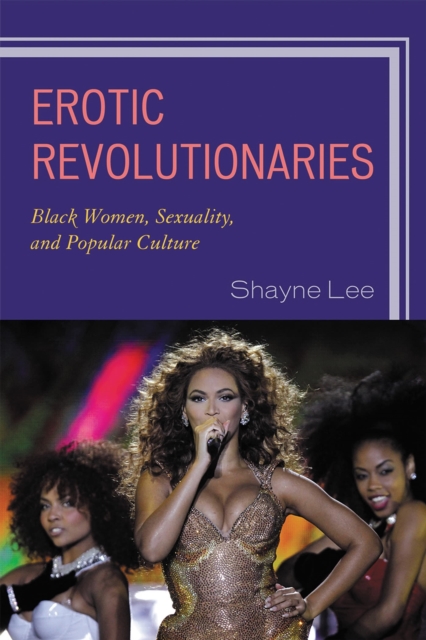
Erotic Revolutionaries
Why is there no 'pro-sex' contingency in black feminist scholarship? Why do so few African-American scholars expound on issues celebrating female sexual pleasure? Perhaps the answers to these questions reside within a discursive matrix of sexual repression commonly referred to as the politics of respectability, and its rein on black sexual politics. In Erotic Revolutionaries: Black Women, Sexuality, and Popular Culture, sociologist Shayne Lee steers black sexual politics toward a more sex-positive trajectory. Introducing feminist analysis to a conceptual mZnage ^ trois of scripting theory, media representation, and black sexual politics, Lee considers the ways in which the feminist quest for social and sexual equality can delve into popular culture to see the production of subversive scripts for female sexuality and erotic agency. Whereas most feminist scholarship underscores how sexual representations of black women in media are exploitative and problematic, Lee portrays black female celebrities like Janet Jackson, BeyoncZ, Karrine Steffans, Zane, Tyra Banks, Juanita Bynum, Sheryl Underwood and many more as feminists of sorts who afford women access to cultural tools to renegotiate sexual identity and celebrate sexual agency and empowerment. Erotic Revolutionaries navigates the uncharted spaces where social constructionism, third-wave feminism, and black popular culture collide to locate a new site for sexuality studies that is theoretically innovative, politically subversive, and stylistically chic.
eBook

Sisters of the yam : black women and self-recovery
\"In Sisters of the Yam, bell hooks reflects on the ways in which the emotional health of black women has been and continues to be impacted by sexism and racism. Desiring to create a context where black females could both work on their individual efforts for self-actualization while remaining connected to a larger world of collective struggle, Hooks articulates the link between self-recovery and political resistance. Both an expression of the joy of self-healing and the need to be ever vigilant in the struggle for equality, Sisters of the Yam continues to speak to the experience of black womanhood\"-- Provided by publisher.
Book
Female subjectivity in African American women's narratives of enslavement : beyond borders
Female Subjectivity in African American Women s Narratives of Enslavement is a new and innovative study of black women s transformation, which focuses on black women writers who support the notion of separate location for a changed female consciousness.
eBook

The sisters are alright : changing the broken narrative of black women in America
\"Everyone seems to have an opinion about American black women: they need to get married, change their hair, act like 'ladies,' and so on. ... Tamara Winfrey Harris writes [an] account of being a black woman in America and explains why it's time for black women to speak for themselves\"--Provided by publisher.
Book

Talk with You Like a Woman
With this book, Cheryl Hicks brings to light the voices and viewpoints of black working-class women, especially southern migrants, who were the subjects of urban and penal reform in early-twentieth-century New York. Hicks compares the ideals of racial uplift and reform programs of middle-class white and black activists to the experiences and perspectives of those whom they sought to protect and, often, control.In need of support as they navigated the discriminatory labor and housing markets and contended with poverty, maternity, and domestic violence, black women instead found themselves subject to hostility from black leaders, urban reformers, and the police. Still, these black working-class women struggled to uphold their own standards of respectable womanhood. Through their actions as well as their words, they challenged prevailing views regarding black women and morality in urban America. Drawing on extensive archival research, Hicks explores the complexities of black working-class women's lives and illuminates the impact of racism and sexism on early-twentieth-century urban reform and criminal justice initiatives.
eBook