
Catalogue Search | MBRL


Are you sure you want to remove the book from the shelf?

{{itemTitle}}
29
result(s) for
"African American women authors-Intellectual life"
Sort by:


Pauline Hopkins and the American Dream
Pauline Elizabeth Hopkins was perhaps the most prolific black female writer of her time. Between 1900 and 1904, writing mainly for Colored American Magazine, she published four novels, at least seven short stories, and numerous articles that often addressed the injustices and challenges facing African Americans in post-Civil War America. In Pauline Hopkins and the American Dream, Alisha Knight provides the first full-length critical analysis of Hopkins's work. Scholars have frequently situated Hopkins within the domestic, sentimental tradition of nineteenth-century women's writing, with some critics observing that aspects of her writing, particularly its emphasis on the self-made man, seem out of place within the domestic tradition. Knight argues that Hopkins used this often-dismissed theme to critique American society's ingrained racism and sexism. In her \"Famous Men\" and \"Famous Women\" series for Colored American Magazine, she constructed her own version of the success narrative by offering models of African American self-made men and women. Meanwhile, in her fiction, she depicted heroes who fail to achieve success or must leave the United States to do so. Hopkins risked and eventually lost her position at Colored American Magazine by challenging black male leaders, liberal white philanthropists, and white racists-and by conceiving a revolutionary treatment of the American Dream that placed her far ahead of her time. Hopkins is finally getting her due, and this clear-eyed analysis of her work will be a revelation to literary scholars, historians of African American history, and students of women's studies. Alisha Knight is an associate professor of English and American Studies at Washington College. Her published articles include \"Furnace Blasts for the Tuskegee Wizard: Revisiting Pauline E. Hopkins, Booker T. Washington, and the Colored American Magazine,\" which appeared in American Periodicals.
eBook

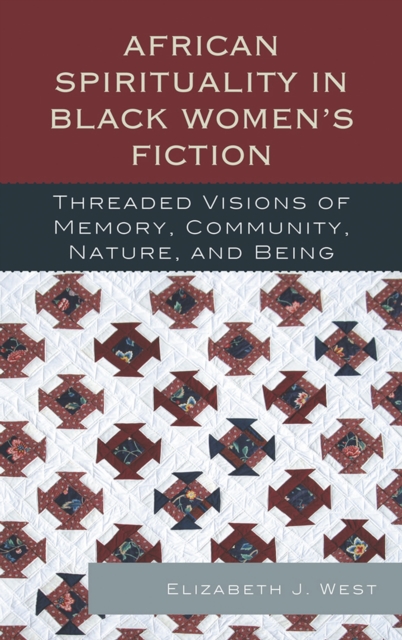
African spirituality in Black women's fiction
African Spirituality in Black Women’s Fiction: Threaded Visions of Memory, Community, Nature and Being is the nexus to scholarship on manifestations of Africanisms in black art and culture, particularly the scant critical works focusing on African metaphysical retentions. This study examines New World African spirituality as a syncretic dynamic of spiritual retentions and transformations that have played prominently in the literary imagination of black women writers. Beginning with the poetry of Phillis Wheatley, African Spirituality in Black Women’s Fiction traces applications and transformations of African spirituality in black women’s writings that culminate in the conscious and deliberate celebration of Africanity in Hurston’s Their Eyes Were Watching God. The journey from Wheatley’s veiled remembrances to Hurston’s explicit gaze of continental Africa represents the literary journey of black women writers to represent Africa as not only a very real creative resource but also a liberating one. Hurston’s icon of black female autonomy and self realization is woven from the thread work of African spiritual principles that date back to early black women’s writings.
eBook


Literary Sisters
Harlem Renaissance writer Dorothy West led a charmed life in many respects. Born into a distinguished Boston family, she appeared in Gershwin's Porgy and Bess, then lived in the Soviet Union with a group that included Langston Hughes, to whom she proposed marriage. She later became friends with Jacqueline Kennedy Onassis, who encouraged her to finish her second novel,The Wedding, which became the octogenarian author's first bestseller.
Literary Sistersreveals a different side of West's personal and professional lives-her struggles for recognition outside of the traditional literary establishment, and her collaborations with talented African American women writers, artists, and performers who faced these same problems. West and her \"literary sisters\"-women like Zora Neale Hurston and West's cousin, poet Helene Johnson-created an emotional support network that also aided in promoting, publishing, and performing their respective works. Integrating rare photos, letters, and archival materials from West's life,Literary Sistersis not only a groundbreaking biography of an increasingly important author but also a vivid portrait of a pivotal moment for African American women in the arts.
eBook
Women's work : an anthology of African-American women's historical writings from antebellum America to the Harlem Renaissance
\"This anthology aims to bring together writings by African-American women between 1832 and 1920, the period when they began to write for American audiences and to use history to comment on political and social issues of the day. The pieces are by more familiar nineteenth-century writers in Black America--like Maria Stewart, Francis E. W. Harper, and Alice Dunbar-Nelson--as well as lesser-known mothers and teachers whose participation in their local educational systems thrust them into national intellectual conversations. Each piece will have a headnote providing biographical information about its author as well as contextual information about its publication and the topic being discussed. The volume will contain a substantial introduction to the overall enterprise of Black women's historical writings. Because the editors are both trained in American studies and religious history, their introduction will particularly highlight religious themes and venues in which these writings were presented. This book should appeal to general readers of books like those in the Schomburg Library series, as well as those who work and teach American history, African American studies, women's studies, American literature, and American religious history\"--Provided by publisher.
Book

Harriet Tubman
Harriet Tubman’s name is known world-wide and her exploits as a self-liberated Underground Railroad heroine are celebrated in children’s literature, film, and history books, yet no major biography of Tubman has appeared since 1943. Jean M. Humez’s comprehensive Harriet Tubman is both an important biographical overview based on extensive new research and a complete collection of the stories Tubman told about her life—a virtual autobiography culled by Humez from rare early publications and manuscript sources. This book will become a landmark resource for scholars, historians, and general readers interested in slavery, the Underground Railroad, the Civil War, and African American women. Born in slavery in Maryland in or around 1820, Tubman drew upon deep spiritual resources and covert antislavery networks when she escaped to the north in 1849. Vowing to liberate her entire family, she made repeated trips south during the 1850s and successfully guided dozens of fugitives to freedom. During the Civil War she was recruited to act as spy and scout with the Union Army. After the war she settled in Auburn, New York, where she worked to support an extended family and in her later years founded a home for the indigent aged. Celebrated by her primarily white antislavery associates in a variety of private and public documents from the 1850s through the 1870s, she was rediscovered as a race heroine by woman suffragists and the African American women’s club movement in the early twentieth century. Her story was used as a key symbolic resource in education, institutional fundraising, and debates about the meaning of \"race\" throughout the twentieth century. Humez includes an extended discussion of Tubman’s work as a public performer of her own life history during the nearly sixty years she lived in the north. Drawing upon historiographical and literary discussion of the complex hybrid authorship of slave narrative literature, Humez analyzes the interactive dynamic between Tubman and her interviewers. Humez illustrates how Tubman, though unable to write, made major unrecognized contributions to the shaping of her own heroic myth by early biographers like Sarah Bradford. Selections of key documents illustrate how Tubman appeared to her contemporaries, and a comprehensive list of primary sources represents an important resource for scholars.
eBook


Autobiography as Activism
A study of three Black Power narratives as instruments for radical social change
Angela Davis, Assata Shakur (a.k.a. JoAnne Chesimard), and Elaine Brown are the only women activists of the Black Power movement who have published book-length autobiographies. In bearing witness to that era, these militant newsmakers wrote in part to educate and to mobilize their anticipated readers.
In this way, Davis'sAngela Davis: An Autobiography(1974), Shakur'sAssata(1987), and Brown'sA Taste of Power: A Black Woman's Story(1992) can all be read as extensions of the writers' political activism during the 1960s.
Margo V. Perkins's critical analysis of their books is less a history of the movement (or of women's involvement in it) than an exploration of the politics of storytelling for activists who choose to write their lives. Perkins examines how activists use autobiography to connect their lives to those of other activists across historical periods, to emphasize the link between the personal and the political, and to construct an alternative history that challenges dominant or conventional ways of knowing.
The histories constructed by these three women call attention to the experiences of women in revolutionary struggle, particularly to the ways their experiences have differed from men's. The women's stories are told from different perspectives and provide different insights into a movement that has been much studied from the masculine perspective. At times they fill in, complement, challenge, or converse with the stories told by their male counterparts, and in doing so, hint at how the present and future can be made less catastrophic because of women's involvement.
The multiple complexities of the Black Power movement become evident in reading these women's narratives against each other as well as against the sometimes strikingly different accounts of their male counterparts.
As Davis, Shakur, and Brown recount events in their lives, they dispute mainstream assumptions about race, class, and gender and reveal how the Black Power struggle profoundly shaped their respective identities.
Recipient of Mississippi University for Women's Eudora Welty Prize, 1999
Margo V. Perkins is an assistant professor of English and American studies at Trinity College in Hartford, Connecticut.
eBook