
Catalogue Search | MBRL


Are you sure you want to remove the book from the shelf?

{{itemTitle}}
5,831
result(s) for
"African American women in literature"
Sort by:


Black Resonance
Ever since Bessie Smith's powerful voice conspired with the \"race records\" industry to make her a star in the 1920s, African American writers have memorialized the sounds and theorized the politics of black women's singing. InBlack Resonance, Emily J. Lordi analyzes writings by Richard Wright, Ralph Ellison, James Baldwin, Gayl Jones, and Nikki Giovanni that engage such iconic singers as Bessie Smith, Billie Holiday, Mahalia Jackson, and Aretha Franklin.
Focusing on two generations of artists from the 1920s to the 1970s,Black Resonancereveals a musical-literary tradition in which singers and writers, faced with similar challenges and harboring similar aims, developed comparable expressive techniques. Drawing together such seemingly disparate works as Bessie Smith's blues and Richard Wright's neglected film ofNative Son, Mahalia Jackson's gospel music and Ralph Ellison'sInvisible Man, each chapter pairs one writer with one singer to crystallize the artistic practice they share: lyricism, sincerity, understatement, haunting, and the creation of a signature voice. In the process, Lordi demonstrates that popular female singers are not passive muses with raw, natural, or ineffable talent. Rather, they are experimental artists who innovate black expressive possibilities right alongside their literary peers.
The first study of black music and literature to centralize the music of black women,Black Resonanceoffers new ways of reading and hearing some of the twentieth century's most beloved and challenging voices.
eBook


Light and Legacies
An engaging examination of Black Girl Magic and its
significance in American literature
In Light and Legacies , author Janaka Bowman Lewis
examines Black girlhood in American literature from the
mid-twentieth century to the present. The representation of Black
girlhood in contemporary literature has long remained
underexplored. Through this literary history of \"Black Girl Magic,\"
Lewis offers one of the first studies in this rapidly growing field
of study. Light and Legacies poignantly showcases the
activist dimensions of creative literature through work by women
writers such as Toni Morrison and Toni Cade. As vectors of protest,
these stories reflect historical events while also creating an
enduring space of liberation and expression. The book provides
didactic and reflective portrayals of the Black experience-an
experience that has long been misunderstood. In a work both
enlightening and personal, Lewis brilliantly weaves accounts of her
own journey together with the liberating stories that shaped her
and so many others.
eBook

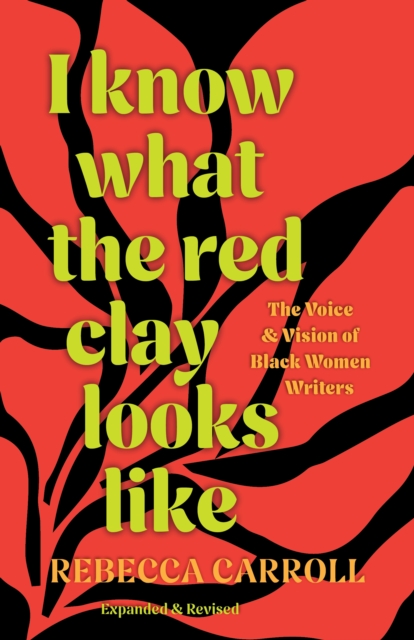
I Know What the Red Clay Looks Like
Thirty years after its original publication, this newly imagined edition brings the work and musings of fifteen Black literary luminaries in conversation with a new generation of writers and readers.The first edition of I Know What the Red Clay Looks Like, published in 1994, remains an essential text for readers of Black feminist literature in all genres. Featuring interviews with and excerpts by writers like Rita Dove, Pearl Cleage, Barbara Neely, June Jordan, and others, this indispensable work speaks to the intersections of politics and art-making along the lines of race, gender, sexuality, and class.Now, writer and cultural critic Rebecca Carroll presents the original conversations alongside personalized introductions by some of the brightest voices in today s literary world, including Donika Kelly, Safiya Sinclair, Diamond Sharp, and Chanda Prescod-Weinstein, among others. This new edition also includes an introductory poem by Morgan Parker, a foreword by Salamishah Tillet, and a new author s note. The new contributors carry the torch of the original interviewees lives and words with heart, rigor, gratitude, and radical imagination, illuminating how these conversations are about more than just writing they are about life, relationships, joy, gratitude, wellness, and self-preservation.I Know What the Red Clay Looks Like is a book unbound by time, lifting up a chorus of past and present voices. Paying homage to a historic lineage of Black feminist writers and their impact on our current literary landscape, it is a book by and for the storytellers, the poets, the playwrights, the dreamers, and all readers interested in what it means to make art within and from marginalized spaces.
eBook

A reader's guide to Zora Neale Hurston's Their eyes were watching god
\"An introduction to Zora Neale Hurston's novel Their eyes were watching God for high school students, which includes biographical background on the author, explanations of various literary devices and techniques, and literary criticism for the novice reader\"--Provided by publisher.
BOOK
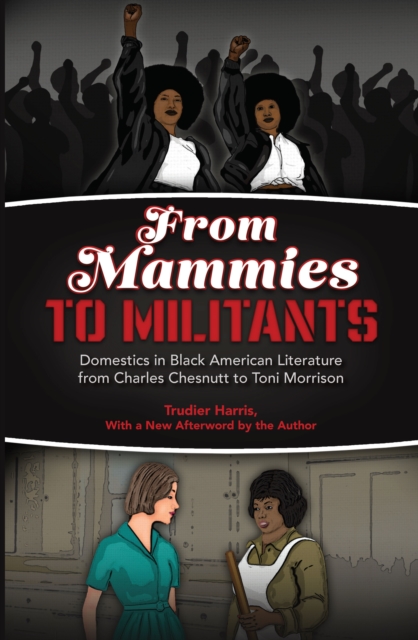
From Mammies to Militants
Welfare queen, hot momma, unwed mother: these stereotypes of Black women share their historical conception in the image of the Black woman as domestic. Focusing on the issue of stereotypes, the new edition of Trudier Harris's classic 1982 study From Mammies to Militants examines the position of the domestic in Black American literature with a new afterword bringing her analysis into the present. From Charles Chesnutt's The Marrow of Tradition to Toni Morrison's The Bluest Eye, Black writers, some of whom worked as maids themselves, have manipulated the stereotype in a strategic way as a figure to comment on Black-white relations or to dramatize the conflicts of the Black protagonists. In fact, the characters themselves, like real-life maids, often use the stereotype to their advantage or to trick their oppressors. Harris combines folkloristic, sociological, historical, and psychological analyses with literary ones, drawing on her own interviews with Black women who worked as domestics. She explores the differences between Northern and Southern maids and between \"mammy\" and \"militant.\" Her invaluable book provides a sweeping exploration of Black American writers of the twentieth century, with extended discussion of works by Charles Chesnutt, Kristin Hunter, Toni Morrison, Richard Wright, Ann Petry, William Melvin Kelley, Alice Childress, John A. Williams, Douglas Turner Ward, Barbara Woods, Ted Shine, and Ed Bullins. Often privileging political statements over realistic characterization in the design of their texts, the authors in Harris's study urged Black Americans to take action to change their powerless conditions, politely if possible, violently if necessary. Through their commitment to improving the conditions of Black people in America, these writers demonstrate the connectedness of art and politics. In her new afterword, \"From Militants to Movie Stars,\" Harris looks at domestic workers in African American literature after the original publication of her book in 1982. Exploring five subsequent literary treatments of Black domestic workers from Ernest J. Gaines's A Lesson Before Dying to Lynn Nottage's By the Way, Meet Vera Stark, Harris tracks how the landscape of representation of domestic workers has broken with tradition and continues to transform into something entirely new.
eBook


Our Mothers, Our Powers, Our Texts
\"Washington writes supple and thoughtful prose and creatively integrates African and African-derived terminology, which never distract the reader. I consider Our Mothers, Our Powers, Our Texts not only a brilliant study, but also a model to be emulated.\" -- Ousseynou B. Traore, William Patterson UniversityÀjé is a Yoruba word that signifies a spiritual power of vast potential, as well as the human beings who exercise that power. Although both men and women can have Àjé, its owners and controllers are women, the literal and cosmic Mothers who are revered as the gods of society. Because of its association with female power, its invisibility and profundity, Àjé is often misconstrued as witchcraft. However, as Teresa N. Washington points out in Our Mothers, Our Powers, Our Texts, Àjé is central to the Yoruba ethos and cosmology. Not only does it underpin the concepts of creation and creativity, but as a force of justice and retribution, Àjé is essential to social harmony and balance. As Africans were forced into exile and enslavement, they took Àjé with them and continued its work of creating, destroying, harming, and healing in the New World.Washington seeks out Àjé's subversive power of creation and re-creation in a diverse range of Africana texts, from both men and women, from both oral and contemporary literature, and across space and time. She guides readers to an understanding of the symbolic, methodological, and spiritual issues that are central to important works by Africana writers but are rarely elucidated by Western criticism. She begins with an examination of the ancient forms of Àjé in Yoruba culture, which creates a framework for innovative readings of important works by Africana writers, including Zora Neale Hurston, Toni Morrison, Ben Okri, Wole Soyinka, Jamaica Kincaid, and Ntozake Shange. This rich analysis will appeal to readers of
Africana literature, African religion and philosophy, feminist studies, and comparative literature.
eBook