
Catalogue Search | MBRL


Are you sure you want to remove the book from the shelf?

{{itemTitle}}
382
result(s) for
"African American women in popular culture"
Sort by:

Token Black girl : a memoir
\"Token Black Girl unpacks the adverse effects of insidious white supremacy in the media--both unconscious and strategic--to tell a personal story about recovery from damaging concepts of perfection, celebrating identity, and demolishing social conditioning\"--Book jacket flap.
Book

See Me Naked
Pleasure refers to the freedom to pursue a desire, deliberately sought in order to satisfy the self. Putting pleasure first is liberating. During their extraordinary lives, Lena Horne, Moms Mabley, Yolande DuBois, and Memphis Minnie enjoyed pleasure as they gave pleasure to both those in their lives and to the public at large. They were Black women who, despite their public profiles, whether through Black society or through the world of entertainment, discovered ways to enjoy pleasure.They left home, undertook careers they loved, and did what they wanted, despite perhaps not meeting the standards for respectability in the interwar era. See Me Naked looks at these women as representative of other Black women of the time, who were watched, criticized, and judged by their families, peers, and, in some cases, the government, yet still managed to enjoy themselves. Among the voyeurs of Black women was Langston Hughes, whose novel Not Without Laughter was clearly a work of fiction inspired by women he observed in public and knew personally, including Black clubwomen, blues performers, and his mother. How did these complicated women wrest loose from the voyeurs to define their own sense of themselves? At very young ages, they found and celebrated aspects of themselves. Using examples from these women's lives, Green explores their challenges and achievements.
eBook


Buy Black
Buy Black examines the role American Black women play in
Black consumption in the US and worldwide, with a focus on their
pivotal role in packaging Black feminine identity since the 1960s.
Through an exploration of the dolls, princesses, and rags-to-riches
stories that represent Black girlhood and womanhood in everything
from haircare to Nicki Minaj's hip-hop, Aria S. Halliday spotlights
how the products created by Black women have furthered Black
women's position as the moral compass and arbiter of Black racial
progress.
Far-ranging and bold, Buy Black reveals what attitudes
inform a contemporary Black sensibility based in representation and
consumerism. It also traces the parameters of Black symbolic power,
mapping the sites where intraracial ideals of blackness, womanhood,
beauty, play, and sexuality meet and mix in consumer and popular
culture.
eBook

Black looks : race and representation
\"In the critical essays collected in Black Looks, bell hooks interrogates old narratives and argues for alternative ways to look at blackness, black subjectivity, and whiteness. Her focus is on spectatorship--in particular, the way blackness and black people are experienced in literature, music, television, and especially film--and her aim is to create a radical intervention into the way we talk about race and representation. As she describes: 'The essays in Black Looks are meant to challenge and unsettle, to disrupt and subvert.' As students, scholars, activists, intellectuals, and any other readers who have engaged with the book since its original release in 1992 can attest, that's exactly what these pieces do\"-- Provided by publisher.
Book

Clinging to Mammy
Loving, hating, pitying, or pining for mammy became a way for Americans to make sense of shifting economic, social, and racial realities. Assertions of black contentment with servitude alleviated white fears while reinforcing racial hierarchy. McElya's stories expose the power and reach of this myth, not only in advertising, films, and literature about the South, but also in national monument proposals, child custody cases, New Negro activism, anti-lynching campaigns, and the civil rights movement.
eBook
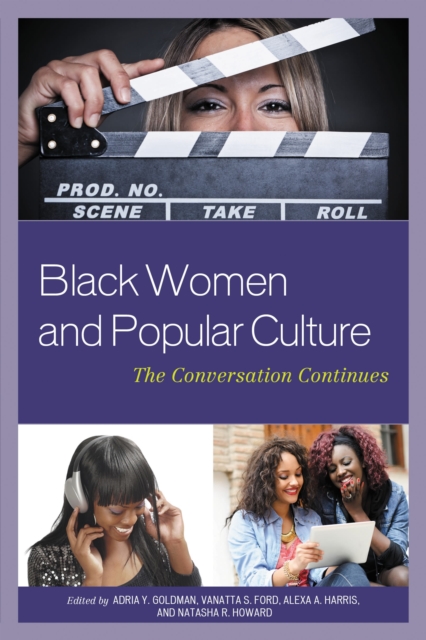
Black women and popular culture
With the emergence of popular culture phenomena such as reality television, blogging, and social networking sites, it is important to examine the representation of Black women and the potential implications of those images, messages, and roles. Black Women and Popular Culture: The Conversation Continues provides such a comprehensive analysis. Using an array of theoretical frameworks and methodologies, this collection features cutting edge research from scholars interested in the relationship among media, society, perceptions, and Black women. The uniqueness of this book is that it serves as a compilation of “hot topics” including ABC’s Scandal, Beyoncé’s Visual Album, and Oprah’s Instagram page. Other themes have roots in reality television, film, and hip hop, as well as issues of gender politics, domestic violence, and colorism. The discussion also extends to the presentation and inclusion of Black women in advertising, print, and digital media.
eBook
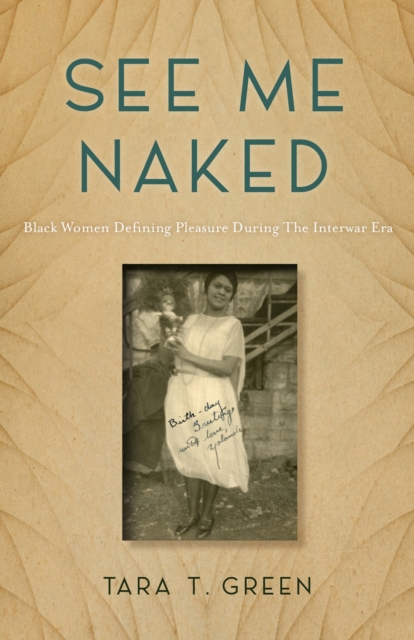
See me naked: Black women defining pleasure during the interwar era
Pleasure refers to the freedom to pursue a desire, deliberately sought in order to satisfy the self. Putting pleasure first is liberating. During their extraordinary lives, Lena Horne, Moms Mabley, Yolande DuBois, and Memphis Minnie enjoyed pleasure as they gave pleasure to both those in their lives and to the public at large. They were Black women who, despite their public profiles, whether through Black society or through the world of entertainment, discovered ways to enjoy pleasure.They left home, undertook careers they loved, and did what they wanted, despite perhaps not meeting the standards for respectability in the interwar era. See Me Naked looks at these women as representative of other Black women of the time, who were watched, criticized, and judged by their families, peers, and, in some cases, the government, yet still managed to enjoy themselves. Among the voyeurs of Black women was Langston Hughes, whose novel Not Without Laughter was clearly a work of fiction inspired by women he observed in public and knew personally, including Black clubwomen, blues performers, and his mother. How did these complicated women wrest loose from the voyeurs to define their own sense of themselves? At very young ages, they found and celebrated aspects of themselves. Using examples from these women's lives, Green explores their challenges and achievements.
eBook
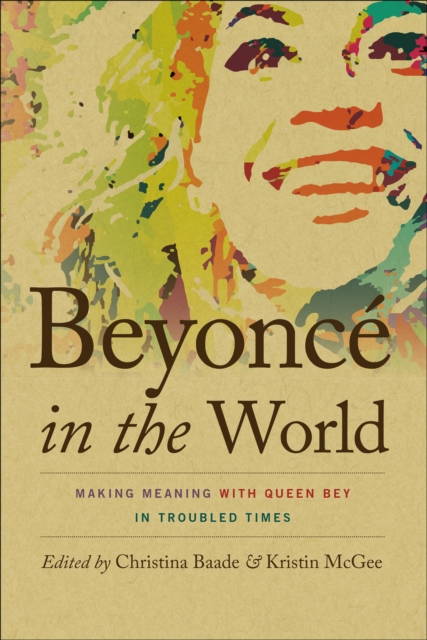
Beyonce in the world: finding art, activism, and community with Queen Bey in troubled times
\"Bringing together interdisciplinary scholars with expertise in gender and ethnic studies; communication and cultural studies; and music, religion, history, and literature, this volume draws on a diversity of perspectives and methods to investigate the artistic meanings, cultural contexts, and significance of Beyoncé's LEMONADE\"--.
eBook
