
Catalogue Search | MBRL


Are you sure you want to remove the book from the shelf?

{{itemTitle}}
72
result(s) for
"African American-Jewish relations"
Sort by:

Jews and the Civil War
At least 8,000 Jewish soldiers fought for the Union and Confederacy during the Civil War. A few served together in Jewish companies while most fought alongside Christian comrades. Yet even as they stood shoulder-to-shoulder on the front lines, they encountered unique challenges.In Jews and the Civil War, Jonathan D. Sarna and Adam Mendelsohn assemble for the first time the foremost scholarship on Jews and the Civil War, little known even to specialists in the field. These accessible and far-ranging essays from top scholars are grouped into seven thematic sections--Jews and Slavery, Jews and Abolition, Rabbis and the March to War, Jewish Soldiers during the Civil War, The Home Front, Jews as a Class, and Aftermath--each with an introduction by the editors. Together they reappraise the impact of the war on Jews in the North and the South, offering a rich and fascinating portrait of the experience of Jewish soldiers and civilians from the home front to the battle front.
eBook
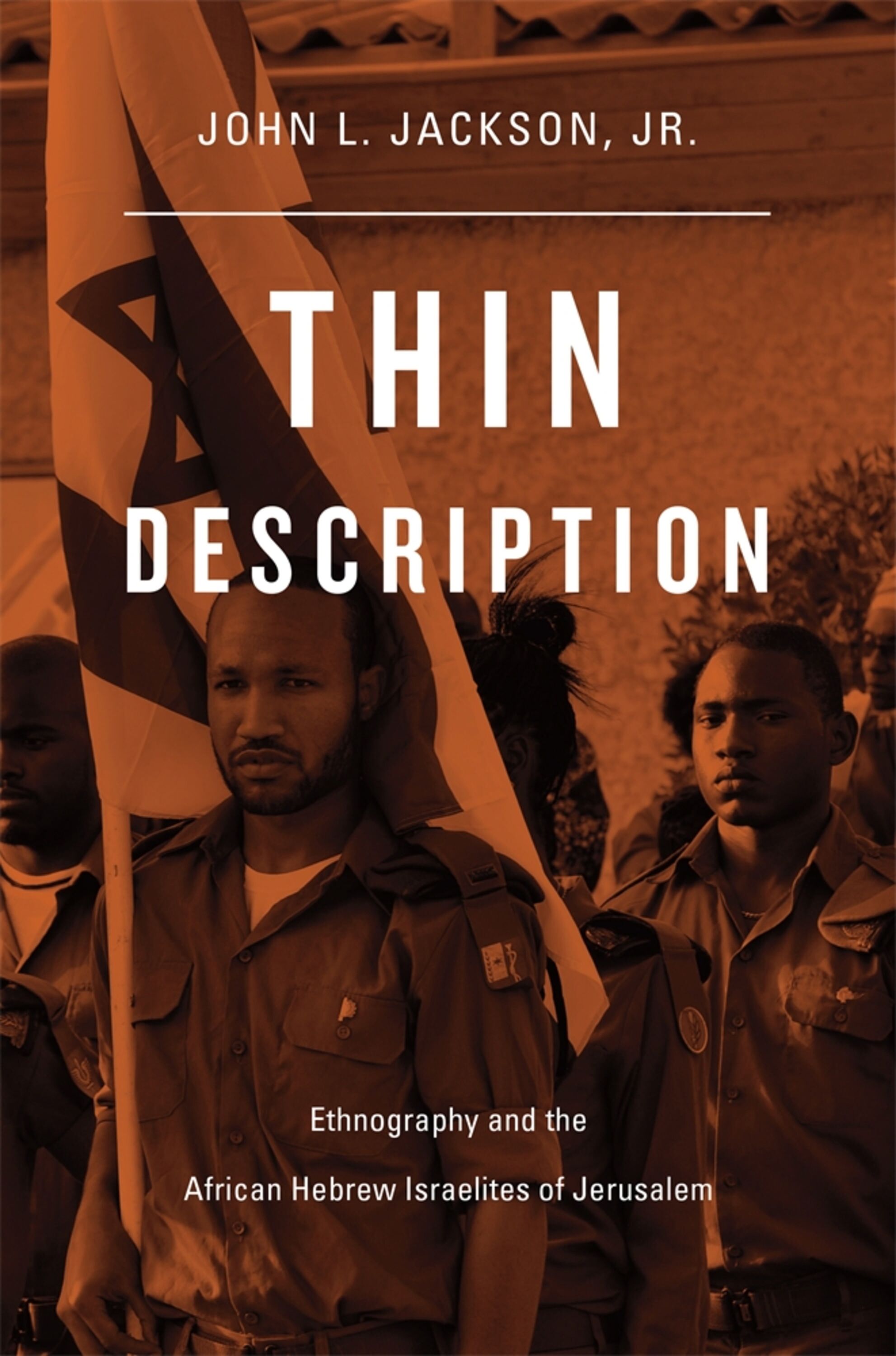
Thin description : ethnography and the African Hebrew Israelites of Jerusalem
African Hebrew Israelites of Jerusalem are often dismissed as a fringe cult, but John L. Jackson questions what \"fringe\" means when cultural practices of every stripe circulate freely on the Internet. He reveals how race, religion, and ethnographic representation must be understood anew in the 21st century lest we reenact past errors.
eBook
Nothing Like Sunshine
Rabbi Ben Kamin has written a definitive personal expression about race, coming of age in the 1960s, a forbidden friendship, and his personal love for Dr. Martin Luther King Jr. This is a story that spans a four-decade search for a lost high school chum, a deep misunderstanding, and a coming to terms with an America painfully evolving from the blood of MLK to the promise of Barack Obama.The book is a remembrance of Kamin's life at Cincinnati's notorious Woodward High School, a microcosm of the 1960s and of America itself, as well as detailing Kamin's search-for Clifton, for America, for the key to understanding what race relations really are in the United States. Simultaneously, it is the story of the emerging rabbi's search for the legacy of his spiritual mentor, Dr. Martin Luther King Jr., taking Kamin from Cincinnati to Cleveland to Memphis to New Orleans and other points, and constantly bringing him home to his friend Clifton and \"the heaving hallways\" of that high school.
eBook

Imagining each other : Blacks and Jews in contemporary American literature
Explores the complex ways in which Blacks and Jews have portrayed each other in recent American literature. Imagining Each Other explores Black-Jewish relations by examining the complex ways they have portrayed each other in recent American literature. It illuminates their dramatic alliances and conflicts and their dilemmas of identity and assimilation, and addresses the persistent questions of ethnic division and economic inequality that have so encompassed the Black-Jewish narrative in America. Focusing primarily on the 1960s and its aftermath, the book reveals how Jewish and African Americans view each other through a complex dialectic of identification and difference, channeled by ever-shifting positions within American society. Through the works of Richard Wright, Saul Bellow, Bernard Malamud, Amiri Baraka, Paule Marshall, Grace Paley, and others, Goffman unfolds a story of two peoples with powerful biblical and mythic connections that replay themselves in contemporary circumstances. In doing so, he uncovers layers of meaning in works that dramatize this turbulent, paradoxical relationship, and reveals how this relationship is paradigmatic of multicultural American self-invention.
eBook

We Jews and Blacks : memoir with poems
A central theme of this memoir by poet and translator Willis Barnstone is that of labels -- names, ethnicities, all distinctions that cause suspicion, anger, and destruction. A fresh and significant contribution to American letters, We Jews and Blacks wrestles with problems of identity, difference, and the human condition. It is a dramatic, whimsical, and literary work that also contains a number of Barnstone's poems, which offer a second view of an event, a crystallization of his thinking, both sorrowful and joyful. The book includes a dialogue with Yusef Komunyakaa and a small selection of his poems.
eBook
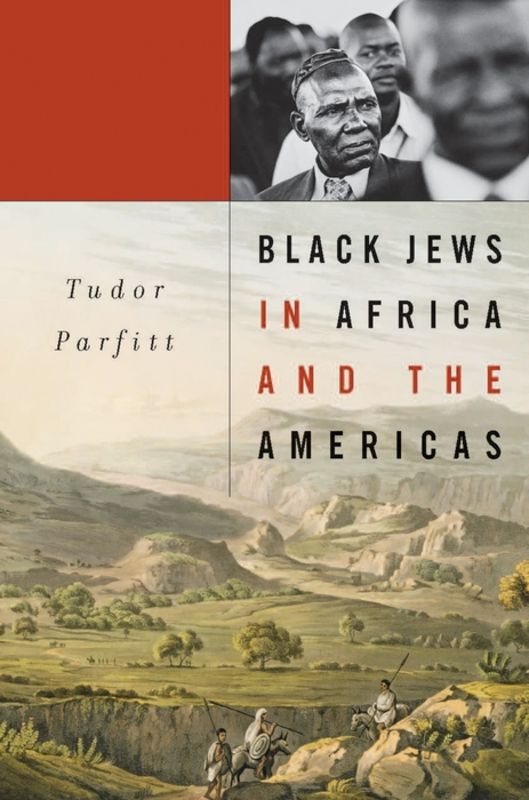
Black Jews in Africa and the Americas
Tudor explains how many African peoples came to think of themselves as descendants of the ancient tribes of Israel. Pursuing medieval and modern race narratives over a millennium in which Jews were cast as black and black Africans were cast as Jews, he reveals a complex interaction between religious and racial labels and their political uses.
eBook

JEWISH FLOW
This article explores performances of Jewish identity in hip-hop music, specifically in relation to the racial dynamics underpinning modes of a rapper’s authentic representation. Hip-hop music, first developed within and still largely defined as a product of African-American culture, has included Jews in various, complicated ways. After surveying antisemitic representations of Jews, the article examines the methods in which white and black Jewish rappers have articulated their own sense of Jewishness in lyrics and music videos. As white rappers, Jews often either depict themselves seriously by aligning with African-Americans, or mark their difference through self-deprecating caricatures for ironic humor. A more recent subgenre of rappers, comprised of African-Americans who have converted to Judaism, present Jewish identity within a religious sphere misleadingly defined as white. Each of these representations underscores the role race plays in designating the self-identification of Jewish rappers.
Journal Article

Facing Black and Jew
A reading of African American and Jewish American writers from Henry Roth and Ralph Ellison to Philip Roth and David Bradley. Reading the work of such writers alongside and through one another, Newton's book offers an original way of juxtaposing two major traditions in modern American literature, and rethinking the sometimes vexed relationship between two constituencies ordinarily confined to sociopolitical or media commentary alone. Newton combines Emmanuel Levinas's ethical philosophy and Walter Benjamin's theory of allegory in shaping an innovative kind of ethical-political criticism. Through artful, dialogical readings of Saul Bellow and Chester Himes, David Mamet and Anna Deavere Smith, and others, Newton seeks to represent American Blacks and Jews outside the distorting mirror of 'Black-Jewish Relations', and restrictive literary histories alike. A final chapter addresses the Black/Jewish dimension of the O. J. Simpson trial.
eBook
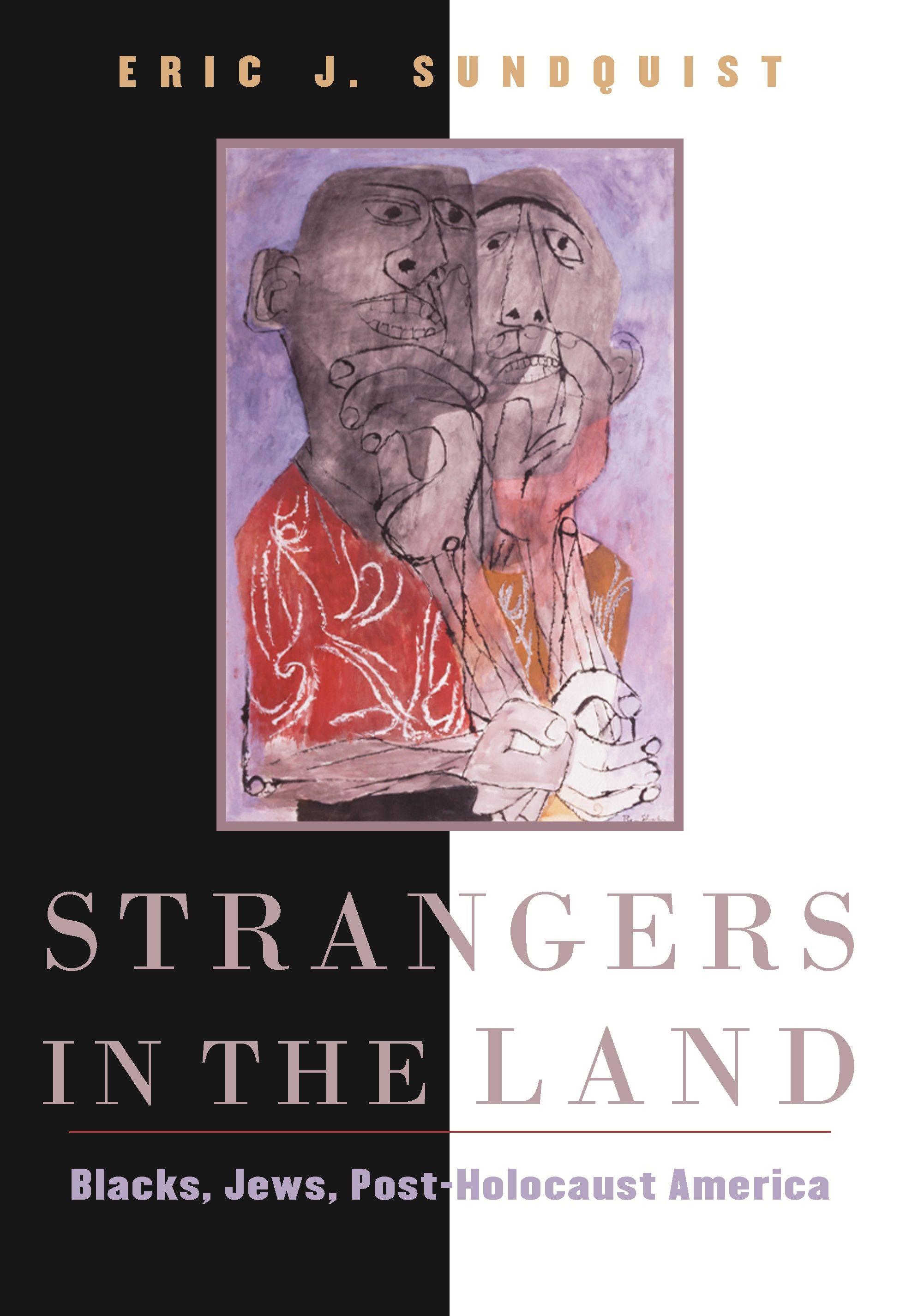
Strangers in the land : Blacks, Jews, post-Holocaust America
In a culture deeply divided along ethnic lines, the idea that the relationship between blacks and Jews was once thought special—indeed, critical to the cause of civil rights—might seem strange. Yet the importance of blacks for Jews and Jews for blacks in conceiving of themselves as Americans, when both remained outsiders to the privileges of full citizenship, is a matter of voluminous but perplexing record. It is this record, written across the annals of American history and literature, culture and society, that Eric Sundquist investigates. A monumental work of literary criticism and cultural history, Strangers in the Land draws upon politics, sociology, law, religion, and popular culture to illuminate a vital, highly conflicted interethnic partnership over the course of a century. Sundquist explores how reactions to several interlocking issues—the biblical Exodus, the Holocaust, Zionism, and the state of Israel—became critical to black–Jewish relations. He charts volatile debates over social justice and liberalism, anti-Semitism and racism, through extended analyses of fiction by Bernard Malamud, Paule Marshall, Harper Lee, and William Melvin Kelley, as well as the juxtaposition of authors such as Saul Bellow and John A. Williams, Lori Segal and Anna Deavere Smith, Julius Lester and Philip Roth. Engaging a wide range of thinkers and writers on race, civil rights, the Holocaust, slavery, and related topics, and cutting across disciplines to set works of literature in historical context, Strangers in the Land offers an encyclopedic account of questions central to modern American culture.
eBook
