
Catalogue Search | MBRL


Are you sure you want to remove the book from the shelf?

{{itemTitle}}
9,337
result(s) for
"African Americans Food."
Sort by:

Recipes for respect : African American meals and meaning
\"Food studies, once trendy, has settled into the public arena. In the academy, scholarship on food and literary culture constitutes a growing river within literary and cultural studies, but writing on African American food and dining remains a small tributary. Recipes for Respect fills this lacuna, illuminating the role of foodways in African American culture. Beginning with the cooks in Uncle Tom's Cabin, if not before, and continuing nearly to the present day, black Americans have been unfairly stereotyped as uneducated culinary geniuses. Rafia Zafar addresses this disparity and highlights not only the long tradition of educated African Americans within our national gastronomic history but also the literary and entrepreneurial strategies for civil rights and respectability woven into the written records of dining, cooking, and serving. Whether revealed in cookbooks or fiction, memoirs or hotel-keeping manuals, agricultural extension bulletins or library collections, the knowledge of foodways supported black strategies for the maintenance of historical memory, the assertion of self-reliance, and the achievement of dignity and civil rights. If, to follow Mary Douglas's dictum, food is a field of action--that is, a venue for social intimacy, exchange, or aggression--African American writing about foodways constitutes an underappreciated intervention into the racialized social and intellectual spaces of the United States\"-- Provided by publisher.
Book

At the Table of Power
At the Table of Power is both a cookbook and a culinary history that intertwines social issues, personal stories, and political commentary. Renowned culinary historian Diane M. Spivey offers a unique insight into the historical experience and cultural values of African America and America in general by way of the kitchen. From the rural country kitchen and steamboat floating palaces to marketplace street vendors and restaurants in urban hubs of business and finance, Africans in America cooked their way to positions of distinct superiority, and thereby indispensability. Despite their many culinary accomplishments, most Black culinary artists have been made invisible—until now. Within these pages, Spivey tells a powerful story beckoning and daring the reader to witness this culinary, cultural, and political journey taken hand in hand with the fight of Africans in America during the foundation years, from colonial slavery through the Reconstruction era. These narratives, together with the recipes from the nineteenth and twentieth centuries, expose the politics of the day and offer insight on the politics of today. African American culinary artists, Spivey concludes, have more than earned a rightful place at the table of culinary contribution and power.
eBook

Dethroning the deceitful pork chop : rethinking African American foodways from slavery to Obama
Uses a variety of methodological perspectives to demonstrate that throughout time black people have used both overt and subtle food practices to resist white oppression.
Book

Building houses out of chicken legs
Chicken--both the bird and the food--has played multiple roles in the lives of African American women from the slavery era to the present. It has provided food and a source of income for their families, shaped a distinctive culture, and helped women define and exert themselves in racist and hostile environments. Psyche A. Williams-Forson examines the complexity of black women's legacies using food as a form of cultural work. While acknowledging the negative interpretations of black culture associated with chicken imagery, Williams-Forson focuses her analysis on the ways black women have forged their own self-definitions and relationships to the \"gospel bird.\"Exploring material ranging from personal interviews to the comedy of Chris Rock, from commercial advertisements to the art of Kara Walker, and from cookbooks to literature, Williams-Forson considers how black women arrive at degrees of self-definition and self-reliance using certain foods. She demonstrates how they defy conventional representations of blackness and exercise influence through food preparation and distribution. Understanding these complex relationships clarifies how present associations of blacks and chicken are rooted in a past that is fraught with both racism and agency. The traditions and practices of feminism, Williams-Forson argues, are inherent in the foods women prepare and serve.
eBook

African American food culture
A look at foods that are popular in the African American culture.
Book

Eating in the side room : food, archaeology, and African American identity
In Eating in the Side Room , Mark Warner uses the archaeological data of food remains recovered from excavations in Annapolis, Maryland, and the Chesapeake to show how African Americans established identity in the face of pervasive racism and marginalization.
By studying the meat purchasing habits of two African American families--the Maynards and the Burgesses--Warner skillfully demonstrates that while African Americans were actively participating in a growing mass consumer society, their food choices subtly yet unequivocally separated them from white society. The side rooms where the two families ate their meals not only satisfied their hunger but also their need to maintain autonomy from an oppressive culture. As a result, Warner claims, the independence that African Americans practiced during this time helped prepare their children and grandchildren to overcome persistent challenges of white oppression.
eBook

Getting what we need ourselves : how food has shaped African American life
\"[T]races the history of African American food habits from West African origins through the twenty-first century, offering a unique set of insights into the daily concerns of black people in the US. The book demonstrates that from capture and enslavement through emancipation, the civil rights movement, and beyond, African American have embraced an understanding of the importance of food that goes beyond merely having enough to eat\"-- Provided by publisher.
Book

The Jemima Code
Winner, James Beard Foundation Book Award, 2016 Art of
Eating Prize, 2015 BCALA Outstanding Contribution to Publishing
Citation, Black Caucus of the American Library Association,
2016
Women of African descent have contributed to America's food
culture for centuries, but their rich and varied involvement is
still overshadowed by the demeaning stereotype of an illiterate
\"Aunt Jemima\" who cooked mostly by natural instinct. To discover
the true role of black women in the creation of American, and
especially southern, cuisine, Toni Tipton-Martin has spent years
amassing one of the world's largest private collections of
cookbooks published by African American authors, looking for
evidence of their impact on American food, families, and
communities and for ways we might use that knowledge to inspire
community wellness of every kind.
The Jemima Code presents more than 150 black cookbooks
that range from a rare 1827 house servant's manual, the first book
published by an African American in the trade, to modern classics
by authors such as Edna Lewis and Vertamae Grosvenor. The books are
arranged chronologically and illustrated with photos of their
covers; many also display selected interior pages, including
recipes. Tipton-Martin provides notes on the authors and their
contributions and the significance of each book, while her chapter
introductions summarize the cultural history reflected in the books
that follow. These cookbooks offer firsthand evidence that African
Americans cooked creative masterpieces from meager provisions,
educated young chefs, operated food businesses, and nourished the
African American community through the long struggle for human
rights. The Jemima Code transforms America's most maligned
kitchen servant into an inspirational and powerful model of
culinary wisdom and cultural authority.
eBook

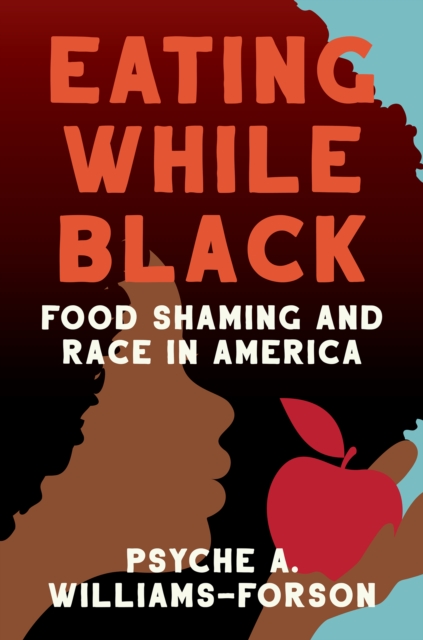
Eating While Black
Psyche A. Williams-Forson is one of our leading thinkers about food
in America. In Eating While Black , she offers her
knowledge and experience to illuminate how anti-Black racism
operates in the practice and culture of eating. She shows how mass
media, nutrition science, economics, and public policy drive
entrenched opinions among both Black and non-Black Americans about
what is healthful and right to eat. Distorted views of how and what
Black people eat are pervasive, bolstering the belief that they
must be corrected and regulated. What is at stake is nothing less
than whether Americans can learn to embrace nonracist
understandings and practices in relation to food. Sustainable
culture-what keeps a community alive and thriving-is essential to
Black peoples' fight for access and equity, and food is central to
this fight. Starkly exposing the rampant shaming and policing
around how Black people eat, Williams-Forson contemplates food's
role in cultural transmission, belonging, homemaking, and survival.
Black people's relationships to food have historically been
connected to extreme forms of control and scarcity-as well as to
stunning creativity and ingenuity. In advancing dialogue about
eating and race, this book urges us to think and talk about food in
new ways in order to improve American society on both personal and
structural levels.
eBook