
Catalogue Search | MBRL


Are you sure you want to remove the book from the shelf?

{{itemTitle}}
5
result(s) for
"African Americans Louisiana New Orleans Music History and criticism."
Sort by:


Creating Jazz Counterpoint
The bookJazzmen(1939) claimed New Orleans as the birthplace of jazz and introduced the legend of Buddy Bolden as the \"First Man of Jazz.\" Much of the information that the book relied on came from a highly controversial source: Bunk Johnson. He claimed to have played with Bolden and that together they had pioneered jazz.
Johnson made many recordings talking about and playing the music of the Bolden era. These recordings have been treated with skepticism because of doubts about Johnson's credibility. Using oral histories, theJazzmeninterview notes, and unpublished archive material, this book confirms that Bunk Johnson did play with Bolden. This confirmation, in turn, has profound implications for Johnson's recorded legacy in describing the music of the early years of New Orleans jazz.
New Orleans jazz was different from ragtime in a number of ways. It was a music that was collectively improvised, and it carried a new tonality--the tonality of the blues. How early jazz musicians improvised together and how the blues became a part of jazz has until now been a mystery. Part of the reason New Orleans jazz developed as it did is that all the prominent jazz pioneers, including Buddy Bolden, Bunk Johnson, Louis Armstrong, Sidney Bechet, Johnny Dodds, and Kid Ory, sang in barbershop (or barroom) quartets. This book describes in both historical and musical terms how the practices of quartet singing were converted to the instruments of a jazz band, and how this, in turn, produced collectively improvised, blues-inflected jazz, that unique sound of New Orleans.
eBook

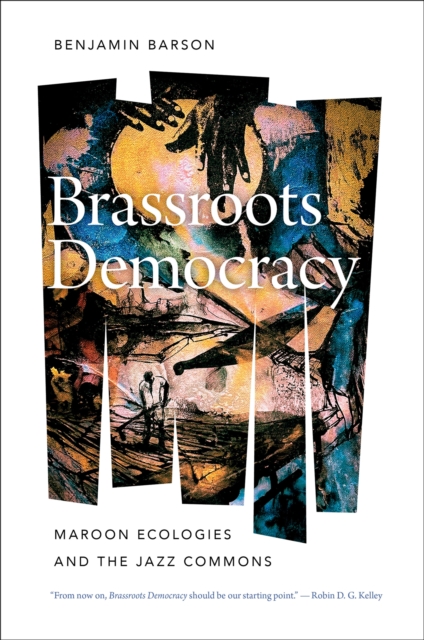
Brassroots Democracy
Brassroots Democracy recasts the birth of jazz, unearthing vibrant narratives of New Orleans musicians to reveal how early jazz was inextricably tied to the mass mobilization of freedpeople during Reconstruction and the decades that followed.
eBook

Bounce
Over the course of the twentieth century, African Americans in New Orleans helped define the genres of jazz, rhythm and blues, soul, and funk. In recent decades, younger generations of New Orleanians have created a rich and dynamic local rap scene, which has revolved around a danceoriented style called “bounce.” Hiphop has been the latest conduit for a “New Orleans sound” that lies at the heart of many of the city’s bestknown contributions to earlier popular music genres. Bounce, while globally connected and constantly evolving, reflects an enduring cultural continuity that reaches back and builds on the city’s rich musical and cultural traditions. In this book, the popular music scholar and filmmaker Matt Miller explores the ways in which participants in New Orleans’s hiphop scene have collectively established, contested, and revised a distinctive style of rap that exists at the intersection of deeply rooted vernacular music traditions and the modern, globalized economy of commercial popular music. Like other forms of grassroots expressive culture in the city, New Orleans rap is a site of intense aesthetic and economic competition that reflects the creativity and resilience of the city’s poor and workingclass African Americans.
eBook