
Catalogue Search | MBRL


Are you sure you want to remove the book from the shelf?

{{itemTitle}}
571
result(s) for
"African Americans Southern States History."
Sort by:


Beyond forty acres and a mule
This collection chronicles the tumultuous history of landowning African American farmers from the end of the Civil War to today. Each essay provides a case study of people in one place at a particular time and the factors that affected their ability to acquire, secure, and protect their land.
The contributors walk readers through a century and a half of African American agricultural history, from the strivings of black farm owners in the immediate post-emancipation period to the efforts of contemporary black farm owners to receive justice through the courts for decades of discrimination by the U.S Department of Agriculture. They reveal that despite enormous obstacles, by 1920 a quarter of African American farm families owned their land, and demonstrate that farm ownership was not simply a departure point for black migrants seeking a better life but a core component of the African American experience.
eBook


Educational Reconstruction: African American Schools in the Urban South, 1865-1890
Tracing the first two decades of state-funded African American schools, Educational Reconstruction addresses the ways in which black Richmonders, black Mobilians, and their white allies created, developed, and sustained a system of African American schools following the Civil War. Hilary Green proposes a new chronology in understanding postwar African American education, examining how urban African Americans demanded quality public schools from their new city and state partners. Revealing the significant gains made after the departure of the Freedmen's Bureau, this study reevaluates African American higher education in terms of developing a cadre of public school educator-activists and highlights the centrality of urban African American protest in shaping educational decisions and policies in their respective cities and states.
eBook


Defending White Democracy
After the Supreme Court ruled school segregation unconstitutional in 1954, southern white backlash seemed to explode overnight. Journalists profiled the rise of a segregationist movement committed to preserving the \"southern way of life\" through a campaign of massive resistance. InDefending White Democracy, Jason Morgan Ward reconsiders the origins of this white resistance, arguing that southern conservatives began mobilizing against civil rights some years earlier, in the era before World War II, when the New Deal politics of the mid-1930s threatened the monopoly on power that whites held in the South.As Ward shows, years before \"segregationist\" became a badge of honor for civil rights opponents, many white southerners resisted racial change at every turn--launching a preemptive campaign aimed at preserving a social order that they saw as under siege. By the time of theBrowndecision, segregationists had amassed an arsenal of tested tactics and arguments to deploy against the civil rights movement in the coming battles. Connecting the racial controversies of the New Deal era to the more familiar confrontations of the 1950s and 1960s, Ward uncovers a parallel history of segregationist opposition that mirrors the new focus on the long civil rights movement and raises troubling questions about the enduring influence of segregation's defenders.
eBook

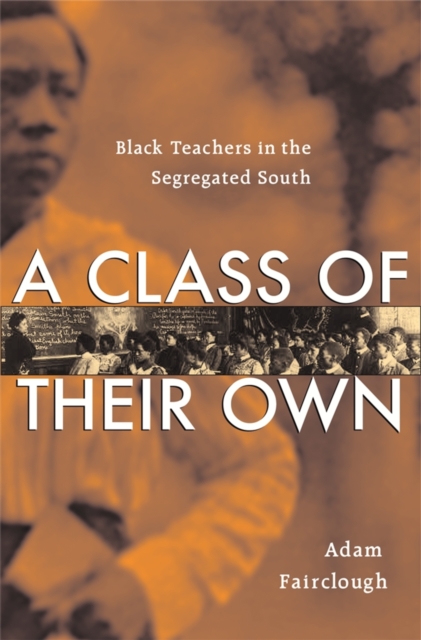
A class of their own
In this major undertaking, civil rights historian Adam Fairclough chronicles the odyssey of black teachers in the South from emancipation in 1865 to integration one hundred years later. A Class of Their Own is indispensable for understanding how blacks and whites interacted after the abolition of slavery, and how black communities coped with the challenges of freedom and oppression.
eBook


The Education of Blacks in the South, 1860-1935
James Anderson critically reinterprets the history of southern black education from Reconstruction to the Great Depression. By placing black schooling within a political, cultural, and economic context, he offers fresh insights into black commitment to education, the peculiar significance of Tuskegee Institute, and the conflicting goals of various philanthropic groups, among other matters.Initially, ex-slaves attempted to create an educational system that would support and extend their emancipation, but their children were pushed into a system of industrial education that presupposed black political and economic subordination. This conception of education and social order--supported by northern industrial philanthropists, some black educators, and most southern school officials--conflicted with the aspirations of ex-slaves and their descendants, resulting at the turn of the century in a bitter national debate over the purposes of black education. Because blacks lacked economic and political power, white elites were able to control the structure and content of black elementary, secondary, normal, and college education during the first third of the twentieth century. Nonetheless, blacks persisted in their struggle to develop an educational system in accordance with their own needs and desires.
eBook