
Catalogue Search | MBRL


Are you sure you want to remove the book from the shelf?

{{itemTitle}}
10
result(s) for
"African literature (English) -- Publishing -- History -- 20th century"
Sort by:

Creating postcolonial literature : African writers and British publishers
Using case studies, this book explores the publishing of African literature, addressing the construction of literary value, relationships between African writers and British publishers, and importance of the African market. It analyses the historical, political and economic conditions framing the emergence of postcolonial literature.
eBook
Africa writes back : the African writers series & the launch of African literature
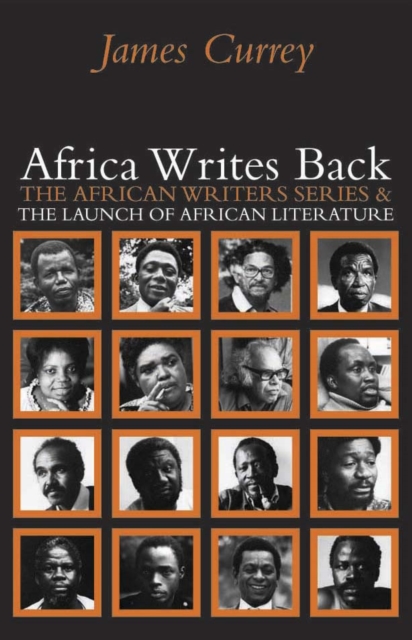
Chinua Achebe's Things Fall Apart provided the impetus for the foundation of Heinemann's African Writers Series in 1962 with Achebe as the editorial adviser. Africa Writes Back presents portraits of the leading characters and the many consultants and readers providing reports and advice to new and established writers.
eBook

Black Writers, White Publishers
Jean Toomer'sCanewas advertised as \"a book about Negroes by a Negro,\" despite his request not to promote the book along such racial lines. Nella Larsen switched the title of her second novel fromNigtoPassing, because an editor felt the original title \"might be too inflammatory.\" In order to publish his first novel as a Book-of-the-Month Club main selection Richard Wright deleted a scene inNative Sondepicting Bigger Thomas masturbating. Toni Morrison changed the last word ofBelovedat her editor's request and switched the title ofParadisefromWarto allay her publisher's marketing concerns.
Although many editors place demands on their authors, these examples invite special scholarly attention given the power imbalance between white editors and publishers and African American authors.Black Writers, White Publishers: Marketplace Politics in Twentieth-Century African American Literatureexamines the complex negotiations behind the production of African American literature.
In chapters on Larsen'sPassing, Ishmael Reed'sMumbo Jumbo, Gwendolyn Brooks'sChildren Coming Home, Morrison's \"Oprah's Book Club\" selections, and Ralph Ellison'sJuneteenth, John K. Young presents the first book-length application of editorial theory to African American literature. Focusing on the manuscripts, drafts, book covers, colophons, and advertisements that trace book production, Young expands upon the concept of socialized authorship and demonstrates how the study of publishing history and practice and African American literary criticism enrich each other.
John K. Young is an associate professor of English at Marshall University. His work has appeared in journals such asCollege English,African American Review, andCritique.
eBook
Africa writes back: the African writers series & the launch of African literature
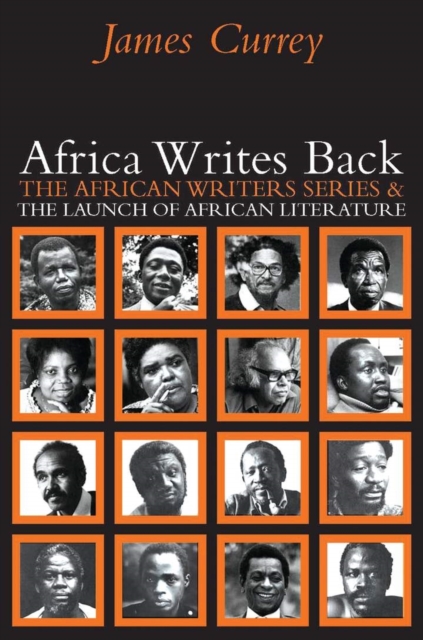
June 17, 2008, is the fiftieth anniversary of the publication of Chinua Achebe\\u2019s Things Fall Apart by Heinemann. This publication provided the impetus for the foundation of the African Writers Series in 1962 with Chinua Achebe as the editorial adviser.Africa Writes Back: The African Writer\\u2019s Series the Launch of African Literature captures the energy of literary publishing in a new and undefined field. Portraits of the leading characters and the many consultants and readers providing reports and advice to new and established writers make Africa Writes Back a stand-out book. James Currey\\u2019s voice and insights are an added bonus.
eBook
Wrestling with the Muse
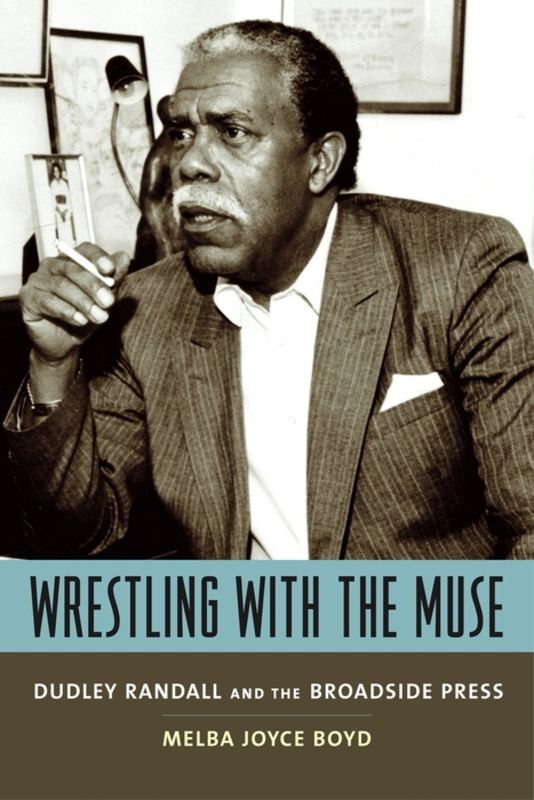
In 1963, the African American poet Dudley Randall (1914–2000) wrote \"The Ballad of Birmingham\" in response to the bombing of a church in Alabama that killed four young black girls, and \"Dressed All in Pink,\" about the assassination of President Kennedy. When both were set to music by folk singer Jerry Moore in 1965, Randall published them as broadsides. Thus was born the Broadside Press, whose popular chapbooks opened the canon of American literature to the works of African American writers. Dudley Randall, one of the great success stories of American small-press history, was also poet laureate of Detroit, a civil-rights activist, and a force in the Black Arts Movement. Melba Joyce Boyd was an editor at Broadside, was Randall’s friend and colleague for twenty-eight years, and became his authorized biographer. Her book is an account of the interconnections between urban and labor politics in Detroit and the broader struggles of black America before and during the Civil Rights era. But also, through Randall’s poetry and sixteen years of interviews, the narrative is a multipart dialogue between poets, Randall, the author, and the history of American letters itself, and it affords unique insights into the life and work of this crucial figure.
eBook

Katharine Lee Bates’ Ballad Book and the Pedagogy of the Ballad
In 1890, Katharine Lee Bates, Wellesley professor, published a college/upper high school textbook entitled Ballad Book. Bates’ volume pre-dates by 4 years Francis Barton Gummere’s Old English Ballads (1894) and Helen Child Sargent and George Lyman Kittredge’s English and Scottish Popular Ballads (1904) by 14 years, making it the earliest ballad collection by an American scholar explicitly designed for classroom use. In 1904, Bates published a second edition of her textbook with the result that her two editions flank ballad work during the formative years of American ballad scholarship. This essay describes Bates’ approach to ballad teaching, how it changed between editions, and what her work demonstrates about early American academic ballad scholarship: that is, as an outcome of the political consequences of Bates’ promotion of a ballad study aimed at supporting classroom learning rather than one aimed at producing academic scholarship.
Journal Article

What America also Read: Australian Historical Fiction in the American Marketplace, 1927–48
Louis stone's Jonah is something of an exception, having first been published in 1911, but its release in the Us in 1933 is a good indication of the increased interest in Australian fiction during the period, while some books not in the historical or regional genres, such as Katharine susannah prichard's Fay's Circus, are included to indicate follow-up publications.1 the books listed range from historical romance to demanding literary fiction, but with the possible exception of patrick White's overtly modernist Happy Valley, all could be included within the terms of the middle-class realism Hutner describes.2 Historical fiction, regional fiction, and family sagas were central to American middleclass reading tastes, and the Australian novels participated in these forms: those listed are predominantly large-scale historical novels, often divided into three books, or individual titles within a trilogy; in short, the classic forms of the intergenerational family saga and the pioneering \"epic,\" a common term in reviews. they are not merely set in Australia, but tell or imply some version of the \"making of Australia. the mainstream Hutner describes-the receptive audience for my cluster of Australian novels-was displaced by a new generation of editors and reviewers oriented toward the \"modern tradition,\" best represented perhaps by the appearance of the New York Review of Books in early 1963.21 norton's earlier interest in developing an Australian list faltered after two prichard novels; only Richardson remained.22 dark's trilogy never appeared in full; prichard's 1950s trilogy of the Australian goldfields never appeared at all, despite repeated efforts by her American agents.
Journal Article

Unspeakable silences; When poetry ceases to be a luxury; Black tulips; My eggs
Melissa Castillo-Garsow is a Mexican-American writer, journalist, and scholar currently pursuing a PhD in American Studies and African American Studies at Yale University. Her short stories and poetry have been published in various journals including The Acentos Review, La Bloga, Hispanic Culture Review, and Hinchas de Poesia. Her first novel, Pure Bronx, co-written with Fordham Professor Mark Naison, is due for release Oct. 2013 from Augustus Publishing. Melissa completed her Master’s degree in English with a concentration in Creative Writing at Fordham University in 2011. Prior to that she was awarded a Bachelor of Arts from New York University summa cum laude with a double major in Journalism and Latin American Studies. A former employee of NBC News, El Diario/ La Prensa and Launch Radio Networks, Melissa has had articles and reviews published in a wide variety of forums including CNN.com, Latin Beat Magazine, University Wire, El Diario/La Prensa, Women’s Studies, Words. Beats. Life: The Global Journal of Hip-Hop Culture, and The Bilingual Review. Melissa is an active scholar in the fields of English literature, American Studies, African American Studies and Latin American/Latino Studies. At Yale, she focuses on the study of Afro-Latino history and culture in the 20th Century.
Journal Article

An Historical Obsession: Counternarration in Rachid Mimouni's \Tombéza\
The sheer volume of Stora's encyclopedic annotated bibliography, which includes historical texts, sociological studies, memoirs, and literary works, reveals the impact that French colonization and the war of independence have had on writers and intellectuals in both France and Algeria in the twentieth century.1 More relevant still to a study of Mimouni's generation of writers are the figures provided in Jean Déjeux's 1989 thematic study of postindependence francophone Algerian novelists: thirty-three percent of works by the one hundred twenty-three novelists and short story writers publishing between 1963 andl987 are wholly or in part dedicated to the theme of war. [...] Mimouni's caustic critique rarely misses its mark, revealing how political and cultural processes have contributed to Algeria's failure to create a democratic nation from the rubble of the struggle for liberation. In the second instance, Tombéza also attributes an enabling if sinister power to a particular category of written texts: compendiums of regulations and procedural manuals, the exclusive purview of Amili, the hospital personnel officer and eminence grise.
Journal Article
