
Catalogue Search | MBRL


Are you sure you want to remove the book from the shelf?

{{itemTitle}}
545
result(s) for
"African literature (French) History and criticism."
Sort by:

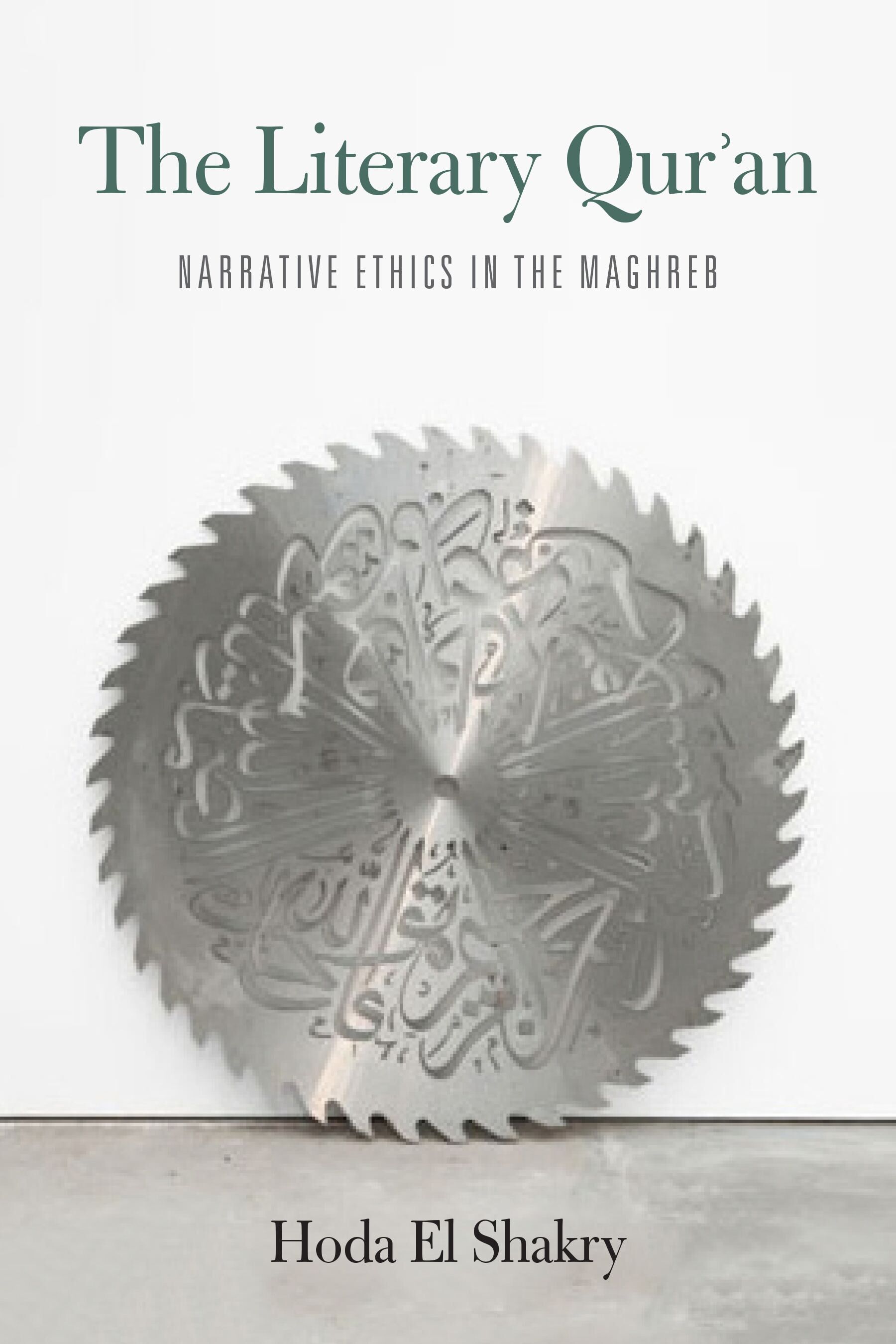
The Literary Qur'an
The novel, the literary adage has it, reflects a world abandoned by God. Yet the possibilities of novelistic form and literary exegesis exceed the secularizing tendencies of contemporary criticism. Showing how the Qurʾan invites critical reading, this account of Arabophone and Francophone Maghrebi literature develops a Qurʾanic model of narratology.
eBook


Shaken Wisdom
In her focus on irony and meaning in postcolonial African fiction, Gloria Nne Onyeoziri refers to an internal subversion of the discourse of the wise and the powerful, a practice that has played multiple roles in the circulation of knowledge, authority, and opinion within African communities; in the interpretation of colonial and postcolonial experience; and in the ongoing resistance to tyrannies in African societies. But irony is always reversible and may be used to question the oppressed as well as the oppressor, shaking all presumptions of wisdom. Although the author cites numerous African writers, she selects six works by Chinua Achebe, Ahmadou Kourouma, and Calixthe Beyala for her primary analysis.
Modern Language Initiative
eBook


Postcolonial Francophone Autobiographies
Bringing a comparative perspective to the study of autobiography, Edgard Sankara considers a cross-section of postcolonial francophone writing from Africa and the Caribbean in order to examine and compare for the first time their transnational reception. Sankara not only compares the ways in which a wide selection of autobiographies were received locally (as well as in France) but also juxtaposes reception by the colonized and the colonizer to show how different meanings were assigned to the works after publication.
Sankara's geographical and cultural coverage of Africa and its diaspora is rich, with separate chapters devoted to the autobiographies of Hampâté Bâ, Valentin Mudimbé, Kesso Barry, Patrick Chamoiseau, Raphaël Confiant, and Maryse Condé. The author combines close reading, reception study, and postcolonial theory to present an insightful survey of the literary connections among these autobiographers as well as a useful point of departure for further exploration of the genre itself, of the role of reception studies in postcolonial criticism, and of the stance that postcolonial francophone writers choose to take regarding their communities of origin.
Modern Language Initiative
eBook


Contemporary Francophone African Writers and the Burden of Commitment
By looking at engagée literature from the recent past, when the francophone African writer was implicitly seen as imparted with a mission, to the present, when such authors usually aspire to be acknowledged primarily for their work as writers,Contemporary Francophone African Writers and the Burden of Commitmentaddresses the currrent processes of canonization in contemporary francophone African literature. Odile Cazenave and Patricia Célérier argue that aesthetic as well as political issues are now at the forefront of debates about the African literary canon, as writers and critics increasingly acknowledge the ideology of form. Working across genres but focusing on the novel, the authors take up the question of renewed forms of commitment in this literature. Their selected writers range from Mongo Beti, Ousmane Sembène, and Aminata Sow Fall to Boubacar Boris Diop, Véronique Tadjo, Alain Mabanckou, and Léonora Miano, among others.
eBook

The Comic Imagination in Modern African Literature and Cinema
This book is a seminal study that significantly expands the interdisciplinary discourse on African literature and cinema by exploring Africa's under-visited carnivalesque poetics of laughter. Focusing on modern African literature as well as contemporary African cinema, particularly the direct-to-video Nigerian film industry known as Nollywood, the book examines the often-neglected aesthetics of the African comic imagination. In modern African literature, which sometimes creatively traces a path back to African folklore, and in Nollywood - with its aesthetic relationship to Onitsha Market Literature - the pertinent styles range from comic simplicitas to comic magnitude with the facilitation of language, characterization, and plot by a poetics of laughter or lightness as an important aspect of style. The poetics at work is substantially carnivalesque, a comic preference or tendency that is attributable, in different contexts, to a purposeful comic sensibility or an unstructured but ingrained or virtual comic mode. In the best instances of this comic vision, the characteristic laughter or lightness can facilitate a revaluation or reappreciation of the world, either because of the aesthetic structure of signification or the consequent chain of signification. This referentiality or progressive signification is an important aspect of the poetics of laughter as the African comic imagination variously reflects, across genres, both the festival character of comedy and its pedagogical value. This book marks an important contribution to African literature, postcolonial literature, world literature, comic imagination, poetics, critical theory, and African cinema.
eBook