
Catalogue Search | MBRL


Are you sure you want to remove the book from the shelf?

{{itemTitle}}
16
result(s) for
"Afrique du Sud Conditions économiques."
Sort by:

How long will South Africa survive?
In 1977, RW Johnson's best-selling How Long Will South Africa Survive? provided a controversial and highly original analysis of the survival prospects of the apartheid regime. Now, after more than twenty years of ANC rule, he believes the situation has become so critical that the question must be posed again. He moves from an analysis of Jacob Zuma's rule to the increasingly dire state of the South African economy, concluding that the country is heading towards a likely International Monetary Fund bail-out which will in turn lead to a regime change of some kind.
BOOK

South Africa pushed to the limit
Since 1994, the democratic government in South Africa has worked hard at improving the lives of the black majority, yet close to half the population lives in poverty, jobs are scarce, and the country is more unequal than ever. For millions, the colour of people's skin still decides their destiny. In his wide-ranging, incisive and provocative analysis, Hein Marais shows that although the legacies of apartheid and colonialism weigh heavy, many of the strategic choices made since the early 1990s have compounded those handicaps. Marais explains why those choices were made, where they went awry, and why South Africa's vaunted formations of the left -- old and new -- have failed to prevent or alter them. From the real reasons behind President Jacob Zuma's rise and the purging of his predecessor, Thabo Mbeki, to a devastating critique of the country's continuing AIDS crisis, its economic path and its approach to the rights and entitlements of citizens, South Africa Pushed to the Limit presents a riveting benchmark analysis of the incomplete journey beyond apartheid.
eBook

Mean Streets
This book powerfully demonstrates that some of the most resourceful entrepreneurs in the South African informal economy are migrants and refugees. Yet far from being lauded, they take their life into their hands when they trade on South Africa's 'mean streets'. The book draws attention to what they bring to their adopted country through research into previously unexamined areas of migrant entrepreneurship. Ranging from studies of how migrants have created agglomeration economies in Jeppe and Ivory Park in Johannesburg, to guanxi networks of Chinese entrepreneurs, to competition and cooperation among Somali shop owners, to cross-border informal traders, to the informal transport operators between South Africa and Zimbabwe, the chapters in this book reveal the positive economic contributions of migrants. these include generating employment, paying rents, providing cheaper goods to poor consumers, and supporting formal sector wholesalers and retailers. As well, Mean Streets highlights the xenophobic responses to migrant and refugee entrepreneurs and the challenges they face in running a successful business on the streets.
eBook

South Africa and the logic of regional cooperation
In South Africa and the Logic of Regional Cooperation, James J. Hentz
addresses changes in South Africa's strategies for regional cooperation and economic
development since its transition from apartheid to democracy. Hentz focuses on why
the new South African government continues to make regional cooperation a priority
and what methods this dominant state uses to pursue its neighborly goals. While
providing a synthetic overview of the history of regional cooperation in southern
Africa, Hentz considers the logic of cooperation more generally. An extensive
discussion of South African politics provides the context for Hentz's exploration of
the more widely felt effects of domestic change. Readers interested in the
international organization of the politics and economy of southern Africa will find
thought-provoking material in this important book.
eBook
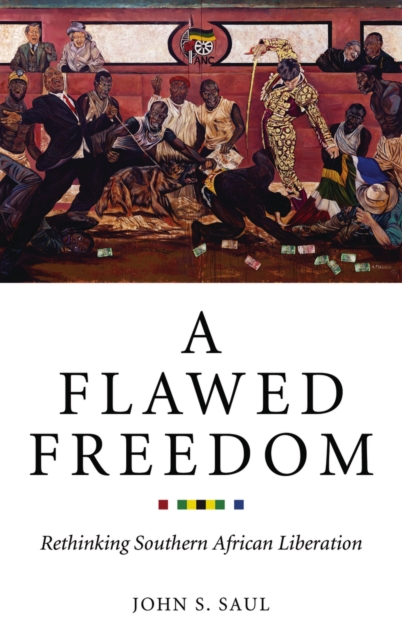
A Flawed Freedom
Twenty years on from the fall of apartheid in South Africa, veteran analyst and activist John S. Saul examines the liberation struggle, placing it in a regional and global context and looking at how the initial optimism and hope has given way to a sense of crisis following soaring inequality levels and the massacre of workers at Marikana. With chapters on South Africa, Tanzania and Mozambique, Saul examines the reality of southern Africa’s post-'liberation' plight, drawing on the insights of Frantz Fanon and Amilcar Cabral and assessing claims that a new 'precariat' has emerged. Saul examines the ongoing 'rebellion of the poor', including the recent Marikana massacre, that have shaken the region and may signal the possibility of a new and more hopeful future.
eBook
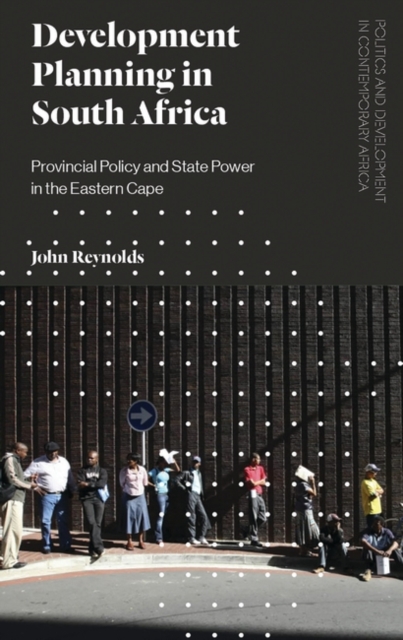
Development planning in South Africa
Celebrated as a beacon of democracy and reconciliation, many people in South Africa continue to live in severe poverty, particularly in the Eastern Cape Province. Backed by the United Nations Development Programme, the Eastern Cape's provincial government consequently launched an historically ambitious programme – the Provincial Growth and Development Plan – aimed at tackling the province's poverty, unemployment and inequality over a ten-year period in a radical policy overhaul. Drawing on the author’s first-hand engagement with the planning process, Development Planning in South Africa is an empirically rich study that utilises a strategic-relational approach to explore the ways in which this unprecedented challenge was negotiated and eventually undermined by the South African state. The first work of its kind, the book provides an indispensable micro-level study with profound implications for how state power is understood to be organised and expressed in state policy. Relevant beyond South Africa to policy implementation in both developing and developed states globally, the book is essential reading for students and scholars of government studies, political economy, development, policy studies and social movements.
eBook

Globalization, negotiation, and the failure of transformation in South Africa : revolution at a bargain?
The book explains the social forces, forms of consciousness and structural constraints that undermined Apartheid, preserved national unity and yet, later constrained democratic sovereignty, as the imperatives of global markets clashed with the prior aspirations of the democratic revolution.
eBook

After Apartheid
Democracy came to South Africa in April 1994, when the African National Congress won a landslide victory in the first free national election in the country's history. That definitive and peaceful transition from apartheid is often cited as a model for others to follow. The new order has since survived several transitions of ANC leadership, and it averted a potentially destabilizing constitutional crisis in 2008. Yet enormous challenges remain. Poverty and inequality are among the highest in the world. Staggering unemployment has fueled xenophobia, resulting in deadly aggression directed at refugees and migrant workers from Zimbabwe and Mozambique. Violent crime rates, particularly murder and rape, remain grotesquely high. The HIV/AIDS pandemic was shockingly mishandled at the highest levels of government, and infection rates continue to be overwhelming. Despite the country's uplifting success of hosting Africa's first World Cup in 2010, inefficiency and corruption remain rife, infrastructure and basic services are often semifunctional, and political opposition and a free media are under pressure.
In this volume, major scholars chronicle South Africa's achievements and challenges since the transition. The contributions, all previously unpublished, represent the state of the art in the study of South African politics, economics, law, and social policy.
eBook


The Comparative Political Economy of Development
This book illustrates the enduring relevance and vitality of the comparative political economy of development approach promoted among others by a group of social scientists in Oxford in the 1980s and 1990s. Contributors demonstrate the viability of this approach as researchers and academics become more convinced of the inadequacies of orthodox approaches to the understanding of development.
Detailed case material obtained from comparative field research in Africa and South Asia informs analyses of exploitation in agriculture; the dynamics of rural poverty; seasonality; the non farm economy; class formation; labour and unfreedom; the gendering of the labour force; small scale production and contract farming; social networks in industrial clusters; stigma and discrimination in the rural and urban economy and its politics. Reasoned policy suggestions are made and an analysis of the comparative political economy of development approach is applied to the situation of Africa and South Asia.
Aptly presenting the relation between theory and empirical material in a dynamic and interactive way, the book offers meaningful and powerful explanations of what is happening in the continent of Africa and the sub-continent of South Asia today. It will be of interest to researchers in the fields of development studies, rural sociology, political economy, policy and practice of development and Indian and African studies.
1. Introduction Barbara Harriss-White and Judith Heyer 2. The Political Economy of Agrarian Change: Dinosaur or Phoenix? Lucia Da Corta 3. Strategic Dimensions of Rural Poverty Reduction in Sub-Saharan Africa Frank Ellis 4. From 'Rural Labour' to 'Classes of Labour': Class Fragmentation, Caste and Class Struggle at the Bottom of the Indian Labour Hierarchy Jens Lerche 5. Poverty: Causes, Responses and Consequences in Rural South Africa Elizabeth Francis 6. Seasonal Food Crises and Social Protection in Africa Stephen Devereux 7. The Political Economy of Contract Farming in Tea in Kenya: The Kenya Tea Development Agency (KTDA), 1964-2002 Cosmas Ochieng 8. Networking for Success: Informal Enterprises and Popular Associations in Nigeria Kate Meagher 9. Free and Unfree Labour: The Cape Wine Industry 1938-1988 Gavin Williams 10. The Opium Revolution: Continuity or Change in Rural Afghanistan? Adam Pain 11. The Marginalisation of Dalits in a Modernising Economy Judith Heyer 12. Shifting the Grindstone of Caste? Decreasing Dependency Amongst Dalit Labourers in Tamilnadu Hugo Gorringe 13. Liberalisation and Transformations in India’s Informal Economy: Female Breadwinners in Working Class Households in Chennai Karin Kapadia 14. Dalit Entrepreneurs in Middle India Aseem Prakash 15. Stigma and Regions of Accumulation: Mapping Dalit and Adivasi Capital in the 1990s Barbara Harriss-White with Kaushal Vidyarthee
Barbara Harriss-White is director of Oxford University’s new Contemporary South Asian Studies programme, and was formerly Director of the Department of International Development at Queen Elizabeth House. She has been studying India ever since driving there in 1969, focussing on the political economy of long term rural development.
Judith Heyer was formerly a Tutorial Fellow of Somerville College, and Lecturer in the Department of Economics, at Oxford University, before which she held posts at Nairobi University’s Institute for Development Studies, and Economics Department. She is now a Fellow Emeritus of Somerville College, Oxford. A specialist in rural development and in micro-economics, she has written and edited a number of books on rural and agricultural development in Kenya and Africa.
eBook