
Catalogue Search | MBRL


Are you sure you want to remove the book from the shelf?

{{itemTitle}}
8,344,345
result(s) for
"After care"
Sort by:

Researching quality in care transitions : international perspectives
\"This book is concerned with the complexities of achieving quality in care transitions. The organization and accomplishment of high quality care transitions relies upon the coordination of multiple professionals, working within and across multiple care processes, settings and organizations, each with their own distinct ways of working, profile of resources, and modes of organizing. In short, care transitions might easily be regarded as complex activities that take place within complex systems, which can make accomplishing high quality care challenging. As a subject of enquiry, care transitions are approached from many research, improvement and policy perspectives: from group psychology and human factors to social and political theory; from applied process re-engineering projects to exploratory ethnographic studies; from large-scale policy innovations to local improvements initiatives. This collection will provide a unique cross-disciplinary and multi-level analysis, where each chapter presents a particular depth of insight and analysis, and together offer a holistic and detail understand of care transitions.\"-- Provided by publisher.
Book

Life Is Filled with Swift Transitions
Finally, a book that an attorney may pick-up and thumb through the table of contents to find direction to help her figure out how to navigate the unchartered waters associated with long-term care No matter what practice area an attorney may be in, because they are a trusted member of a person's network they will be asked for advice on how to.
eBook

The Value of Remote Vital Signs Monitoring in Detecting Clinical Deterioration in Patients in Hospital at Home Programs or Postacute Medical Patients in the Community: Systematic Review
Vital signs monitoring (VSM) is used in clinical acuity scoring systems (APACHE [Acute Physiology and Chronic Health Evaluation], NEWS2 [National Early Warning Score 2], and SOFA [Sequential Organ Failure Assessment]) to predict patient outcomes for early intervention. Current technological advances enable convenient remote VSM. While the role of VSM for ill, hospital ward-treated patients is clear, its role in the community for acutely ill patients in the hospital at home (HAH) or postacute setting (patients who have just been discharged from an acute hospital stay and at increased risk of deterioration) is less well defined.
We assessed the efficacy of remote VSM for patients in the HAH or postacute setting.
This systematic review adhered to the PRISMA (Preferred Reporting Items for Systematic Reviews and Meta-Analyses) methodology. We searched studies in PubMed (MEDLINE), Embase, and Scopus. Studies focused on the postacute phase were included, as only 2 case series addressed the HAH setting. Risk of bias (ROB) was evaluated using the Cochrane Risk of Bias Tool for randomized controlled trials (RCTs), the Newcastle-Ottawa scale for observational studies, and the case methods outlined by Murad et al for case reports. The GRADE (Grading Recommendations Assessment, Development, and Evaluation) framework was used to assess the certainty of evidence. Outcomes of interest included hospital readmissions, mortality, patient satisfaction, and compliance. Risk ratios (RR) were used to measure effect sizes for readmission and mortality, with patient satisfaction and compliance reported descriptively.
The search yielded 5851 records, with 28 studies meeting eligibility criteria (8 RCTs, 7 cohort studies, and 13 case series). Two focused on HAH, while 26 studies addressed the postacute phase. Nineteen studies looked at heart failure, 3 studied respiratory conditions, and 6 studies studied other conditions. Meta-analysis was conducted with 6 studies looking at hospital readmission within 60 days and 4 studies at mortality within 30 days. Readmissions did not significantly decrease (RR 0.81, 95% CI 0.61-1.09; P=.16). Significant heterogeneity was observed for readmissions (I
=58%). Conversely, mortality reduced significantly (RR 0.65, 95% CI 0.42-0.99; P=.04). There was no significant heterogeneity in mortality (I
=0%). There was high heterogeneity in the study populations, interventions, and outcomes measured. Many studies were of poor quality, with 50% (4/8) of RCTs exhibiting a high ROB. The certainty of evidence for both readmission and mortality was very low.
Published data on the effects of remote VSM in acutely ill patients at home remains scarce. Future studies evaluating all common vital signs (heart rate, blood pressure, oxygen saturation, and temperature) with consistent monitoring frequencies and clear intervention protocols to better understand how to integrate remote VSM into HAH programs are needed.
PROSPERO CRD42023388827; https://www.crd.york.ac.uk/PROSPERO/view/CRD42023388827.
Journal Article

Implementation of a multimodal home-based rehabilitation intervention after discharge from inpatient geriatric rehabilitation (GeRas): an early qualitative process evaluation
Background
Geriatric rehabilitation aims at increasing physical and social activity and maintaining the functional reserve of older people. However, the continuity of geriatric rehabilitation in the outpatient setting is limited due to a lack of structured aftercare programs. In order to overcome this, a three-month multimodal home-based intervention program (GeRas) was implemented. The aim of this early qualitative process evaluation was to assess GeRas in terms of perceived reach, effectiveness/efficacy, adoption/uptake, implementation, and maintenance/sustainability (Domains within the RE-AIM Framework) from the perspective of patients who received the intervention and healthcare providers who were involved in the delivery of the intervention.
Methods
In a qualitative process evaluation, 13 healthcare providers and 10 patients were interviewed throughout the beginning of the implementation period of GeRas to capture early experiences using a semi-structured interview guide. The interview guide and qualitative content analysis was guided by the RE-AIM Framework.
Results
The GeRas program was perceived to be largely well implemented and beneficial by healthcare providers and patients. According to healthcare providers, GeRas showed more advantages compared to usual care. Additionally, outcome expectations were mainly met (Domain 1: Effectiveness). However, the implementation of the intervention delivered via the eHealth system was perceived as challenging (Domain 2: Adoption). Nevertheless, the outpatient physical exercise, the outpatient counselling, and the continuous care after discharge improved perceived well-being regardless of the intervention type (Domain 3: Implementation). To facilitate the continued use of GeRas, technical requirements should be created to increase user-friendliness and to motivate patients to continue the training in the long term (Domain 4: Maintenance).
Conclusion
Although initial experiences with the implementation and effectiveness of GeRas were positive in general, organisational and technical issues need to be resolved to enhance sustainable and successful implementation of the GeRas program.
Trial registration
German Clinical Trials Register (DRKS00029559). Registered 5/10/2022.
Journal Article
Intensive Care Unit–Specific Virtual Reality for Critically Ill Patients With COVID-19: Multicenter Randomized Controlled Trial
Although psychological sequelae after intensive care unit (ICU) treatment are considered quite intrusive, robustly effective interventions to treat or prevent these long-term sequelae are lacking. Recently, it was demonstrated that ICU-specific virtual reality (ICU-VR) is a feasible and acceptable intervention with potential mental health benefits. However, its effect on mental health and ICU aftercare in COVID-19 ICU survivors is unknown.
This study aimed to explore the effects of ICU-VR on mental health and on patients' perceived quality of, satisfaction with, and rating of ICU aftercare among COVID-19 ICU survivors.
This was a multicenter randomized controlled trial. Patients were randomized to either the ICU-VR (intervention) or the control group. All patients were invited to an COVID-19 post-ICU follow-up clinic 3 months after hospital discharge, during which patients in the intervention group received ICU-VR. One month and 3 months later (4 and 6 months after hospital discharge), mental health, quality of life, perceived quality, satisfaction with, and rating of ICU aftercare were scored using questionnaires.
Eighty-nine patients (median age 58 years; 63 males, 70%) were included. The prevalence and severity of psychological distress were limited throughout follow-up, and no differences in psychological distress or quality of life were observed between the groups. ICU-VR improved satisfaction with (mean score 8.7, SD 1.6 vs 7.6, SD 1.6 [ICU-VR vs control]; t
=-2.82, P=.006) and overall rating of ICU aftercare (mean overall rating of aftercare 8.9, SD 0.9 vs 7.8, SD 1.7 [ICU-VR vs control]; t
=-3.25; P=.002) compared to controls. ICU-VR added to the quality of ICU aftercare according to 81% of the patients, and all patients would recommend ICU-VR to other ICU survivors.
ICU-VR is a feasible and acceptable innovative method to improve satisfaction with and rating of ICU aftercare and adds to its perceived quality. We observed a low prevalence of psychological distress after ICU treatment for COVID-19, and ICU-VR did not improve psychological recovery or quality of life. Future research is needed to confirm our results in other critical illness survivors to potentially facilitate ICU-VR's widespread availability and application during follow-up.
Netherlands Trial Register NL8835; https://www.trialregister.nl/trial/8835.
RR2-10.1186/s13063-021-05271-z.
Journal Article

Experiences, opinions and expectations of health care providers towards an intensive care unit follow-up clinic: Qualitative study and online survey
Independent of the underlying disease, intensive care unit survivors often suffer from cognitive, physical and mental impairments, also known as post-intensive care syndrome (PICS). Specific follow-up services are recommended for these patients. This study aims to capture the perspectives of health care providers on the development of the first intensive care unit follow-up-clinic in Germany.
A qualitative study with six focus groups (n = 41) and six expert interviews, followed by a quantitative survey was conducted, involving nine different professions. Qualitative and quantitative data were analysed using thematic analysis and descriptive statistics, respectively.
Participants described aftercare of former intensive care unit patients as complex and appreciated the idea of an intensive care unit follow-up clinic to improve continuity of care and multidisciplinary collaboration. The favoured model combined diagnostics and targeted referral of patients to specialists and therapists with the provision of information. In the survey, participants disagreed on how to implement this referral system but agreed that assessments should be multidimensional.
The necessity of and important criteria for the design of an intensive care unit follow-up clinic were identified. We will integrate these data with further evidence to develop a concept for a complex intervention.
Journal Article
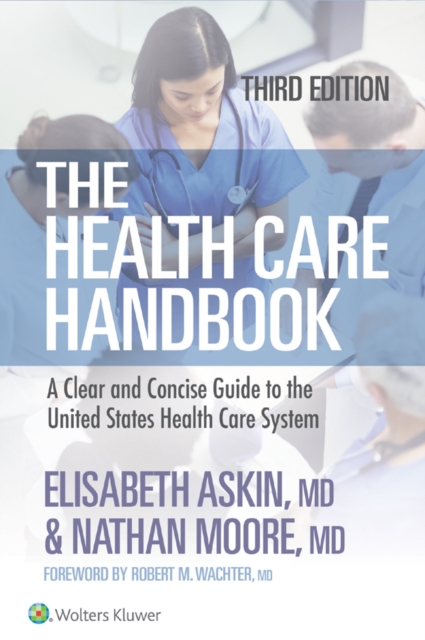
The Health Care Handbook
Described in the New York Times as \"an astonishingly clear 'user's manual' that explains our health care system and the policies that will change it,\" The Health Care Handbook, by Drs.Elisabeth Askin and Nathan Moore, offers a practical, neutral, and readable overview of the U.S.health care system in a compact, convenient format.
eBook

Patient involvement in interprofessional education: A qualitative study yielding recommendations on incorporating the patient’s perspective
Background Patient involvement in interprofessional education (IPE) is a new approach in fostering person‐centeredness and collaborative competencies in undergraduate students. We developed the Patient As a Person (PAP‐)module to facilitate students in learning from experts by experience (EBEs) living with chronic conditions, in an interprofessional setting. This study aimed to explore the experiences of undergraduate students, EBEs and facilitators with the PAP‐module and formulate recommendations on the design and organization of patient involvement in IPE. Methods We collected data from students, EBEs and facilitators, through eight semi‐structured focus group interviews and two individual interviews (N = 51). The interviews took place at Maastricht University, Zuyd University of Applied Sciences and Regional Training Center Leeuwenborgh. Conventional content analysis revealed key themes. Results Students reported that learning from EBEs in an interprofessional setting yielded a more comprehensive approach and made them empathize with EBEs. Facilitators found it challenging to address multiple demands from students from different backgrounds and diverse EBEs. EBEs were motivated to improve the person‐centredness of health care and welcomed a renewed sense of purpose. Conclusions This study yielded six recommendations: (a) students from various disciplines visit an EBE to foster a comprehensive approach, (b) groups of at least two students visit EBEs, (c) students may need aftercare for which facilitators should be receptive, (d) EBEs need clear instruction on their roles, (e) multiple EBEs in one session create diversity in perspectives and (f) training programmes and peer‐to‐peer sessions for facilitators help them to interact with diverse students and EBEs.
Journal Article

Effects of post-ICU follow-up on subject outcomes: A systematic review and meta-analysis
The present systematic review and meta-analysis aimed to synthesize data on subject outcomes associated with post-ICU follow-up.
MEDLINE, PsycINFO, CINAHL, Cochrane CENTRAL, and EMBASE databases were searched according to pre-specified criteria (PROSPERO- CRD42017074734). Non-randomized and randomized studies assessing patient and family outcomes associated with post-ICU follow-up were included.
Twenty-six studies were included. Sixteen (61%) were randomized trials; of these, 15 were meta-analyzed. Non-randomized studies reported benefits in survival, functional status, anxiety, depression, and posttraumatic stress disorder (PTSD) symptoms, and satisfaction. In randomized trials, post-ICU follow-up models focusing on physical therapy were associated with fewer depression symptoms (mean difference [MD], −1.21 (see Fig. 2); 95% confidence interval [CI], −2.31 to −0.11; I2 = 0%) and better mental health-related quality of life scores (standardized MD [SMD], 0.26; 95%CI, 0.02 to 0.51; I2 = 6%) in the short term. Post-ICU follow-up models focusing on psychological or medical management interventions were associated with fewer PTSD symptoms (SMD, −0.21; 95%CI, −0.37 to −0.05; I2 = 0%) in the medium term.
Post-ICU follow-up may improve depression symptoms and mental health-related quality of life in the short term for models focusing on physical therapy and PTSD symptoms in the medium term for models focusing on psychological or medical management interventions.
•Post-ICU follow-up is associated with less depression symptoms.•Post-ICU follow-up is associated with less PTSD symptoms.•Post-ICU follow-up is associated with better mental health quality of life.
Journal Article
Improving patient care transitions from the intensive care unit to the ward by learning from everyday practice. A multicenter qualitative study
To explore and describe the everyday practices (Work-As-Done) that hinder and facilitate patient care transitions from the intensive care unit (ICU) to the ward.
Multiple qualitative case studies in the ICU and various specialized wards of three Dutch hospitals. Adult patients planned to be transferred were purposively sampled on a variety of characteristics along with their relative (if present), and the ICU and ward nurses who were involved in the transition process. Data were collected by using multiple sources (i.e., observations, semi-structured interviews and a qualitative survey) and then systematically analyzed using the thematic analysis approach until saturation was reached.
Twenty-six cases were studied. For each case, the actual transfer was observed. Sixteen patients, five relatives and 36 nurses were interviewed. Two patients completed the survey. Fifteen themes emerged from the data, showing that the quality of transitions is influenced by the extent to which nurses anticipate to patient-specific needs (e.g., providing timely and adequate information, orientation, mental support and aftercare) and to the needs of the counterpart to continue care (e.g., by preparing handovers) besides following standard procedures. Data also show that procedures sometimes interfere with what works best in practice (e.g., communication via a liaison service instead of direct communication between ICU and ward nurses).
Subtle, non-technical nursing skills play an important role in comforting patients and in the coordination of care when patients are transferred from the ICU to the ward.
These Work-As-Done findings and their underlying narratives, that are often overlooked when focusing on quality improvement, can be used as material to reflect on own practice and raise awareness for its impact on patients. They may stimulate healthcare staff in crafting interventions for optimizing the transition process.
Journal Article