
Catalogue Search | MBRL


Are you sure you want to remove the book from the shelf?

{{itemTitle}}
517
result(s) for
"Aging Cross-cultural studies."
Sort by:


Transitions and Transformations
Rapid population aging, once associated with only a select group of modern industrialized nations, has now become a topic of increasing global concern. This volume reframes aging on a global scale by illustrating the multiple ways it is embedded within individual, social, and cultural life courses. It presents a broad range of ethnographic work, introducing a variety of conceptual and methodological approaches to studying life-course transitions in conjunction with broader sociocultural transformations. Through detailed accounts, in such diverse settings as nursing homes in Sri Lanka, a factory in Massachusetts, cemeteries in Japan and clinics in Mexico, the authors explore not simply our understandings of growing older, but the interweaving of individual maturity and intergenerational relationships, social and economic institutions, and intimate experiences of gender, identity, and the body.
eBook


Successful Aging as a Contemporary Obsession
In recent decades, the North American public has pursued an inspirational vision of successful aging-striving through medical technique and individual effort to eradicate the declines, vulnerabilities, and dependencies previously commonly associated with old age. On the face of it, this bold new vision of successful, healthy, and active aging is highly appealing. But it also rests on a deep cultural discomfort with aging and being old.The contributors toSuccessful Aging
as a Contemporary Obsessionexplore how the successful aging movement is playing out across five continents. Their chapters investigate a variety of people, including Catholic nuns in the United States; Hindu ashram dwellers; older American women seeking plastic surgery; aging African-American lesbians and gay men in the District of Columbia; Chicago home health care workers and their aging clients; Mexican men foregoing Viagra; dementia and Alzheimer sufferers in the United States and Brazil; and aging policies in Denmark, Poland, India, China, Japan, and Uganda. This book offers a fresh look at a major cultural and public health movement of our time, questioning what has become for many a taken-for-granted goal-aging in a way that almost denies aging itself.
eBook

Ageing, insight and wisdom : meaning and practice across the lifecourse
\"This book focuses on older people as makers of meaning and insight, highlighting the evolving values, priorities and ways of communicating that make later life fascinating. It explores what creating 'meaning' in later life really implies, for older people themselves, for how to conceptualise older people and for relationships between generations. The book offers a language for discussing major types of lifecourse meaning, not least those concerning ethical and temporal aspects of the ways older people form part of social and symbolic landscapes, and the types of wisdom they can offer\"-- Back cover.
Book


Ageing and Intergenerational Relations
With socio-economic and demographic changes taking place in contemporary societies, new patterns of family relations are forming partly due to significant family changes, value shifts, precariousness in the labour market, and increasing mobility within and beyond national boundaries.
This book explores the exchange of support between generations and examines variations in contemporary practices and rationales in different regions and societies. It draws on both theoretical perspectives and empirical analysis in relation to new patterns of family reciprocity. Contributors discuss both newly emerging patterns and more established ones which are now being affected due to various opportunities and pressures in contemporary societies.
The book is split into two parts, the first (Chapters one to four) reviews key theoretical and conceptual debates in this field, while the second (Chapter five to nine) offers insights and an understanding of exchange practices based on case studies from different regions and different relationships.
eBook
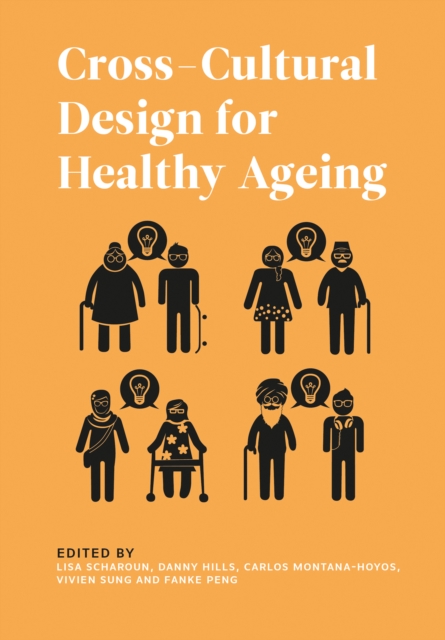
Cross-Cultural Design for Healthy Ageing
This book is based on many years of research and practical pedagogical experiences around cross-cultural and multidisciplinary design for healthy ageing. It provides important insight into origins, design, implementation, and impact of cross-cultural design student study tours, and takes an original approach by foregrounding pedagogical practice for exploring healthy ageing solutions.
The populations of Australia and many other countries in the Asia Pacific region are ageing. The next few decade will see up to half of the population in many countries represented by the over 65s. The impact of this change in population balance will be profound and it represents a potential global shift in design for society. This will challenge designers, planners and health care professionals to develop solutions to better meet the needs and harness the capacity of our growing and diversifying populations of older citizens, in relation to housing, community interaction and co-operation, health and well-being, and the integration new technologies. Different disciplinary and cultural perspectives can be a means to create new ideas and approaches that provide a deeper understanding of the needs of the global ageing population.
This book examines some of the challenges associated with ageing in multi-cultural societies. We explore some of the major issues facing society in the area of 'healthy ageing' and propose a method of working with cross-disciplinary groups of health practitioners, designers, architects and cultural practitioners. Through case-studies of a series of workshops run in China and Singapore with Australian, Chinese and Singaporean students, we review the benefits of this approach and provide a framework for engaging designers, planners and health professionals in the process of creating new design solutions for the growing global ageing population.
This book is especially useful for academics and educators in the design and health areas. Design professionals in urban, architectural, interior, industrial, graphic, multimedia, fashion, interaction, service and user-experience design will find many useful ideas. Health professionals across the range of disciplines, including medical practitioners, nurses, physiotherapists, other allied health professionals and carers practising in different settings such as aged-care facilities, government offices and others will also find it useful.
It also provides insights and ideas for innovators, businesses and everybody interested in exploring design and innovation for an ageing population, which has been identified as a growing market. It may also be useful to anyone who wants to understand how to provide care for ageing members of the family and friends, or for anyone who wants to better understand issues around their own ageing.
Although there are many articles and books on social design, there has been very little work on the methods to combine the discipline areas of Health and Design in the creation of concepts and artefacts around design for healthy ageing. There is also very little on the understanding of 'Cross-cultural Empathy' in design. This book takes an original approach to 'Design for Healthy Ageing' by combining not only a varied discipline group of practitioners from design and health but also presenting cross-cultural methods to deal with issues associated with the social cause.
The primary readership will include professionals and academics in the areas of cross-cultural design, health, ageing and related policies, government institutions and gerontologists. It will also be of interest to tutors and lecturers across design practice internationally, and the case studies are useful for those with a specific geographical interest (Australia, Singapore, China), including clinicians, carers and other health professionals in those areas.
eBook
Other cultures, elder years
This fully revised Second Edition of Other Cultures, Elder Years is not only the textbook on the anthropology of aging, but also the most comprehensive, comparative study available on worldwide patterns of ageing. `Provides an excellent summary of secondary sources, avoiding extensive review of primary research, complicated theory, and methodological issues′ - Clinical Gerontologist.
eBook
Aging in East and West
Widely recognized experts present the first comparative analysis of recent developments among six Eastern and Western nations concerning population aging and its consequences. Chapters focus on demographic trends, sociocultural contexts, and policy implications. Nations selected as case studies include: the People's Republic of China, the Republic of Korea, Japan, Germany, the United Kingdom, and the United States. The editors and contributors call attention to the varied trajectories and effects of population aging in culturally diverse societies that are often at different stages or on different paths of economic development. Such analyses bring into sharper focus those conditions that are unique, or similar, and emphasize the ways in which cultural stereotypes of aging and the elderly complicate our understanding of the effects of world-wide population aging.
eBook