
Catalogue Search | MBRL


Are you sure you want to remove the book from the shelf?

{{itemTitle}}
217
result(s) for
"Agnon, Shmuel Yosef (1888-1970)"
Sort by:
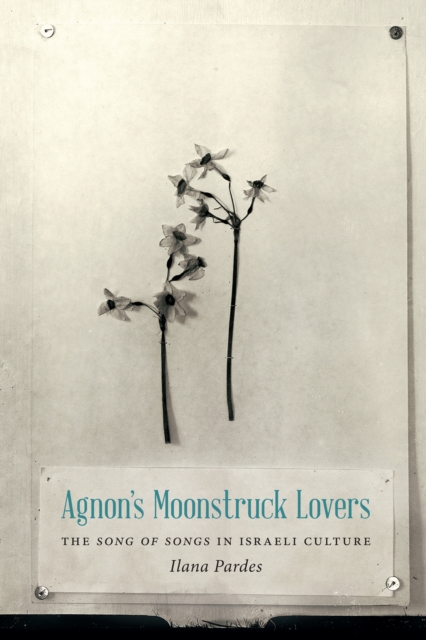
Agnon's Moonstruck Lovers
Agnon's Moonstruck Loversexplores the response of Israel's Nobel laureate S. Y. Agnon to the privileged position of theSong of Songsin Israeli culture. Standing at a unique crossroads between religion and secularism, Agnon probes the paradoxes and ambiguities of the Zionist hermeneutic project. In adopting the Song, Zionist interpreters sought to return to the erotic, pastoral landscapes of biblical times. Their quest for a new, uplifting, secular literalism, however, could not efface the haunting impact of allegorical configurations of love. With superb irony, Agnon's tales recast Israeli biblicism as a peculiar chapter within the ever-surprising history of biblical exegesis.
eBook
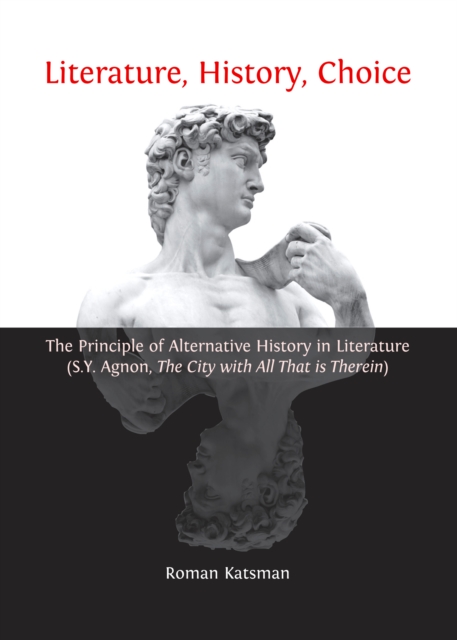
Literature, history, choice : the principle of alternative history in literature (S.Y. Agnon, The city with all that is therein)
Starting with a discussion on the elements of the genre of alternative (counterfactual) history and on its place between the poles of historical determinism and relativism, this book develops a literary theory of the historical alternativeness principle and applies it to the reading of The City with All That is Therein (Ir u-mloa) - one of the most important and less-studied books of the greatest Israeli writer, Nobel Prize winner S.Y. Agnon (1887-1970). The investigation reveals that this pr.
eBook

Studies in Modern Jewish Literature (JPS Scholar of Distinction Series)
This outstanding volume of 26 essays represents a cross-section of the writings of Arnold Band on Jewish literature. Band, a renowned Jewish studies and humanities scholar, writes on such topics as: literature in historic context, interpretations of Hasidic tales and other traditional texts, Zionism, S.Y. Agnon and other important Israeli writers, anti-Semitism and the Holocaust, Jewish studies, and the Jewish community.
Scholars and students of Jewish studies and literature -- particularly Jewish literature -- won't want to miss this remarkable collection.
eBook

The Blemished Human Shmu'el Yosef Agnon's \Ovadyah ba al mum\ as a Wartime Story
During World War I, S. Y. Agnon resided in Germany and witnessed the destruction of war through the physical and psychological injuries and disabilities of returning soldiers. While he managed to avoid the draft, the measures he took led to his own lengthy hospitalization. In his fiction, the ancient Hebrew term ba'al mum (a blemished person) attained a new, modern significance. Agnon used it to describe a range of disabilities caused by industrialized labor, modern technologies, and warrelated injuries. The story \"'Ovadyah ba'al mum,\" first published in 1920, implicitly addresses modern disabilities and their treatment. In his revision process, Agnon intensified the drama of Ovadiah's abuse by members of the Jewish community, which brings about the character's hospitalization. Drawing on scholarship in disability studies, I show how Agnon uses Ovadiah's physical and psychological suffering as a narrative crutch upon which he leans to augment the representational power of his story and expose the mistreatment of the weakest members of ( Jewish) society. Within a World War I context, Ovadiah's mumim, or blemishes, designate not only his inability to serve God but also his deficiencies in the eyes of a society that instrumentalizes its subjects and values them only as workers or soldiers.
Journal Article

From the Kheyder to the Ḥeder: A Transformation of the Room
In this article I argue that the transformation of the ḥeder (the traditional Jewish study room) in modern Hebrew literature from the late-nineteenth to the late-twentieth century reflects a profound shift in Jewish identity, encapsulating the tensions between tradition and modernity. I explore how the ḥeder , once a site of rigorous religious education, evolves into a potent symbol of individual creativity and self-expression in the works of Micha Josef Berdyczewski, Yosef Haim Brenner, Dvora Baron, Hayim Nahman Bialik, and Shmuel Yosef Agnon. By situating this literary transformation within the broader currents of secularization and European modernism, I illuminate how these authors grapple with the dual forces of cultural continuity and change. I conclude with a discussion of Youval Shimoni’s 1999 novel Ḥeder , which suggests that while the ḥeder ’s function has changed, the room continues to serve as a space for introspection and artistic creation in a world that is increasingly uncertain.
Journal Article
Packing Up an Office: The Work of Mourning and the Creation of an Archive
Alan Mintz was my doctoral advisor at the Jewish Theological Seminary. Since his death, several of Alan's friends, colleagues, and family members have reached out to me looking for a \"student of Alan's\" to work on a series of projects to honor him and his work. Jeffrey Saks, one of the conference's organizers, who is editing a volume based on the talks from the conference, invited me to turn a video recording of Alan's talk, \"Homeland and Hometown: The Dialectic Between Eretz Yisrael and Buczacz in Agnon's Late Works,\" into a written essay to be included in the book. The creators of such anthologies were frequently motivated by a sense of imminent loss, as well as the threat that aspects of traditional Jewish culture were on the brink of disappearing with the onset of modernity.1 Just as facing a sense of cultural loss triggers a collective response to gather, preserve, and commemorate the loss of an individual-a mentor and colleague-likewise activates a similar impulse to assemble and consolidate, to preserve the memory of the deceased. The map contains images of Buczacz's town hall, the Great Synagogue, Old Beit Midrash, train station, market well, and castle ruins, along with images from several of Agnon's stories, superimposed on an official map of the region.
Journal Article
For Alan
For decades--half a lifetime, really--you write to Alan, sharing an idea, a thought, an essay, and eagerly await his response. Always gracious, generous, even when he (oh-so-politely) takes issue with this or that claim. Then, suddenly, you are writing about Alan, hoping that something of his mind and spirit will be conveyed through your words. As present tense becomes past tense in your rhetoric, the presentness of his voice and his soul must somehow flow through you ...
Journal Article

Challenging Contemporary Historiography in Shmuel Yosef Agnon's Only Yesterday
Agnon's Temol Shilshom (Only Yesterday) masterfully depicts twentieth century Palestinian Jewish life and responds critically to Second Aliyah narratives popular in his day which lauded seasonal workers and stressed their critical role in Yishuv development. Agnon found the Second Aliyah image contrived; his novel presents an alternative view of the period. His protagonist Isaac Kumer, like other Second Aliyah workers, proves unable to resolve the ongoing tension between Zionist commitment and his lingering feelings of familial obligation. When he fails to participate in the grand redemptive narrative that would enable him simultaneously to persevere as a Zionist and aid his family, he is punished, “sacrificed” as a self-absorbed immigrant whose preoccupation with his own needs prevents him from conceiving a grander Zionist vision that would address the needs of European Jewry. In the wake of the Holocaust, Agnon encourages a broadening of the vision to meet the survivors' needs.
Journal Article
From Avraham to Avraham
[...]their support for his book. [...]at this meeting entirely dedicated to Biczacz/Buczacz, Alan gave a lecture about his work on 'Ir umelo'ah. The event was originally intended to be a celebration on the occasion of the book launch of Alan Mintz's Ancestral Tales: Reading the Buczacz Stories of S. Y. Agnon, published by Stanford University Press, which was dedicated to the author and to Arnold (Avraham) Band.
Journal Article
Introduction
[...]I chose not to go to Brandeis, but Alan remained a presence in my life as a teacher, a mentor, and a friend. Yet, rather than turning to the appurtenances of the \"concentrationary universe,\" he set upon the idea of conjuring-in his own imaginative terms-the lost world of Polish Jewry, viewed not in its fallen, belated aspect but in the vigor of its golden age.4 Indeed, Agnon was one of several Hebrew writers, Baron included, who sought, in the immediate post-Holocaust years, to acknowledge the Holocaust in ways that viewed it as part of a modern continuum of deterioration and destruction that began with the Haskalah, continued through the World War I, and resulted in the total decimation of a way of life. David Roskies, with whom Alan founded this journal in 1981, revisits their moment of reckoning when they realized they were both writing a book about trauma in Jewish literature during the early 1980s, one from the perspective of Yiddish literature and one from the perspective of Hebrew literature; what could have been a disastrous competition turned out to be a respectful collaboration. [...]Miki Gluzman, in his essay on Y. H. Brenner, builds on Alan's brilliant analysis of Bahoref (In Winter) in Banished from Their Father's Table: Loss of Faith and Hebrew Autobiography (1989), creating a new argument out of their divergent readings.5 The comfort with which these contributors address some of their disagreements with Alan and the comfort with which we, as editors of this memorial volume, have agreed to publish them, speaks to the spirit of rebellion and responsiveness that compelled Alan throughout his intellectual life, from the very first publication he cofounded in 1967 at Columbia College, Response: A Contemporary Jewish Review.
Journal Article