
Catalogue Search | MBRL


Are you sure you want to remove the book from the shelf?

{{itemTitle}}
7,673
result(s) for
"Agriculture Data processing."
Sort by:

Cloud computing technologies for smart agriculture and healthcare
\"Cloud Computing Technologies for Smart Agriculture and Healthcare aims to cover the cloud management and framework. It discusses how cloud computing framework can be integrated with fog computing, edge computing, deep learning and IOT. This book will be divided in two application parts: Agriculture and Healthcare. Discusses fundamentals theories to practical and sophisticated applications of Cloud Technology for Agriculture and Healthcare Includes case studies Concepts are illustrated well with appropriate figures, tables and simple language This book is primarily aimed at graduates and researchers to understand the echo system of cloud technology for agriculture and healthcare\"-- Provided by publisher.
Book
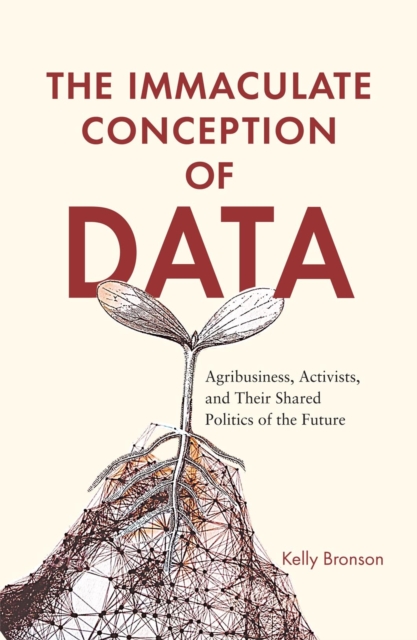
The Immaculate Conception of Data
Every new tractor now contains built-in sensors that collect
data and stream it to cloud-based infrastructure. Seed and chemical
companies are using these data, and these agribusinesses are a form
of big tech alongside firms like Google and Facebook. The
Immaculate Conception of Data peeks behind the secretive legal
agreements surrounding agricultural big data to trace how it is
used and with what consequences. Agribusinesses are among the
oldest oligopoly corporations in the world, and their concentration
gives them an advantage over other food system actors. Kelly
Bronson explores what happens when big data get caught up in
pre-existing arrangements of power. Her richly ethnographic account
details the work of corporate scientists, farmers using the data,
and activist \"hackers\" building open-source data platforms. Actors
working in private and public contexts have divergent views on whom
new technology is for, how it should be developed, and what kinds
of agriculture it should support. Surprisingly, despite their
differences, these groups share a way of speaking about data and
its value for the future. Bronson calls this the immaculate
conception of data, arguing that this phenomenon is a dangerous
framework for imagining big data and what it might do for society.
Drawing our attention to agriculture as an important new site for
big tech criticism, The Immaculate Conception of Data
uniquely bridges science and technology studies, critical data
studies, and food studies, bringing to light salient issues related
to data justice and a sustainable food system.
eBook

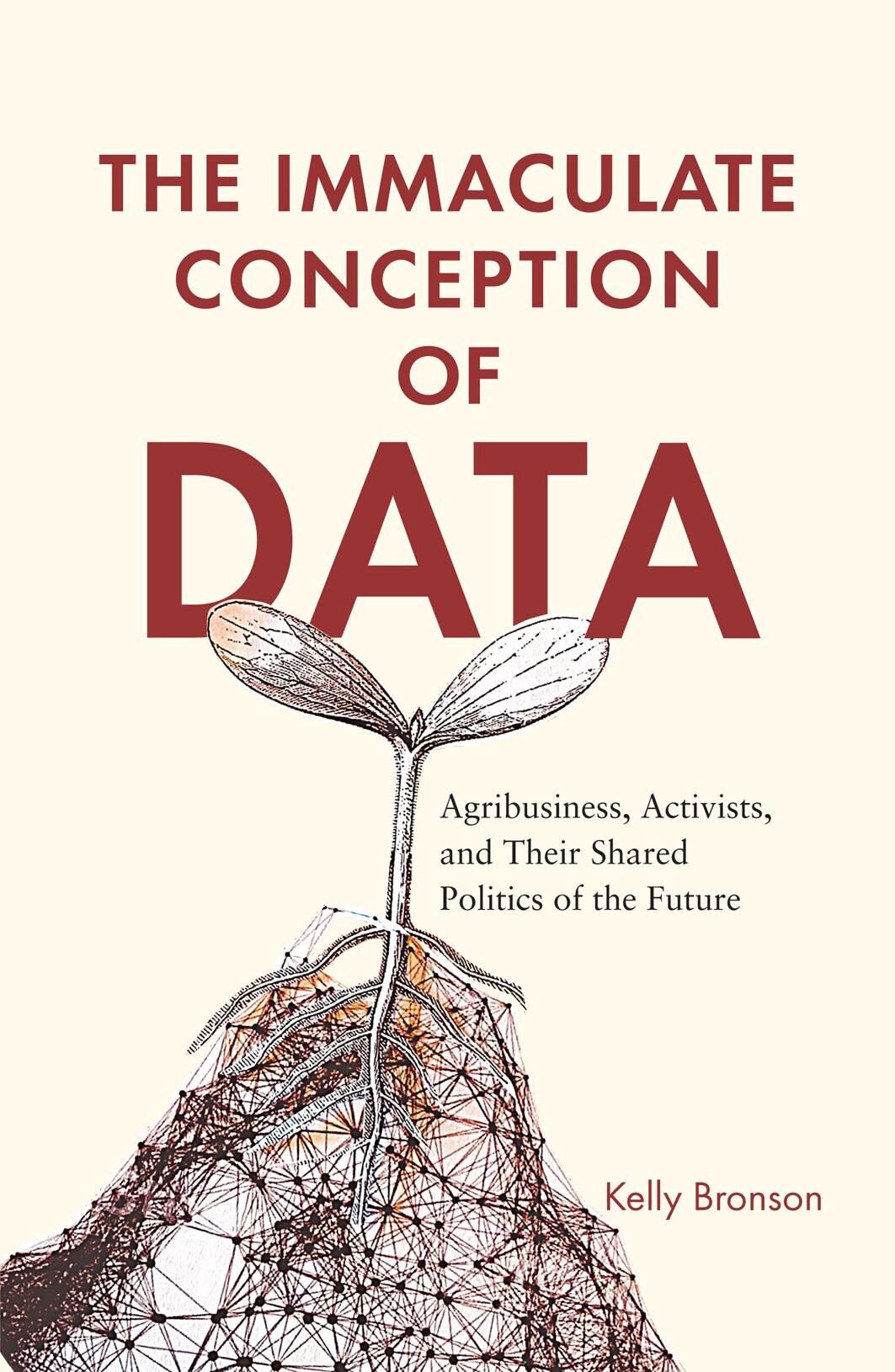
The Immaculate Conception of Data
Every new tractor now contains built-in sensors that collect data and stream it to cloud-based infrastructure. Seed and chemical companies are using these data, and these agribusinesses are a form of big tech alongside firms like Google and Facebook.The Immaculate Conception of Data peeks behind the secretive legal agreements surrounding agricultural big data to trace how it is used and with what consequences. Agribusinesses are among the oldest oligopoly corporations in the world, and their concentration gives them an advantage over other food system actors. Kelly Bronson explores what happens when big data get caught up in pre-existing arrangements of power. Her richly ethnographic account details the work of corporate scientists, farmers using the data, and activist “hackers” building open-source data platforms. Actors working in private and public contexts have divergent views on whom new technology is for, how it should be developed, and what kinds of agriculture it should support. Surprisingly, despite their differences, these groups share a way of speaking about data and its value for the future. Bronson calls this the immaculate conception of data, arguing that this phenomenon is a dangerous framework for imagining big data and what it might do for society.Drawing our attention to agriculture as an important new site for big tech criticism, The Immaculate Conception of Data uniquely bridges science and technology studies, critical data studies, and food studies, bringing to light salient issues related to data justice and a sustainable food system.
eBook


Agriculture and Environment Perspectives in Intelligent Systems
The eventual aim when applying digital technologies in agriculture is to replace or reduce the human labor required for agricultural production.Large amounts of heterogeneous data are essential for integration studies of automated agriculture, and the digitalization of agriculture is helping to fulfill the demand for this data, but management of.
eBook

Internet of Things and Machine Learning in Agriculture
Agriculture is one of the most fundamental human activities. It has kept humans happier and healthier and helped birth modern society as we know it. As farming has expanded, however, the usage of resources such as land, fertilizer, and water has grown exponentially. Environmental pressures from modern farming techniques have stressed our natural landscapes. Still, by some estimates, worldwide food production will need to increase 70% by 2050 to keep up with global demand. With global populations rising, it falls to technology to make farming processes more efficient and keep up with the growing demand. Fortunately, Machine Learning (ML) and the Internet of Things (IoT) can play a very promising role in the agricultural industry. Some examples include: an AI-powered drone to monitor the field, an IoT-designed automated crop watering system, sensors embedded in the field to monitor temperature and humidity, etc. The agriculture industry is the largest in the world, but when it comes to innovation there is a lot more to explore. IoT devices can be used to analyze the status of crops. For instance, with soil sensors, farmers can detect any irregular conditions such as high acidity and efficiently tackle these issues to improve their yield. In this book, we will point out the challenges facing the agro-industry that can be addressed by ML and IoT and explore the impacts of these technologies in the agriculture sector.
eBook
Intelligent Agriculture
Intelligent Agriculture: Developing a System for Monitoring and Controlling Production examines the development of Wireless Sensor Network (WSN) technology designed to monitor and control agriculture production. The book is divided into four sections which illustrate the innovative technology of this product. Section One explores the consumer's discovery of the product and includes a benchmark analysis of the WSN against other similar technologies alongside a technological roadmap, intellectual property analysis and value proposal. Sections Two and Three demonstrate the development of WSN technology in relation to system architecture and software application. Finally, Section Four outlines concept activities used to test the WSN technology and its solutions. An illuminating resource for academics and professionals within the fields of agriculture and agribusiness, this volume will also serve as a helpful guide for other technological sectors as a reference for the development of new technologies.
eBook

Internet Plus Agriculture
Cover -- Title -- Copyright -- Contents -- Figures and Boxes -- Acknowledgments -- Abbreviations -- Executive Summary -- 1 Overview of the Internet Plus Rural Economy in the People's Republic of China -- 1.1 Characteristics, Challenges, and Trends of the Rural Economy -- 1.2 Internet Development and Application in Rural Areas -- 2 Government Support through Policies and Projects -- 3 Development Models of the Internet Plus Rural economy -- 3.1 The Agriculture Value Chain Model -- 3.2 The Rural E-commerce Platform Model -- 3.3 The Internet-Based Agriculture Service Model -- 3.4 Summary of the Models -- 4 Opportunities and Constraints for Farmers and New Agriculture Operators with Internet -- 4.1 Opportunities -- 4.2 Negative Impacts of Internet Plus on Farmers and New Agriculture Operators -- 4.3 Constraints Faced by Farmers and New Agriculture Operators -- 4.4 Summary of Opportunities and Constraints -- 5 Main Policy and Institutional Issues -- 5.1 Less Efficient Management of Government Departments -- 5.2 Incomplete Public Services -- 5.3 Low Infrastructure and Equipment Support -- 5.4 Inferior External Environment for the Development of the Internet Plus Rural Economy -- 6 Recommendations for Policies, Mechanisms, and Investments -- 6.1 Basic Conclusions -- 6.2 Policy Proposals and Specific Recommendations -- 7 Implications of the Internet Plus Rural Economy for Other Developing Countries -- 7.1 Regional Trade of Agriculture Products through E-commerce Platforms between the People's Republic of China and Other Developing Countries -- 7.2 Agriculture Logistics Support -- 7.3 Extension Services -- 8 Conclusion and Way Forward.
Book
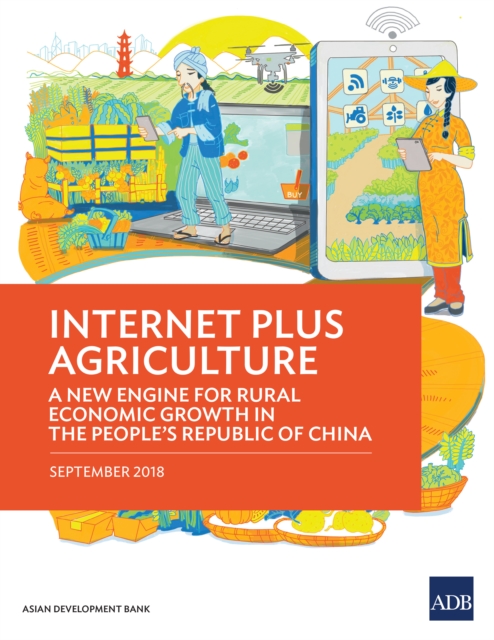
Internet Plus Agriculture
This publication reviews the practices and policies of Internet Plus agriculture business models in the People's Republic of China (PRC). It analyzes the agriculture value chain model, rural e-commerce platform, and Internet Plus agriculture service model. The Internet Plus rural economy is an emerging driver of comprehensive development in the PRC as a new production management and marketing tool for farmers and farmers' cooperatives. Its potential is seen as a foundation for vitalizing the countryside and key to achieving agricultural modernization.
eBook