
Catalogue Search | MBRL


Are you sure you want to remove the book from the shelf?

{{itemTitle}}
14,193
result(s) for
"Agriculture India."
Sort by:


The Bengal Delta : ecology, state and social change, 1840-1943
With a focus on colonial Bengal, this book demonstrates how the dynamics of agrarian prosperity or decline, communal conflicts, poverty and famine can only be properly understood from an ecological perspective as well as discussions of state's coercion and popular resistance, market forces and dependency, or contested cultures and consciousness.
eBook

Combating hunger and achieving food security
\"Discusses the major causes of chronic and hidden hunger and emphasizes on the need to redesign farming system to increase food production\"-- Provided by publisher.
Book
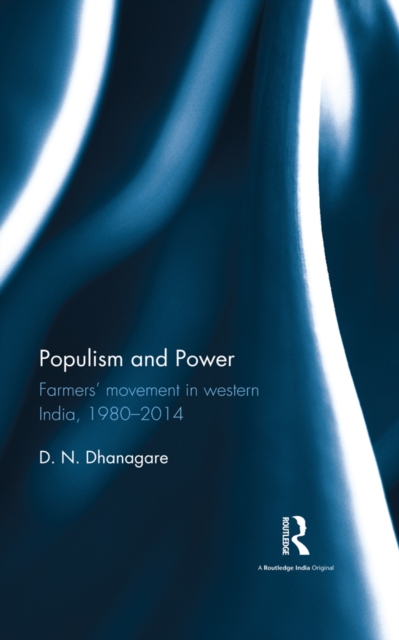
Populism and Power
This book traces the entire trajectory of the farmers' movement in Western India, especially Maharashtra, from the 1980s to the present day. It reveals the fundamental contradictions between populism as an ideology and as political power within the democratic state structure. The volume highlights the ideologies of the movement; its emergence in the wake of a perceived agrarian crisis; how it conflates economics and populism; the role of leadership; stages of development from grassroots agitations rooted in civil society to the attempts to create space within structures of democratic politics; the eventual formation of a separate political party and consequent implications. It maps the linkages between populist ideology and mass participation, and their contested successes and failures in the domain of electoral politics. Further, the author underlines the effectiveness of the movement in addressing class and gender equations in the region.
Rich in primary archival sources and informed field studies, this book will interest scholars and researchers of agrarian economy, rural sociology, and politics, particularly those concerned with social movements in India.
eBook


Water Management, Food Security and Sustainable Agriculture in Developing Economies
This book addresses strategies for food security and sustainable agriculture in developing economies. The book focuses primarily on India, a fast developing economy, whose natural resource base comprising land and water supporting agricultural production is not only under enormous stress, but also complex and not amenable to a uniform strategy. It critically reviews issues which continue to dominate the debate on water management for agricultural and food production.
The book examines the validity of the claim that large water resources projects cause serious social and environmental damages using global and national datasets. The authors examine claims that the future of Indian agriculture is in rain-fed farming supported by small water harvesting. They question whether water-abundant eastern India could become the granary of India, through a groundwater revolution with the right policy inputs. In the process, they look at the less researched aspect of the food security challenge, which is land scarcity in eastern India. The book analyzes the physical, economic and social impacts of large-scale adoption of micro irrigation systems, using a farming system approach for north Gujarat. Through an economic valuation of the multiple use benefits from tank systems in western Orissa, it shows how value of water from large public irrigation systems could be enhanced.
The book also looks at the reasons for the limited success in bringing about the much needed institutional reforms in canal irrigation for securing higher productivity and equity using case studies of Gujarat, Madhya Pradesh and Maharashtra. Finally it addresses how other countries in the developing world, particularly Sub-Saharan Africa could learn from Indian experience.
eBook


An Agrarian History of South Asia
Originally published in 1999, David Ludden's book offers a comprehensive historical framework for understanding the regional diversity of agrarian South Asia. Adopting a long-term view of history, it treats South Asia not as a single civilization territory, but rather as a patchwork of agrarian regions, each with their own social, cultural and political histories. The discussion begins during the first millennium, when farming communities displaced pastoral and tribal groups, and goes on to consider the development of territoriality from the sixteenth to the nineteenth centuries. Subsequent chapters consider the emergence of agrarian capitalism in village societies under the British, and demonstrate how economic development in contemporary South Asia continues to reflect the influence of agrarian localism. As a comparative synthesis of the literature on agrarian regimes in South Asia, the book promises to be a valuable resource for students of agrarian and regional history as well as of comparative world history.
eBook

Climate change and agriculture in India : impact and adaptation
\"This book provides the most recent understanding about climate change and its effects on agriculture in India. Further in-depth research is showcased regarding important allied sectors such as horticulture and fisheries, and examines the effect of climate change on different cereal crops. The individual chapters discuss the different mitigation strategies for climate change impacts and detail abiotic and biotic stresses in relation to climate change. The book provides an insight into environmentally safe and modern technologies approaches such as nanotechnology and utilization of underutilized crops under a changing climate. This book provides a solid foundation for the discussion of climate resilience in agricultural systems and the requirements to keep improving agricultural production.\"--Back cover.
Book
