
Catalogue Search | MBRL


Are you sure you want to remove the book from the shelf?

{{itemTitle}}
10,389
result(s) for
"Agriculture Social aspects."
Sort by:


Black, White, and Green
Farmers markets are much more than places to buy produce. According to advocates for sustainable food systems, they are also places to \"vote with your fork\" for environmental protection, vibrant communities, and strong local economies. Farmers markets have become essential to the movement for food-system reform and are a shining example of a growing green economy where consumers can shop their way to social change. Black, White, and Green brings new energy to this topic by exploring dimensions of race and class as they relate to farmers markets and the green economy. With a focus on two Bay Area markets-one in the primarily white neighborhood of North Berkeley, and the other in largely black West Oakland-Alison Hope Alkon investigates the possibilities for social and environmental change embodied by farmers markets and the green economy. Drawing on ethnographic and historical sources, Alkon describes the meanings that farmers market managers, vendors, and consumers attribute to the buying and selling of local organic food, and the ways that those meanings are raced and classed. She mobilizes this research to understand how the green economy fosters visions of social change that are compatible with economic growth while marginalizing those that are not. Black, White, and Green is one of the first books to carefully theorize the green economy, to examine the racial dynamics of food politics, and to approach issues of food access from an environmental-justice perspective. In a practical sense, Alkon offers an empathetic critique of a newly popular strategy for social change, highlighting both its strengths and limitations.
eBook


The Institutional Framework of Russian Serfdom
Russian rural history has long been based on a 'Peasant Myth', originating with nineteenth-century Romantics and still accepted by many historians today. In this book, Tracy Dennison shows how Russian society looked from below, and finds nothing like the collective, redistributive and market-averse behaviour often attributed to Russian peasants. On the contrary, the Russian rural population was as integrated into regional and even national markets as many of its west European counterparts. Serfdom was a loose garment that enabled different landlords to shape economic institutions, especially property rights, in widely diverse ways. Highly coercive and backward regimes on some landlords' estates existed side-by-side with surprisingly liberal approximations to a rule of law. This book paints a vivid and colourful picture of the everyday reality of rural Russia before the 1861 abolition of serfdom.
eBook

Grounded vision : new agrarianism and the academy
In this book, the author puts contemporary agrarian thinking into a conciliatory and productive dialogue with academic criticism. He argues that the lack of participation in academic discussions means a loss to both agrarians and academics, since agrarian through can enrich other ongoing discussions on topics such as ecocriticism, postmodernism, feminism, work studies, and politics.
Book
Defending the social licence of farming
Issues including climate variability, water scarcity, animal welfare and declining biodiversity have led to increasing demands on farmers to conduct and communicate their farming practices so as to protect their 'social licence to farm'. Farmers are increasingly expected to demonstrate their social and environmental responsibility as a pre-condition to being allowed to carry out their preferred farming and commercial practices. Current examples include the live animal export trade, battles over protection of aquifers from mining, and contests over rural carbon emissions. In Defending the Social Licence of Farming, authors from Australia, the USA, Europe and Iceland document the diverse issues associated with the 'social licence to farm'. They provide examples of different sectors' strategies and experiences, and give specific indications of what is involved in coping successfully with this political and legal dimension of farming. As resources become scarce and society's expectations more diverse and demanding, farming can expect that social licence issues will become both more difficult and more important. The book suggests that the old models of response, largely focused on defensive positions, will often be insufficient to protect the interests of both farmers and the community. This book will provide a useful stimulus for innovation and proactive policies to defend the social licence of the farm sector.
eBook

Constructing a New Framework for Rural Development
\"This volume seeks to answer modern questions and concerns regarding peasants, their production techniques, and their links to wider society. In the past, peasants and their seemingly simple production models have been criticized for being unable to fully meet the needs of modern society, especially when it comes to world hunger, food quality, and sustainability. However, often neglected is the myriad of new initiatives that alter the way food is produced and marketed. New 'peasant markets' are created everywhere and new products and services abound. This volume argues that these initiatives represent \"seeds of transition\"; they are the \"sprouts\" out of which new socio-technical modes for organizing production and marketing emerge - \"sprouts\" that, taken together, can be summarized as \"rural development\". This book critically discusses these new practices and the actors engaged in them. In doing so, it deals with several countries in three different continents (Asia, South America and Europe). It proposes new concepts and approaches for a better understanding of the re-emergence of peasants as indispensable part of modern societies.\"
eBook

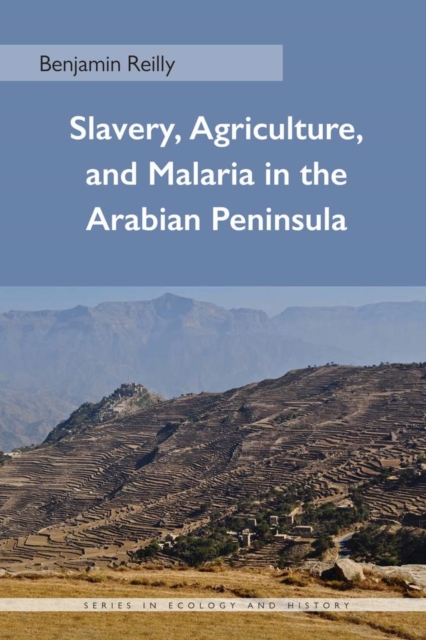
Slavery, Agriculture, and Malaria in the Arabian Peninsula
This book illuminates a previously unstudied phenomenon: the large-scale employment of people of African ancestry as slaves in agricultural oases within the Arabian Peninsula. The key to understanding this unusual system is the prevalence of malaria within Arabian Peninsula oases and drainage basins, which rendered agricultural lands in Arabia extremely unhealthy for people without genetic or acquired resistance to malarial fevers. In this way, Arabian slave agriculture had unexpected similarities to slavery as practiced in the Caribbean and Brazil. This book synthesizes a body of historical and ethnographic data about slave-based agriculture in the Arabian Peninsula. Reilly uses an innovative methodology to analyze the limited historical record and a multidisciplinary approach to complicate our understandings of the nature of work in an area that is popularly thought of solely as desert.
eBook