
Catalogue Search | MBRL


Are you sure you want to remove the book from the shelf?

{{itemTitle}}
27
result(s) for
"Airplanes Performance Mathematical models."
Sort by:

Aircraft control and simulation : dynamics, controls design, and autonomous systems
This third edition is a comprehensive guide to aircraft control and simulation. The updated text covers flight control systems, flight dynamics, aircraft modelling, and flight simulation from both classical design and modern perspectives, as well as two new chapters on the modelling, simulation, and adaptive control of unmanned aerial vehicles.
Book
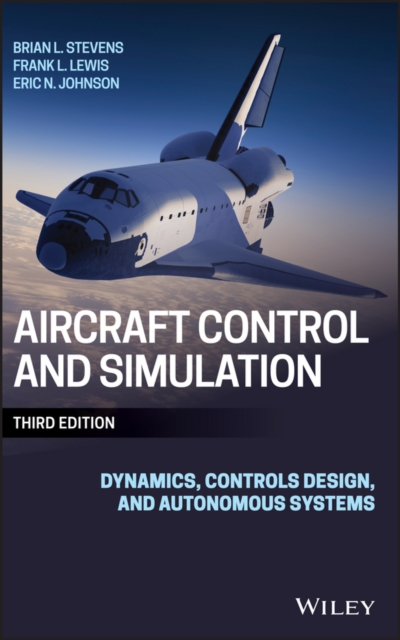
Aircraft Control and Simulation - Dynamics, Controls Design, and Autonomous Systems (3rd Edition)
This book is a comprehensive guide to aircraft control and simulation. This updated text covers flight control systems, flight dynamics, aircraft modeling, and flight simulation from both classical design and modern perspectives, as well as two new chapters on the modeling, simulation, and adaptive control of unmanned aerial vehicles. With detailed examples, including relevant MATLAB calculations and FORTRAN codes, this approachable yet detailed reference also provides access to supplementary materials, including chapter problems and an instructor's solution manual.Aircraft control, as a subject area, combines an understanding of aerodynamics with knowledge of the physical systems of an aircraft. The ability to analyze the performance of an aircraft both in the real world and in computer-simulated flight is essential to maintaining proper control and function of the aircraft. Keeping up with the skills necessary to perform this analysis is critical for you to thrive in the aircraft control field.
eBook

Aerodynamics of Corrugated Wings: Past, Present, and Future
This paper provides a detailed review of the evolution and development of corrugated wings, a biomimetic concept that is very effective under low Reynolds number flights. We will highlight, through reviewing experimental and numerical studies, the emphasis on its aerodynamic performance for lift enhancement, flow separation delay, and drag reduction in the aerodynamics of corrugated wings. Furthermore, we focus on topics such as fluid–structure interaction and aeroacoustics, presenting the possibility of morphing wing technologies in tandem and its effects on an angle of attack at various flight modes. This review outlines durability issues, materials selection, and experimental testing complemented by numerical models while determining the importance of interdisciplinary developments within corrugated wing aerodynamics using potential AI-assisted design. Our review envisions the application of aerodynamics of corrugated wings in the development of UAVs, MAVs, and future advanced aviation systems by integrating the principles from biology to engineering.
Journal Article

Prediction of performance degradation in aircraft engines with fuel flow parameter
Planned maintenance is required by licensed maintenance organizations to detect and prevent performance degradation in aircraft engines. In the literature, engine performance is evaluated with parameters that show engine performance. Fuel flow parameter is one of the important parameters that shows engine performance. In the models developed earlier, no engine performance evaluation was made with the fuel flow parameter at all stages from the take-off to the landing of the aircraft. In this study, fuel flow parameter is estimated with over 99.9% accuracy by using artificial neural network in MATLAB
®
software. In order to detect the engine performance deterioration of the aircraft, the fuel flow values obtained from the artificial neural network and confidence intervals with 99% confidence level were established. Each value taken from the fuel flow sensor is evaluated by the model in all flight phases. In the model, engine performance is considered normal if the fuel flow value is within the confidence interval, and abnormal (anomaly) if it is outside the confidence interval. An accuracy of over 99.9% was achieved and results of this study showed that fuel flow rate of the engine of interest was within the confidence interval (no performance deterioration).
Journal Article

Aerodynamic Analysis and Application of the Channel Wing Configuration Based on the Actuator Disk Model
The channel wing offers unique advantages in the short take-off and landing (STOL) application of Unmanned Aerial Vehicles (UAVs). To investigate its aerodynamic performance, an individual propeller was simulated using the actuator disk model. The computed values were in close agreement with the experimental data. To conduct an initial assessment of the aerodynamic advantages offered by the channel wing, this study compared three configurations: a clean wing, a wing with a forward propeller, and a channel wing. The analysis revealed that the channel wing exhibits a better lift-to-drag ratio than the wing with a forward propeller. Further analysis investigated how propeller-to-wing clearance, axial placement relative to the wing’s leading edge, and changes in propeller diameter influence the channel wing aerodynamic characteristics. To validate the simulation results, a test platform was designed, and the calculated results were qualitatively verified. The findings indicated that reducing the propeller-to-wing clearance enhances the channel wing’s lift force and contributes to a higher lift-to-drag ratio. Altering the propeller’s installation position along the chordwise direction of the channel wing significantly influences its aerodynamic performance. Finally, the channel wing configuration was applied to a lifting-fuselage tandem-wing drone. A comparison with the conventional forward propeller configuration demonstrated that the drone with the channel wing achieves a higher lift-to-drag ratio, with a maximum value of 18.6. Compared with “forward propeller” configuration, the lift-to-drag ratio exhibits an improvement of 97.8% under the optimal configuration.
Journal Article

Prediction of aircraft engine parameters based on ARMA model
The high-pressure rotor speeds, low-pressure rotor speeds, and exhaust temperature of the aircraft engine are the key parameters reflecting the performance of aircraft engines. To realize the trend monitoring during the flight test and the processing of data outliers in flight data recorder, the time series analysis and modeling method is used to establish a suitable ARMA model through data processing, series property analysis, model identification, order determination, modeling, model diagnosis and other steps. Fit the real flight test data of an engine. The results show that the prediction interval within 3 steps of the ARMA model has high accuracy, and has good engineering practicability in real-time flight monitoring and data processing.
Journal Article

Jet engine degradation prognostic using artificial neural networks
Purpose
The purpose of this paper is to propose and develop artificially intelligent methodologies to discover degradation trends through the detection of engine’s status. The objective is to predict these trends by studying their effects on the engine measurable parameters.
Design/methodology/approach
The method is based on the implementation of an artificial neural network (ANN) trained with well-known cases referred to real conditions, able to recognize degradation because of two main gas turbine engine deterioration effects: erosion and fouling. Three different scenarios are considered: compressor fouling, turbine erosion and presence of both degraded conditions. The work consists of three parts: the first one contains the mathematical model of real jet engine in healthy and degraded conditions, the second step is the optimization of ANN for engine performance prediction and the last part deals with the application of ANN for prediction of engine fault.
Findings
This study shows that the proposed diagnostic approach has good potential to provide valuable estimation of engine status.
Practical implications
Knowledge of the true state of the engine is important to assess its performance capability to meet the operational and maintenance requirements and costs.
Originality/value
The main advantage is that the engine performance data for model validation were obtained from real flight conditions of the engine VIPER 632-43.
Journal Article
Comparison of Flight Parameters in SIL Simulation Using Commercial Autopilots and X-Plane Simulator for Multi-Rotor Models
Modern aviation technology development heavily relies on computer simulations. SIL (Software-In-The-Loop) simulations are essential for evaluating autopilots and control algorithms for multi-rotors, including drones and other UAVs (Unmanned Aerial Vehicle). In such simulations, it is possible to compare the flight parameters achieved by flying platforms using various commercial autopilots widely used in the UAV sector. This research aims to provide objective and comprehensive insights into the effectiveness of different autopilot systems This article examines the simulated flight test results of a drone performing the same mission using different autopilot systems. The X-Plane software was used as an environment to simulate the dynamics of the drone and its surroundings. Matlab/Simulink r2023a provided the interface between autopilot software and X-Plane models. Those methods allowed us to obtain an appropriate comparison of the autopilot systems and indicate the main differences between them. This research focused on analyzing UAV flight characteristics such as stability, trajectory tracking, response time to control changes, and the overall effectiveness of autopilots. Various flight scenarios including take-off, landing, flight at a constant altitude, dynamic manoeuvrers and, flight along a planned trajectory were also examined. In order to obtain the most accurate and realistic results, the tests were carried out in various weather conditions. The aim of this research is to provide objective data and analysis to compare the performance of commercial autopilots. This method offers several advantages, including cost-effective testing, the ability to test in diverse environmental conditions, and the evaluation of autopilot algorithms without the need for real hardware. The findings of this study may have a considerable impact on how autopilot designers and developers choose the best platforms and technologies for their projects. Future research on this topic will compare the obtained data with flight test data.
Journal Article

Influence of the Rotation Speed on the Internal Flow Characteristics of an Aircraft Fuel Gear Pump
A gear pump is a key rotary-displacement pump for aircraft fuel transportation in the aerospace industry. Due to the great ratio of power-to-weight condition demanded for gear pumps in aircraft fuel transportation systems, the parameter of the rotation speed is a matter of extreme concern affecting internal flow characteristics that determines the adverse effects of cavitation, fuel trapping, and vibration. However, the flow characteristics of an aircraft fuel gear pump influenced by the rotation speed have not been elaborated upon on yet. In this research, the flow characteristics of an aircraft fuel gear pump were studied by considering the influence of the rotation speed. An experiment for testing the external performance of an aircraft fuel gear pump was performed, and a corresponding numerical simulation of a gas–liquid two-phase flow was employed. Distributions of the velocity and pressure at the central cross-sections and their monitored transient developments were comparatively analyzed for different rotation speeds. It was found that a greater pressure oscillational amplitude accompanied by a higher frequency could be induced by a higher rotation speed, especially in the region of gear engagement. Additionally, cavitation evolution characteristics affected by the rotation speed in the fuel gear pump were discussed. The mechanism of cavitation generation in the region of gear engagement to withdrawal was revealed to be the quick release of a great amount of pressure. Furthermore, a dimensionless cavitation area was employed to quantify the periodic cavitation evolution, and the natural exponential development of the maximum dimensionless cavitation area with the rotation speed was determined through curve fitting. This study should be helpful for creating a deeper understanding of the internal flow characteristics of an aircraft fuel gear pump in scientific research and the external performance in aerospace industrial applications.
Journal Article

Pitch Angle Control of an Airplane Using Fractional Order Direct Model Reference Adaptive Controllers
This paper deals with the longitudinal movement control of an airplane (pitch angle) using fractional order adaptive controllers (FOACs). It shows the improvements achieved in the plane’s behavior, in terms of the minimization of a given performance index. At the same time, less control effort is needed to accomplish the control objectives compared with the classic integer order adaptive controllers (IOACs). In this study, fractional order direct model reference adaptive control (FO-DMRAC) is implemented at the simulation level, and exhibits a better performance compared with the classic integer order (IO) version of the DMRAC (IO-DMRAC). It is also shown that the proposed control strategy for FO-DMRAC reduces the resultant system control structure down to a relative degree 2 system, for which the control implementation is simpler and avoids oscillations during the transient period. Moreover, it is interesting to note that this is the first time that an FOAC with fractional adaptive laws is applied to the longitudinal control of an airplane. A suitable model for the longitudinal movement of the airplane related to the pitch angle θ as the output variable with the lifter angle (δe) as the control variable, is first analyzed and discussed to obtain a reliable mathematical model of the plane. All of the other input variables acting on the plane are considered as perturbations. For certain operating conditions defined by the flight conditions, an FO-DMRAC is designed, simulated, and analyzed. Furthermore, a comparison with the implementation of the classical adaptive general direct control (relative degree ≥ 2) is presented. The boundedness and convergence of all of the signals are theoretically proven based on the new Lemma 3, assuring the boundedness of all internal signals ω(t).
Journal Article