
Catalogue Search | MBRL


Are you sure you want to remove the book from the shelf?

{{itemTitle}}
19
result(s) for
"Airplanes Piloting Human factors."
Sort by:


Flying Fast Jets
This book provides a detailed overview of the human factors and performance limitations associated with flying fast jets, integrating all the latest available research literature on the demanding operational tasks faced by such pilots and aircrews. As such, it has a strong military focus, dealing with pilots of fighter aircraft, attack aircraft and lead-in fighter trainer aircraft that are traditionally only single or dual pilot operations.
eBook


Pilots in Command
This is not AI-generated content.The contents were written and verified by subject matter experts from Aviation Supplies & Academics, an 85-year-old aviation company.Look for the ASA wings to ensure you are purchasing a reliable publication.Airline pilots are looked upon as leaders by passengers, crew, and employers alike.
eBook

Human factors on the flight deck : a practical guide for design, modelling and evaluation
\"This book presents the Human Factors methodologies and applications thereof that can be utilized across the design, modeling and evaluation stages of the design lifecycle of new technologies entering future commercial aircraft. As advances are made to the architecture of commercial aircraft cockpits, Human Factors on the Flight Deck argues that it is vitally important that these new interfaces are safely incorporated and designed in a way that is usable to the pilot. Incorporation of Human Factors is essential to ensuring that engineering developments to avionic systems are integrated such that pilots can maintain safe interactions while gaining information of value. Case study examples of various technological advancements during their early conceptual stages are given throughout to highlight how the methods and processes can be applied across each stage. The text will be useful for professionals, graduate students, and academic researchers in the fields of aviation, human factors, and ergonomics\"-- Provided by publisher.
Book
Aviation Safety and Pilot Control
Adverse aircraft-pilot coupling (APC) events include a broad set of undesirable and sometimes hazardous phenomena that originate in anomalous interactions between pilots and aircraft. As civil and military aircraft technologies advance, interactions between pilots and aircraft are becoming more complex. Recent accidents and other incidents have been attributed to adverse APC in military aircraft. In addition, APC has been implicated in some civilian incidents.
This book evaluates the current state of knowledge about adverse APC and processes that may be used to eliminate it from military and commercial aircraft. It was written for technical, government, and administrative decisionmakers and their technical and administrative support staffs; key technical managers in the aircraft manufacturing and operational industries; stability and control engineers; aircraft flight control system designers; research specialists in flight control, flying qualities, human factors; and technically knowledgeable lay readers.
eBook

Flying fast jets : human factors and performance limitations
\"This book provides a detailed overview of the human factors and performance limitations associated with flying fast jets, integrating all the latest available research literature on the demanding operational tasks faced by such pilots and aircrews. As such, it has a strong military focus, dealing with pilots of fighter aircraft, attack aircraft and lead-in fighter trainer aircraft that are traditionally only single or dual pilot operations\"--Provided by publisher.
Book
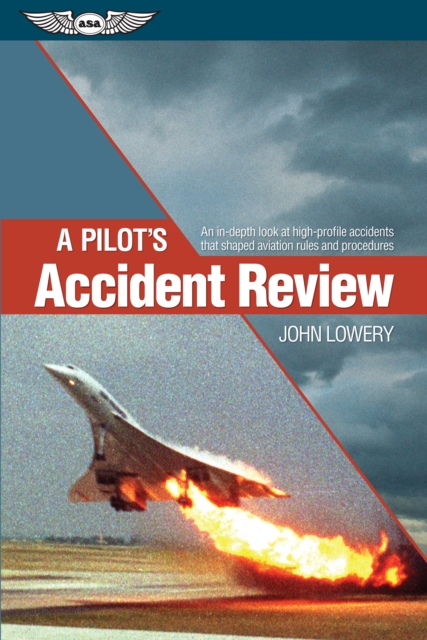
A Pilot's Accident Review (eBook - epub edition)
This is the eBook (epub) edition of this title. In A Pilot's Accident Review, starting on the premise that we often learn best by reviewing the mistakes of others, author John Lowery compiles an in-depth analysis of high-profileas well as some not so well-knownaviation accidents. He illustrates the potential dangers during each phase of flight and the psychology behind pilot error, effectively demonstrating how a chain of errors, often originating from a pilot's support team, can lead to fatal crashes. Lowery discusses at length the JFK, Jr. and Concorde accidents, and those involving Frank Sinatra's mother, Reba McIntire's band, John Denver and Wiley Post. A Pilot's Accident Review provides pilots with a closer look at safety procedures in intense circumstances, such as flying through extreme weather or hazardous environments, and is designed to build awareness of the most preventable factors in pilot errorincluding the primary causes of controlled flight into terrain (CFIT) and loss of control (LOC). Carefully reviewed are the human factors that can precipitate accidentsparticularly complacency, overconfidence, and compulsion. Most books that address aircraft accidents are written for accident investigators or government entities. Many organizations in the aviation industry make an effort to avoid discussing accidents directly, or show photos of wrecked or damaged aircraft. Instead, this book goes straight to the accidents' causes from a prevention viewpoint, in order to help pilots as well as investigators gain insight on them. The author firmly believes that by understanding the factors that cause accidents, we can train to be safer, more effective pilots-in-command. This book is an ideal textbook addition to aviation safety, accident investigation, and human factors courses, yet is written in a clear and direct style that can speak to
and benefit all kinds of fliers and aviation industry employees.
eBook

The dragon in the cockpit : how Western aviation concepts conflict with Chinese value systems
\"The Dragon in the Cockpit enhances the mutual understanding between Western aviation human-factors practitioners and the Chinese aviation community by describing some of the fundamental Chinese cultural characteristics pertinent to the field of flight safety\"--Provided by publisher.
BOOK
Crew resource management
Crew Resource Management, Second Edition continues to focus on CRM in the cockpit, but also emphasizes that the concepts and training applications provide generic guidance and lessons learned for a wide variety of \"crews\" in the aviation system as well as in the complex and high-risk operations of many non-aviation settings.
eBook