
Catalogue Search | MBRL


Are you sure you want to remove the book from the shelf?

{{itemTitle}}
16,791
result(s) for
"Alabama."
Sort by:

Citizens Creek : a novel
The story of \"a once-enslaved man who buys his freedom after serving as a translator during the American Indian Wars, and his granddaughter, who sustains his legacy of courage\"--Amazon.com.
Book

Mound Excavations at Moundville
How social and political power was wielded in order to build Moundville This work is a state-of-the-art, data-rich study of excavations undertaken at the Moundville site in west central Alabama, one of the largest and most complex of the mound sites of pre-contact North America. Despite the site's importance and sustained attention by researchers, until now it has lacked a comprehensive analysis of its modern excavations. Richly documented by maps, artifact photo-graphs, profiles of strata, and inventories of materials found, the present work explores one expression of social complexity; the significance of Moundville’s monumental architecture, including its earthen mounds; the pole-frame architecture that once occupied the summits of these mounds; and the associated middens that reveal the culture of Moundville’s elites. This book supplies a survey of important materials recovered in more than a decade of recent excavations of seven mounds and related areas under the author’s direction, as part of a long-term archaeological project consisting of new field work at the Mississippian political and ceremonial center of Moundville. Visitors to Moundville are immediately impressed with its monumentality. The expansiveness and grandness of that landscape are, of course, deliberate features that have a story to tell and this archaeological project reveals Moundville’s monumentality and its significance to the people whose capital town it was. Exactly how the social and political power symbolized by mound building was distributed is a question central to this work. It seems critical to ask to what extent this monumental landscape was the product of a chief’s ability to recruit and direct the labor of large groups of political subordinates, most of whom were presumably non-kin. At the onset of the present project, speculations regarding the paired orders of mounds and the timing of the formal structuring of space at Moundville were already suggested but were in need of further testing, confirmation, and refinement. The work reported in this volume is largely devoted to filling in such evidence and refining those initial insights. An excellent chapter by H. Edwin Jackson and Susan L. Scott, "Zooarchaeology of Mounds Q, G, E, F, and R," compliments this research. A Dan Josselyn Memorial Publication
eBook


Distracted by Alabama
A gateway to Alabama for the omnivorous mind, Distracted by Alabama is a collection of twelve captivating essays about Alabama and the South by Samford University writer and scholar Jim Brown, a former president of the Alabama Folklife Association.
eBook

A mind to stay : White plantation, Black homeland
The story of the members of a black family which won their \"freedom with emancipation but, instead of fleeing the poverty and oppression of the White plantation, decided to stay on the homeland of their White masters and then to purchase it for themselves within a decade. In a true counterpoint to the predominant tale of the Black exodus north in the late nineteenth and early twentieth century, these African Americans chose to hold onto the land that they had rightfully inherited and to risk all to keep it in the ensuing decades\"-- Provided by publisher.
Book

Racial union
In November 2001, the state of Alabama opened a referendum on its long-standing constitutional prohibition against interracial marriage. A bill on the state ballot offered the opportunity to relegate the state's antimiscegenation law to the dustbin of history. The measure passed, but the margin was alarmingly slim: more than half a million voters, 40 percent of those who went to the polls, voted to retain a racist and constitutionally untenable law. Julie Novkov's Racial Union explains how and why, nearly forty years after the height of the civil rights movement, Alabama struggled to repeal its prohibition against interracial marriage—the last state in the Union to do so. Novkov's compelling history of Alabama's battle over miscegenation shows how the fight shaped the meanings of race and state over ninety years. Novkov's work tells us much about the sometimes parallel, sometimes convergent evolution of our concepts of race and state in the nation as a whole.
eBook

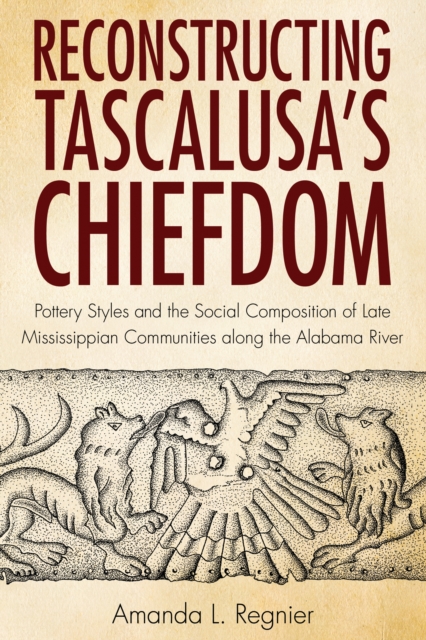
Reconstructing Tascalusa's Chiefdom
Reconstructing Tascalusa's Chiefdom is an archaeological study of political collapse in the Alabama River Valley following the Hernando de Soto expedition.To explain the cultural and political disruptions caused by Hernando de Soto's exploration deep into north America, Amanda L.
eBook


Patterson for Alabama
John Patterson, Alabama governor from 1959 to 1963, was
thrust into the Alabama political arena after the brutal murder
of his father, attorney general Albert Patterson in 1954. Allowed
by the Democratic Party to take his father’s place and to
complete the elder’s goal of cleaning up corruption in his
hometown Phenix City, Patterson made a young, attractive, and
sympathetic candidate.
Patterson for Alabama details his efforts to clean up
his hometown, oppose corruption in the administration of Governor
Big Jim Folsom, and to resist school desegregation. Popular on
all three counts, Patterson went on to defeat rising populist
George Wallace for governor. Patterson’s term as governor
was marked by rising violence as segregationists violently
resisted integration. His role as a champion of resistance has
clouded his reputation to this day. Patterson left office with
little to show for f his efforts and opposed for one reason or
another by nearly all sectors of Alabama. Stymied in efforts to
reclaim the governorship or a seat on the Alabama state Supreme
Court, Patterson was appointed by Wallace to the state court of
criminal appeals in 1984 and served on that body until retiring
in 1997. In 2004, he served as one of the justices who removed
the Chief Justice of the Alabama Supreme Court Roy Moore for
ignoring a federal court order.
eBook