
Catalogue Search | MBRL


Are you sure you want to remove the book from the shelf?

{{itemTitle}}
201
result(s) for
"Alabaster"
Sort by:
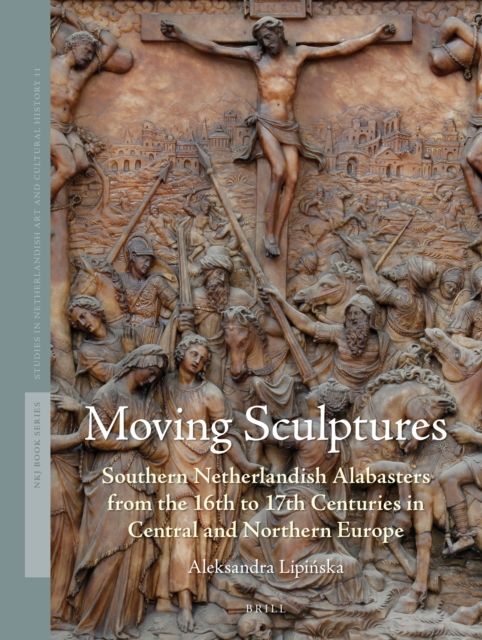
Moving sculptures : southern Netherlandish alabasters from the 16th to 17th centuries in central and northern Europe
In Moving Sculptures Lipińska explores the little-known phenomenon of serial production of small-scale alabaster sculpture in the Southern Netherlands of the 16th and 17th centuries from the perspective of its recipients in Central and Northern Europe.
eBook

Lithostratigraphy, petrography, and geochemistry of the Eocene–Oligocene rock succession, Wadi Arhab area, North Eastern Desert, Egypt
The present study recorded for the first time, an occurrence of Oligocene basaltic plugs in Beni-Suef Governorate, Egypt. In addition, Egyptian alabaster was discovered in the study area, further the well-known ancient area around the Cavern of Wadi Sannur. In this work, the lithostratigraphy, structure, petrography, and geochemistry including TGA and DSC were studied. In addition, the thermal effect of the basaltic magma on the Eocene carbonates that covered most of the area, caused the formation of the Egyptian alabaster in the region. The Eocene succession represents different stages in age (late Middle–Late Eocene). Their outcrops are disconformably overlain by the basaltic plugs extruded along the NW–SE fault trend which is parallel to the Red Sea graben which was formed in the Oligo–Miocene Period. Petrographically, the Eocene rocks show ten microfacies types indicating that deposition of Eocene carbonates in the subtidal shallow marine environment except for microfacies of the Egyptian alabaster shows that the precipitation is related to the basaltic thermal effect and related hydrothermal waters within open cavities or karstic systems in the Eocene carbonate. The chemical analysis showed that SiO
2
, Al
2
O
3
, MgO, Fe
2
O
3
, and CaO are of high content as major oxides, while Sr and Ba are of high content in the basaltic plugs as trace elements. TG analysis shows that basaltic rocks in the present study are suitable for conserving high-temperature thermal energy because they do not exhibit any thermal events when exposed to thermal influences by DSC between 30 °C and 1000 °C. Unlike both Egyptian alabaster and recrystallized limestone which are not suitable for maintaining high temperatures between 695 °C and 965 °C and decompose into CaO and CO
2
due to the decarbonization of the calcite mineral.
Journal Article

THE ORIGINS OF GANCH COMPOSITIONS WITH OYNAVAND-O’UMA IN THE INTERIORS OF UZBEKISTAN AND GEORGIA
Ganch (fired clay ceramics with gypsum) has long been an integral part of the interior and exterior decoration for appropriate buildings to make them stand out. First of all, these are classy palaces, Buddhist traditional harem-type buildings in Western and Central Asia and other mosques, madrasas, mausoleums and minarets in some Oriental cultures associated with Islam. In particular, in the territories of Khorasan (now a part of modern Uzbekistan, was Iran, referred to as some kingdoms sort of the Bukhara emirate). The goal is to establish the origins of oynavand-o’uma, (stucco network decorations made of alumina with coloured powders and shiny pearl or mirror elements), which are genetically related to monuments in Uzbekistan and Georgia of the 5th/7th–19th centuries. The following methods were used in this study: analysis, generalisation and systematisation. The study highlighted that in the pre-Arabic period of the Iranian-speaking tribes of the Eftalites and Bukharhudates, who were simultaneously influenced by Buddhist and Greco-Byzantine cultures, the phenomenon of a local plastic canon was formed, which laid the foundation for the development of carved alabaster and plaster, which further developed without a figurative component during the Muslim era and spread to Asian lands until the time of the Turkic-Persian Qajar dynasty, reaching not only Uzbekistan and Tajikistan, but also Georgia. The study also discussed the specific features of art education in the context of preserving and developing the cultural heritage of the regions. The findings of this study can be used by specialists in the field of studying the evolution of the plastic canon of monumental and decorative art of certain Eastern countries, experts in the scientific restoration and reconstruction of oriental visions of the synthesis of painting with ganch and mirrors, as well as teachers of the history of oriental culture.
Journal Article

A pan-European art trade in the late middle ages: Isotopic evidence on the master of Rimini enigma
The identity of artists and localisation of workshops are rarely known with certainty before the mid-15 th century. We investigated the material used by one of the most prolific and enigmatic medieval sculptors, the Master of the Rimini Altarpiece or Master of Rimini, active around 1420–40. The isotope fingerprints (Sr, S and O) of a representative corpus of masterpieces but also minor artworks, attributed to the Master of Rimini and his workshop, are virtually identical, demonstrating the unity of the corpus and a material evidence behind the stylistic and iconographic ascriptions. The material used is exclusively Franconian (N-Bavarian) alabaster, 600 km distant from the supposed zone of activity of the Master of Rimini workshop according to recent literature. The same material was later used by the prominent Late Medieval German carver Tilman Riemenschneider, active in Würzburg after 1483, whose small corpus of alabaster sculptures we have been able to characterize almost entirely. Based on these findings, we propose here an alternative to the prevailing hypothesis of a Flemish or N-French workshop being founded on similarities of the Rimini sculpture with motives in Flemish and French painting. Our scenario, returning to the initial proposal of a German localisation of the Master of Rimini workshop, assumes the migration of an artist, perhaps trained in the Low Countries or strongly inspired by the Flemish art, to Southern Germany where he founded a highly productive export workshop, well situated on the crossroads of medieval trade, with a pan-European radiance. This study sheds a spotlight on the on the trade networks of luxury goods, the raw material used for their production, and the high-end art market in Europe as well as on international migration of artists and styles, at the eve of the Renaissance.
Journal Article

AN EGYPTIAN CALCITE-ALABASTER DROP JAR AT THE CYPRIOT SITE OF PYLA-KOKKINOKREMOS
The Late Bronze Age presents a peak in the cultural interactions between the different empires of the ancient Near East. Bulk goods and small quantities of luxury products were exchanged between the kings and the local elite over long distances. During the 2019 excavation campaign, such a luxury item was discovered at the site of Pyla-Kokkinokremos in Cyprus: an Egyptian calcite-alabaster drop jar incised with geometric and floral decorations. In the present publication, this exceptional find is contextualized by examining other decorated drop jars from the Near East.
Journal Article

Characterization and Analysis of Gypsum Alabaster Constituting the “Santissimo Salvatore” Statue by Gabriele Brunelli (Bologna, 1615–1682)
This study is part of a broader conservation and restoration project of the 17th-century statue “Santissimo Salvatore” attributed to the Bolognese sculptor Gabriele Brunelli (1615–1682). This sculpture was traditionally classified as a marble statue, i.e., primarily composed of calcium carbonate. However, the careful diagnostic analyses conducted during the present work of restoration revealed that, instead, the sculpture is made of gypsum alabaster, a material predominantly composed of calcium sulphate hydrate (CaSO4·2H2O). In the present research, a multi-analytical investigation was carried out using X-Ray Powder Diffraction (XRPD), Field Emission Environmental Scanning Electron Microscopy (FE-ESEM) with Energy-Dispersive X-ray Spectroscopy (EDS), and confocal Raman microspectrometry. Here, we report detailed and updated analytical data of the material constituting the “Santissimo Salvatore” statue by Gabriele Brunelli. These data were found extremely useful to plan and accomplish the restoration work in detail: (i) the suitable conservation project of the artwork, (ii) the reassessment of the knowledge on the artist’s sculptural production, and (iii) gaining more information about the material used in the 17th-century Bolognese sculptural context.
Journal Article
“And Hence Have Been a Thousand Mistakes”: Marble or Alabaster? Resolving an Old Problem of Material Identification with Ultra-Portable Near-Infrared Spectroscopy
Gypsum alabaster as material for European sculpture emerged in the 12th century and soon rivalled marble due to its accessibility, ease of sculpting, and aesthetic qualities. Lack of clear terminology and the visual similarity of the two materials have led to a considerable amount of confusion and deliberate misnomers. Despite attempts, since early modern times, to make a clear physical and chemical distinction between both materials, mistakes persist, even in modern collections. Here we present a non-invasive, cost-effective, reliable technique to differentiate the two, using an ultra-portable near-infrared spectrometer. The characteristic NIR spectrum of gypsum alabaster over the range of 900–1700 nm strongly contrasting with the near-featureless spectra of marble, allows for a simple and straightforward differentiation of these materials. Our technique enables rapid lithological identification of complex composite sculptural ensembles. We illustrate this through two case studies: The 15th century Saint Catherine of Alexandria from Kortrijk, attributed to André Beauneveu, one of the most prominent artists of the late Middle Ages, was supposedly made of alabaster, but is in fact made of marble and restored with alabaster replacement parts. The tomb of Prince-Bishop Julius Echter in Würzburg Cathedral is an example of the variety of materials used for such monuments in the 17th century. Here we highlight a previously undocumented but extensive use of multi-coloured alabaster.
Journal Article

Competing English, Spanish, and French alabaster trade in Europe over five centuries as evidenced by isotope fingerprinting
A lack of written sources is a serious obstacle in the reconstruction of the medieval trade of art and art materials, and in the identification of artists, workshop locations, and trade routes. We use the isotopes of sulfur, oxygen, and strontium (S, O, Sr) present in gypsum alabaster to unambiguously link ancient European source quarries and areas to alabaster artworks produced over five centuries (12th–17th) held by the Louvre museum in Paris and other European and American collections. Three principal alabaster production areas are identified, in central England, northern Spain, and a major, long-lived but little-documented alabaster trade radiating from the French Alps. The related trade routes are mostly fluvial, although terrestrial transport crossing the major river basin borders is also confirmed by historical sources. Our study also identifies recent artwork restoration using Italian alabaster and provides a robust geochemical framework for provenancing, including recognition of restoration and forgeries.
Journal Article

Effects of Mineral Composition and Texture on Durability of Sulfate Rocks in Gachsaran Formation, Iran
Slake Durability is one of the most important engineering properties which is investigated by many researchers. Several correlations have been proposed between the slake durability index (SDI) of some rocks and their engineering properties. The purpose of this research is to determine the SDIs of sulfate rocks, including gypsum (GP), anhydrite (AN), and clay bearing gypsum and to investigate the effect of mineral composition and rock texture on the SDI. In order to carry out this research study, rock blocks were collected from the outcrops of the Gachsaran formation in 4 under construction reservoir dam sites in Iran. Rounded rock samples were prepared according to standard methods. Due to the specific characteristics of sulfate rocks, a thorough research was carried out on the determination and application of appropriate drying and saturation methods of sulfate rocks. The slake durability tests were performed in 5 cycles of 10 min using ionized water under dry and saturated conditions. These experiments have shown that in a rock composed of GP and AN, the durability of a rock is affected by its mineral composition and as a result, the durability index in both dry and saturated conditions decreases with increasing the GP percentage, and inversely, increases with increasing the AN content. In an almost pure GP or AN rock, there is a strong linear correlation between the number of slaking cycles and the SDI. Presence of clay-sized carbonates or microcrystalline carbonates in the mineral composition of GP rocks, increases the durability of rock in both dry and saturated conditions, especially in higher test cycles. Rock texture also has an important effect on the durability index, so that in a similar mineral composition, a rock with a porphyry texture is more durable than a rock with alabaster texture.
Journal Article

“So shall yoe bee:” Encountering the Shrouded Effigies of Thomas Beresford and Agnes Hassall at Fenny Bentley
The Beresford Monument from the Church of St Edmund at Fenny Bentley in Derbyshire is a funerary monument that has received relatively little attention from scholars due to its unusual imagery and the lack of documentary evidence regarding its creation. The alabaster monument depicts Thomas Beresford (d. 1473) and Agnes Hassall (d. 1467) as fully shrouded three-dimensional effigies. Incised around the base of the monument are enshrouded representations of their twenty-one children. This paper analyzes the impact that veiling the bodies of Thomas Beresford and Agnes Hassall has on the effectiveness of the monument as a commemorative tool and situates the shrouded effigies within their broader visual and social context at the turn of the sixteenth century. Rather than dismiss the unusual imagery of the Beresford Monument as an expedient solution selected by sculptors who did not know what Thomas Beresford and Agnes Hassall actually looked like, this paper argues that shrouding the effigies was a deliberate commemorative strategy meant to evoke specific responses in the monument’s viewers. Although there is little concrete information about the tomb’s commission, contextualizing it by examining the monument in concert with other aspects of late medieval culture—including purgatorial piety, macabre texts and imagery, and ex votos—can provide a richer understanding of the object’s potentiality for its beholders. The anonymizing aspect of the shroud ultimately enabled viewers to identify freely and easily with the individuals depicted on the monument, which would have encouraged them to pray for the souls of Thomas and Agnes, thus perpetuating their memories and reducing their time in purgatory.
Journal Article