
Catalogue Search | MBRL


Are you sure you want to remove the book from the shelf?

{{itemTitle}}
57,482
result(s) for
"Alberta."
Sort by:


A policy travelogue
An ethnography of the development and travel of the New Zealand model of neoliberal welfare reform, this study explores the social life of policy, which is one of process, motion, and change. Different actors, including not only policy elites but also providers and recipients, engage with it in light of their own resources and knowledge. Drawing on two analytic frameworks of the contemporary anthropology of policy-translation and assemblage-Kingfisher situates policy as an artifact and architect of cultural meaning, as well as a site of power struggles. All points of engagement with policy are approached as sites of policy production that serve to transform it as well as reproduce it. As such,
A Policy Travelogueprovides an antidote to theorizations of policy as a-cultural, rational, and straightforwardly technical.
eBook

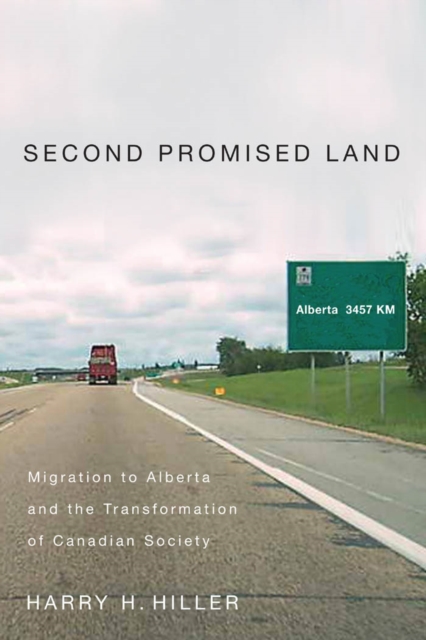
Second Promised Land
Combining statistical analysis and ethnographic study, Harry Hiller uncovers two waves of in-migration to Alberta. His innovative approach begins with the individual migrant and analyzes the relocation experience from origin to destination. Through interviews with hundreds of migrants, Hiller shows that migration is complex and dynamic, shaped not just by what Alberta offers but also prompted by a process that begins in the region of origin which makes migration possible, and helps determine whether migrants stay or return home. By combining a social psychological approach with structural factors such as Alberta's transition from a regional hinterland province to its emerging role the global system, discussions of gender, the internet, and folk culture, Second Promised Land provides a multi-dimensional and deeply human account of a contemporary Canadian phenomenon.
eBook

Beautiful Alberta
Beautiful Alberta is a spectacular photographic portrait of Canada's most prosperous province. It reveals the resplendent natural beauty of the West's towering mountains, cerulean lakes, man-made cities and unique architecture that come together in this awe-inspiring slice of the country.
Book

Tar Wars
Tar Wars offers a critical inside look at how leading image-makers negotiate escalating tensions between continuous economic growth mandated by a globalized economic system and its unsustainable environmental costs. As place branding assumes paramount importance in an increasingly global, visual, and ecologically conscious society, an international battle unfolds over Alberta’s bituminous sands. This battle pits independent documentary filmmakers against professional communicators employed by government and the oil industry. Tar Wars engages scholars and students in communications, film, environmental studies, social psychology, PR, media and cultural studies, and petrocultures. This book also speaks to decision makers, activists, and citizens exploring intersections of energy, environment, culture, politics, economy, media and power.
eBook


Attitudes, current behaviours and barriers to public health measures that reduce COVID-19 transmission: A qualitative study to inform public health messaging
Public health measures to reduce COVID-19 transmission include masking in public places, physical distancing, staying home when ill, avoiding high-risk locations, using a contact tracing app, and being willing to take a COVID-19 vaccine. However, adoption of these measures varies greatly. We aimed to improve health messaging to increase adherence to public health behaviours to reduce COVID-19 transmission by: 1) determining attitudes towards public health measures and current behaviours; 2) identifying barriers to following public health measures; and, 3) identifying public health communication strategies. We recruited participants from a random panel of 3000 phone numbers across Alberta to fill a predetermined quota: age (18–29; 30–59; 60+ years), geographic location (urban; rural), and whether they had school-age children. Two researchers coded and themed all transcripts. We performed content analysis and in-depth thematic analysis. Nine focus groups were conducted with 2–8 participants/group in August-September, 2020. Several themes were identified: 1) importance of public health measures; 2) compliance with public health measures; 3) critiques of public health messaging; and 4) suggestions for improving public health messaging. Physical distancing and masking were seen as more important than using a contact tracing app. There were mixed views around willingness to take COVID-19 vaccine. Current public health messaging was perceived as conflicting. Participants felt that consistent messaging and using social media to reach younger people would be helpful. In conclusion, these findings provide insights that can be used to inform targeted (e.g., by age, current behaviour) public health communications to encourage behaviors that reduce COVID-19 transmission.
Journal Article

Leaving tomorrow : a novel
In the small Alberta town of Tomorrow, young Arthur yearns for a larger life. His father prefers the love of horses and good books, while his mother is guided by practicality and her faith. Bev, his rough-edged brother, chooses action over thinking. Among them is the solitary Arthur -- intelligent, curious, garrulous, romantic and at odds with his surroundings and his religion. His one ally is his adopted cousin, the fearless Isobel. Their mutual admiration for the land, for literature, for all things French and for each other sustains Arthur. When Bev goes to fight in Vietnam and returns emotionally broken, relationships within the family change and tensions between the two brothers rise. With a secret between them, Arthur leaves for Paris, where he pursues his passions for writing and women and at last claims the life he has always wanted. But dreams and reality don't always match, and it takes going away for Arthur to appreciate the push and pull of both home and love.
Book

The Peace-Athabasca Delta
Timely ecology of the Peace-Athabasca Delta--home of wildlife, indigenous cultures, and Alberta's oil sands.
eBook