
Catalogue Search | MBRL


Are you sure you want to remove the book from the shelf?

{{itemTitle}}
972
result(s) for
"Albuquerque"
Sort by:


Healthcare Access and Quality Index based on mortality from causes amenable to personal health care in 195 countries and territories, 1990–2015: a novel analysis from the Global Burden of Disease Study 2015
National levels of personal health-care access and quality can be approximated by measuring mortality rates from causes that should not be fatal in the presence of effective medical care (ie, amenable mortality). Previous analyses of mortality amenable to health care only focused on high-income countries and faced several methodological challenges. In the present analysis, we use the highly standardised cause of death and risk factor estimates generated through the Global Burden of Diseases, Injuries, and Risk Factors Study (GBD) to improve and expand the quantification of personal health-care access and quality for 195 countries and territories from 1990 to 2015.
We mapped the most widely used list of causes amenable to personal health care developed by Nolte and McKee to 32 GBD causes. We accounted for variations in cause of death certification and misclassifications through the extensive data standardisation processes and redistribution algorithms developed for GBD. To isolate the effects of personal health-care access and quality, we risk-standardised cause-specific mortality rates for each geography-year by removing the joint effects of local environmental and behavioural risks, and adding back the global levels of risk exposure as estimated for GBD 2015. We employed principal component analysis to create a single, interpretable summary measure–the Healthcare Quality and Access (HAQ) Index–on a scale of 0 to 100. The HAQ Index showed strong convergence validity as compared with other health-system indicators, including health expenditure per capita (r=0·88), an index of 11 universal health coverage interventions (r=0·83), and human resources for health per 1000 (r=0·77). We used free disposal hull analysis with bootstrapping to produce a frontier based on the relationship between the HAQ Index and the Socio-demographic Index (SDI), a measure of overall development consisting of income per capita, average years of education, and total fertility rates. This frontier allowed us to better quantify the maximum levels of personal health-care access and quality achieved across the development spectrum, and pinpoint geographies where gaps between observed and potential levels have narrowed or widened over time.
Between 1990 and 2015, nearly all countries and territories saw their HAQ Index values improve; nonetheless, the difference between the highest and lowest observed HAQ Index was larger in 2015 than in 1990, ranging from 28·6 to 94·6. Of 195 geographies, 167 had statistically significant increases in HAQ Index levels since 1990, with South Korea, Turkey, Peru, China, and the Maldives recording among the largest gains by 2015. Performance on the HAQ Index and individual causes showed distinct patterns by region and level of development, yet substantial heterogeneities emerged for several causes, including cancers in highest-SDI countries; chronic kidney disease, diabetes, diarrhoeal diseases, and lower respiratory infections among middle-SDI countries; and measles and tetanus among lowest-SDI countries. While the global HAQ Index average rose from 40·7 (95% uncertainty interval, 39·0–42·8) in 1990 to 53·7 (52·2–55·4) in 2015, far less progress occurred in narrowing the gap between observed HAQ Index values and maximum levels achieved; at the global level, the difference between the observed and frontier HAQ Index only decreased from 21·2 in 1990 to 20·1 in 2015. If every country and territory had achieved the highest observed HAQ Index by their corresponding level of SDI, the global average would have been 73·8 in 2015. Several countries, particularly in eastern and western sub-Saharan Africa, reached HAQ Index values similar to or beyond their development levels, whereas others, namely in southern sub-Saharan Africa, the Middle East, and south Asia, lagged behind what geographies of similar development attained between 1990 and 2015.
This novel extension of the GBD Study shows the untapped potential for personal health-care access and quality improvement across the development spectrum. Amid substantive advances in personal health care at the national level, heterogeneous patterns for individual causes in given countries or territories suggest that few places have consistently achieved optimal health-care access and quality across health-system functions and therapeutic areas. This is especially evident in middle-SDI countries, many of which have recently undergone or are currently experiencing epidemiological transitions. The HAQ Index, if paired with other measures of health-system characteristics such as intervention coverage, could provide a robust avenue for tracking progress on universal health coverage and identifying local priorities for strengthening personal health-care quality and access throughout the world.
Bill & Melinda Gates Foundation.
Journal Article
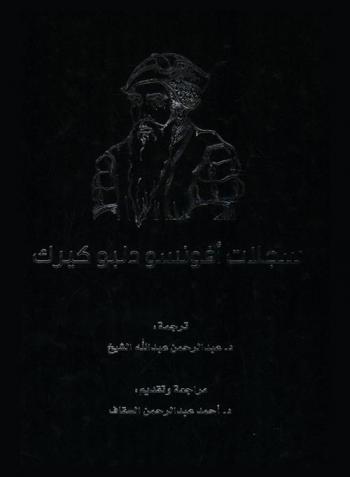
سجلات أفونسو دلبو كيرك (1503-1515 م) : الرواية البرتغالية لأحداث الغزو البرتغالي لسواحل الخليج العربي والمحيط الهندي
يتناول هذا الكتاب جانبا من المرحلة المبكرة للوجود البرتغالي في موانئ بلاد الشرق المطلة على سواحل المحيط الهندي وجزره ومضايقه وخلجانه، ما بين عامي 1503 و1515م ويكاد ينحصر ذلك الجانب في الحوادث التي شهدها الأدميرال البرتغالي أفونسو دلبوكيرك (1453-1515) والمعارك التي قادها والذي اجتاح فيما يشبه العاصفة سواحل المحيط الهندي ومضايقاته، فقصف ودمر ونهب وأحرق الموانئ التجارية الكبيرة وارتكب من الأعمال الوحشية بحق العزل من السكان عامة.
BOOK

Judge Pinto de Albuquerque and the Progressive Development of International Human Rights Law
This is the first English written book that includes the most significant opinions of Judge Paulo Pinto de Albuquerque delivered at the European Court of Human Rights. He was the President of the Committee on the Rules of the Court, the President of the Criminal Law Group of the Court and the focal point for the international relations of the European Court with Constitutional and Supreme Courts outside Europe. Previously he had worked as an anti-corruption leading expert for the Council of Europe. As Full Professor at the Faculty of Law of the Catholic University of Lisbon, he has published, inter alia, 23 books in English, French, Italian, Portuguese, Russian, Spanish, Turkish and Ukranian and 65 legal articles and book chapters in those languages as well as Chinese and German. Since his appointment as a Judge in Strasbourg, he has authored 157 opinions that have significantly contributed to the development of international human rights law. The Judge's decisions are regularly cited by academic scholars and practitioners in human rights law, public international law, criminal law, migration and refugee law.
eBook


Industry-Laboratory Partnerships
The Sandia National Laboratories asked the Board on Science, Technology, and Economic Policy (STEP) to hold a one-day symposium to review Sandia's proposal to develop a science and technology park. In light of the importance of industry-laboratory cooperation for the STEP Board's project on Government-Industry Partnerships for the Development of New Technologies, the Board convened a workshop bringing together executive branch officials, congressional staff, representatives from the private sector, and regional economists to discuss the Sandia S&T park initiative. The Sandia S&T Park, which Sandia National Laboratories, the City of Albuquerque, and the State of New Mexico are jointly developing, is a 285 acre site located adjacent to Sandia National Laboratories. Groundbreaking for the park took place in May, 1999.
eBook


The Commentaries of the Great Afonso Dalboquerque, Second Viceroy of India
This is translated from the Portuguese Edition of 1774, with Notes and an Introduction. Continued in First Series 55, 62, and 69. This is a new print-on-demand hardback edition of the volume first published in 1875.
eBook

Volver : a persistence of memory
\"Born on the eve of World War II into a family of Mexican immigrants in El Paso, Antonio C. Márquez remains a child of the border, his life partaking of multiple cultures, countries, and classes. Here he recounts his life story, from childhood memories of movies and baseball and friendship with his Chinese Mexican American neighbor, Manuel Wong, to the turbulent events of his manhood. Márquez recalls the impact of immigration and war on his family; his experiences of gang conflict in El Paso and Los Angeles in the 1960s; enlisting in the Marine Corps; his activism in the civil rights movement, the antiwar movement of the Vietnam era, and the Crusade for Justice; and his travels to crisis-ridden Latin American countries. From a family where no one had the luxury of higher education, Márquez became a professor when universities hired few Chicanos. His is a story of survival and courage\"--Provided by publisher.
Book

Environmental impacts of groundwater overdraft: selected case studies in the southwestern United States
The southwestern United States--this paper's study region--is home to large urban centers and features a thriving agro-industrial economic sector. This region is also one of the driest in North America, with highly variable seasonal and inter-annual precipitation regimes and frequent droughts. The combination of a large demand for usable water and semi-arid climate has led to groundwater overdraft in many important aquifers of the region. Groundwater overdraft develops when long-term groundwater extraction exceeds aquifer recharge, producing declining trends in aquifer storage and hydraulic head. In conjunction with overdraft, declines in surface-water levels and streamflow, reduction or elimination of vegetation, land subsidence, and seawater intrusion are well documented in many aquifers of the southwestern United States. This work reviews case studies of groundwater overdraft in this region, focusing on its causes, consequences, and remedial methods applied to counter it.[PUBLICATION ABSTRACT]
Journal Article