
Catalogue Search | MBRL


Are you sure you want to remove the book from the shelf?

{{itemTitle}}
464
result(s) for
"Alcoholics Anonymous"
Sort by:

Educating desire : autobiographical impressions of addiction in alcoholics anonymous
This impressionistic autobiographical inquiry is an attempt to connect the personal with the socio-historical?addiction with Addiction; it is also an attempt to demonstrate that knowledge production can be generated through radically non-traditional means. Narrative serves as method and methodology in a mostly first person account of a fictional open AA meeting. A suspicious hermeneutics is applied to addiction, to AA, and to the phenomenon of total medicalization, which the author and narrative finally succumb to, in the interest of questioning common sense assumptions about these themes, and as jumping off points for literary and philosophical exploration. Highlighted is the semi-fictionalized storied nature of reflected upon lived experience?the personal telephone game of (Paul Ricoeur?s) narrative identity?and the role of institutions like AA in grafting onto lived experience new narrative forms that allow for new ways of structuring self and identity. All the made-up aspects of the narrative?the multi-tracked narrator?s voice, shifts in point-of-view, and the semi and sometimes totally imagined characters encountered at the meeting and elsewhere?are the fiction the author makes of his personal history as an addict and newcomer in AA, which complicates the relation between knower and known (author and reader) while enriching and enlivening the narrative, drawing the reader into a literary representation of imagined and lived experience.
Book

The Beneficial Role of Involvement in Alcoholics Anonymous for Existential and Subjective Well-Being of Alcohol-Dependent Individuals? The Model Verification
Involvement in Alcoholics Anonymous (AA) is an important psychosocial factor for the recovery of alcohol-dependent individuals. Recent studies have confirmed the beneficial role of involvement in AA for abstinence and reduction in drinking alcohol. Little is known about the mechanism underlying the relationship between involvement in AA and subjective well-being. This study aims to verify whether in a sample of Polish AA participants involvement in AA is indirectly related to subjective well-being through existential well-being consisting of hope and meaning in life. The achieved results have confirmed that involvement in AA is positively related to existential well-being, which in turn positively predicts subjective well-being including life satisfaction as well as positive and negative affect. It was confirmed that AA involvement in self-help groups indirectly via existential well-being is related to subjective well-being. Theoretical and practical implications were discussed.
Journal Article

American Protestantism in the age of psychology
\"The social history of three major psycho-spiritual movements since World War II shows that these groups innovated a practical religious psychology that nurtured participants' faith, fellowship, and responsibility\"--Provided by publisher.
Book

The Language of the Heart
InThe Language of the HeartTrysh Travis explores the rich cultural history of Alcoholics Anonymous (AA) and its offshoots and the larger \"recovery movement\" that has grown out of them. Moving from AA's beginnings in the mid-1930s as a men's fellowship that met in church basements to the thoroughly commercialized addiction treatment centers of today, Travis chronicles the development of recovery and examines its relationship to the broad American tradition of self-help, highlighting the roles that gender, mysticism, and print culture have played in that development.Travis draws on hitherto unexamined materials from AA's archives as well as a variety of popular recovery literatures. Her analysis traces AA's embrace of the concept of alcoholism as disease, the rise of feminist sobriety discourse and the codependence theories of the 1970s and 80s, and Oprah Winfrey's turn-of-the-millennium popularization of metaphysical healing. What unites these varied cultures of recovery, Travis argues, is their desire to offer spiritual solutions to problems of gender and power.Treating self-help seekers as individuals whose intellectual and aesthetic traditions are worth excavating,The Language of the Heartis the first book to attend to the evolution and variation found within the recovery movement and to treat recovery with the attention to detail that its complexity requires.
eBook
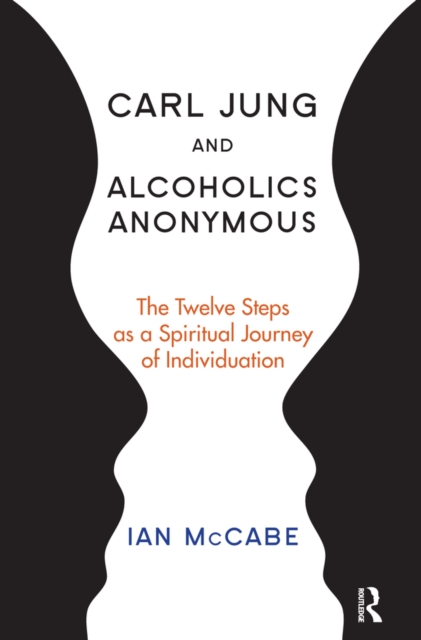
Carl Jung and Alcoholics Anonymous
The author visited the archives of the headquarters of A.A. in New York, and discovered new communications between Carl Jung and Bill Wilson. For the first time this correspondence shows Jung's respect for A.A. and in turn, its influence on him. In particular, this research shows how Bill Wilson was encouraged by Jung's writings to promote the spiritual aspect of recovery as opposed to the conventional medical model which has failed so abysmally. The book overturns the long-held belief that Jung distrusted groups. Indeed, influenced by A.A.'s success, Jung gave \"complete and detailed instructions\" on how the A.A. group format could be developed further and used by \"general neurotics\".Wilson was an advocate of treating some alcoholics with LSD in order to deflate the ego and induce a spiritual experience. The author explains how alcoholism can be diagnosed and understood by professionals and the lay person; by examining the detailed case histories of Jung, the author gives graphic examples of its psychological and behavioural manifestations.
eBook

American Protestantism in the Age of Psychology
Many have worried that the ubiquitous practice of psychology and psychotherapy in America has corrupted religious faith, eroded civic virtue and weakened community life. But an examination of the history of three major psycho-spiritual movements since World War II – Alcoholics Anonymous, The Salvation Army's outreach to homeless men, and the 'clinical pastoral education' movement – reveals the opposite. These groups developed a practical religious psychology that nurtured faith, fellowship and personal responsibility. They achieved this by including religious traditions and spiritual activities in their definition of therapy and by putting clergy and lay believers to work as therapists. Under such care, spiritual and emotional growth reinforced each other. Thanks to these innovations, the three movements succeeded in reaching millions of socially alienated and religiously disenchanted Americans. They demonstrated that religion and psychology, although antithetical in some eyes, could be blended effectively to foster community, individual responsibility and happier lives.
eBook

Belief, Behavior, and Belonging: How Faith is Indispensable in Preventing and Recovering from Substance Abuse
This study reviews the voluminous empirical evidence on faith's contribution to preventing people from falling victim to substance abuse and helping them recover from it. We find that 73% of addiction treatment programs in the USA include a spirituality-based element, as embodied in the 12-step programs and fellowships initially popularized by Alcoholics Anonymous, the vast majority of which emphasize reliance on God or a Higher Power to stay sober. We introduce and flesh out a typology of faith-based substance abuse treatment facilities, recovery programs, and support groups. This typology provides important background as we then move on to make an economic valuation of nearly 130,000 congregation-based substance abuse recovery support programs in the USA. We find that these faith-based volunteer support groups contribute up to $316.6 billion in savings to the US economy every year at no cost to tax payers. While negative experiences with religion (e.g., clergy sex abuse and other horrendous examples) have been a contributory factor to substance abuse among some victims, given that more than 84% of scientific studies show that faith is a positive factor in addiction prevention or recovery and a risk in less than 2% of the studies reviewed, we conclude that the value of faith-oriented approaches to substance abuse prevention and recovery is indisputable. And, by extension, we also conclude that the decline in religious affiliation in the USA is not only a concern for religious organizations but constitutes a national health concern.
Journal Article

The effect of alcoholics anonymous group participation on flourishing in Turkey: the mediating role of hope and social support
Background
Alcohol use disorder (AUD) is a significant public health issue that negatively impacts individuals’ flourishing, social relationships, and life satisfaction. In recent years, the concept of recovery has been approached as encompassing not only the reduction or cessation of alcohol use but also the strengthening of positive psychology-based resources such as hope, social support, and developmental flourishing. Alcoholics Anonymous (AA) groups are an important community-based intervention that can contribute to the development of these resources through mutual experience sharing and the 12-step program. This study aims to examine the effect of AA participation on flourishing and the mediating role of hope and perceived social support in this relationship.
Methods
The study, conducted using a cross-sectional comparative design, included 245 participants from all official AA centers operating in Turkey’s seven geographical regions (low participation
n
= 109; high participation
n
= 136). Participants completed validated self-report scales: Flourishing Scale, Continuous Hope Scale, Multidimensional Perceived Social Support Scale, Connor-Davidson Resilience Scale, and DASS-21. Age, depression and stress were controlled as covariates in the analyses. Data were evaluated using MANCOVA and mediation analyses.
Results
High levels of AA participation were found to be significantly associated with higher flourishing, hope, and perceived social support; and lower levels of depression and stress. Mediation analyses indicated that hope (indirect effect = 0.75, 95% CI [0.23, 1.29]) and perceived social support (indirect effect = 0.59, 95% CI [0.21, 1.07]) mediated the relationship between AA participation and flourishing. The final model explained 28% of the variance in flourishing (R² = 0.28,
p
< 0.001).
Conclusions
Regular participation in AA is associated with reducing or ceasing alcohol use and with enhanced flourishing by strengthening hope and social support. These results highlight the critical role of positive psychology-based resources in the recovery process from addiction. Furthermore, as the study was conducted using data obtained from all official AA centers in Turkey, it reflects the socio-cultural diversity across the country and offers a unique contribution to the literature.
Clinical trial number
Not applicable.
Trial registration
Not applicable.
Journal Article