
Catalogue Search | MBRL


Are you sure you want to remove the book from the shelf?

{{itemTitle}}
38,878
result(s) for
"Alexandria"
Sort by:


The Eastern Mediterranean and the making of global radicalism, 1860-1914
In this groundbreaking book, Ilham Khuri-Makdisi establishes the existence of a special radical trajectory spanning four continents and linking Beirut, Cairo, and Alexandria between 1860 and 1914. She shows that socialist and anarchist ideas were regularly discussed, disseminated, and reworked among intellectuals, workers, dramatists, Egyptians, Ottoman Syrians, ethnic Italians, Greeks, and many others in these cities. In situating the Middle East within the context of world history, Khuri-Makdisi challenges nationalist and elite narratives of Mediterranean and Middle Eastern history as well as Eurocentric ideas about global radical movements. The book demonstrates that these radical trajectories played a fundamental role in shaping societies throughout the world and offers a powerful rethinking of Ottoman intellectual and social history.
eBook
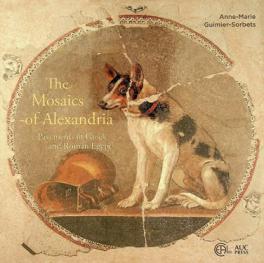
Mosaics of Alexandria : pavements of Greek and Roman Egypt
\"The art of the mosaic was developed by the Greeks, notably within the royal court of Macedonia, and was initially unknown to the Egyptians. Macedonian mosaicists then established busy workshops in the capital, Alexandria, and in the new towns of Greek Egypt. Under the stimulus of commissions from the Ptolemaic court, these workshops soon showed that they were capable of innovation. Beginning with pebbles, they then used tesserae of different sizes, and adopted new materials (glass, faience, paint) in order to transpose onto the floor images from grand paintings, which was the major art form of the time and was characterized by the vivid use of color. Alexandrian mosaicists were at the forefront of creativity during the Hellenistic period and their influence spread around the Mediterranean. After the Roman conquest of Egypt they adapted to the tastes of their new sponsors and to changes in architecture and were able to retain an important place within this art as it developed across the entire empire, in Rome and from east to west. The Mosaics of Alexandria provides the first overview of the mosaics and pavements of Egypt that were created between the end of the fourth century BC and the sixth century AD. It presents a selection of some seventy mosaics and pavements from Alexandria and Greco-Roman Egypt. Generally little known and more often than not unpublished, these works are illustrated here in full color, some for the first time. The aim is to better understand the artistic and artisanal production of a type of decoration that played an important role within the living environment of the ancients.\"-- Provided by publisher.
Book



Alexandrian Cosmopolitanism: An Archive
Interrogating how Alexandria became enshrined as the exemplary cosmopolitan space in the Middle East, this book mounts a radical critique of Eurocentric conceptions of cosmopolitanism. The dominant account of Alexandrian cosmopolitanism elevates things European in the city's culture and simultaneously places things Egyptian under the sign of decline. The book goes beyond this civilization/barbarism binary to trace other modes of intercultural solidarity. Halim presents a comparative study of literary representations, addressing poetry, fiction, guidebooks, and operettas, among other genres. She reappraises three writers--C. P. Cavafy, E. M. Forster, and Lawrence Durrell--whom she maintains have been cast as the canon of Alexandria. Attending to issues of genre, gender, ethnicity, and class, she refutes the view that these writers' representations are largely congruent and uncovers a variety of positions ranging from Orientalist to anti-colonial. The book then turns to Bernard de Zogheb, a virtually unpublished writer, and elicits his Camp parodies of elite Levantine mores in operettas one of which centers on Cavafy. Drawing on Arabic critical and historical texts, as well as contemporary writers' and filmmakers' engagement with the canonical triumvirate, Halim orchestrates an Egyptian dialogue with the European representations.
eBook


The Alexandrian Riots of 38 C. E. and the Persecution of the Jews. a Historical Reconstruction
An imperial adjudication against the Jews prompted the riots of 38 CE in Alexandria. The Roman prefect and the Alexandrian citizenry acted within their institutional roles to the effect that most of the Jews lost their legal residence for good.
eBook


PHILO OF ALEXANDRIA’S DE GIGANTIBVS AND QVOD DEVS SIT IMMVTABILIS: COMPLEXITIES IN THE TRANSMISSION OF THE ALLEGORICAL COMMENTARY
One of the tendencies among scribes who transmitted the corpus Philonicum was to divide treatises into smaller units. This article argues that Philo’s De gigantibus and Quod Deus sit immutabilis were originally a single treatise that scribes split in an effort to create thematic unities for each half. Two lines of evidence support this conclusion. There is significant evidence that the two treatises circulated as a single work in antiquity. The most important evidence lies in the titles. Eusebius knew a compound title for a single work and the eighth-century compilers of the Sacra parallela attributed fragments from Quod Deus sit immutabilis to De gigantibus. The second line of evidence is internal. De gigantibus is noticeably shorter than any other treatise in the Allegorical Commentary with the exception of De sobrietate that may be incomplete. More importantly, the work concludes with an internal transitional phrase that introduces the citation that opens Quod Deus sit immutabilis. While Philo creates a bridge between treatises, this is an internal transition marker. For these reasons, we should discontinue following the scribal tradition and reunite the two halves of Philo’s treatise.
Journal Article