
Catalogue Search | MBRL


Are you sure you want to remove the book from the shelf?

{{itemTitle}}
54
result(s) for
"Algeria-History-Revolution, 1954-1962"
Sort by:

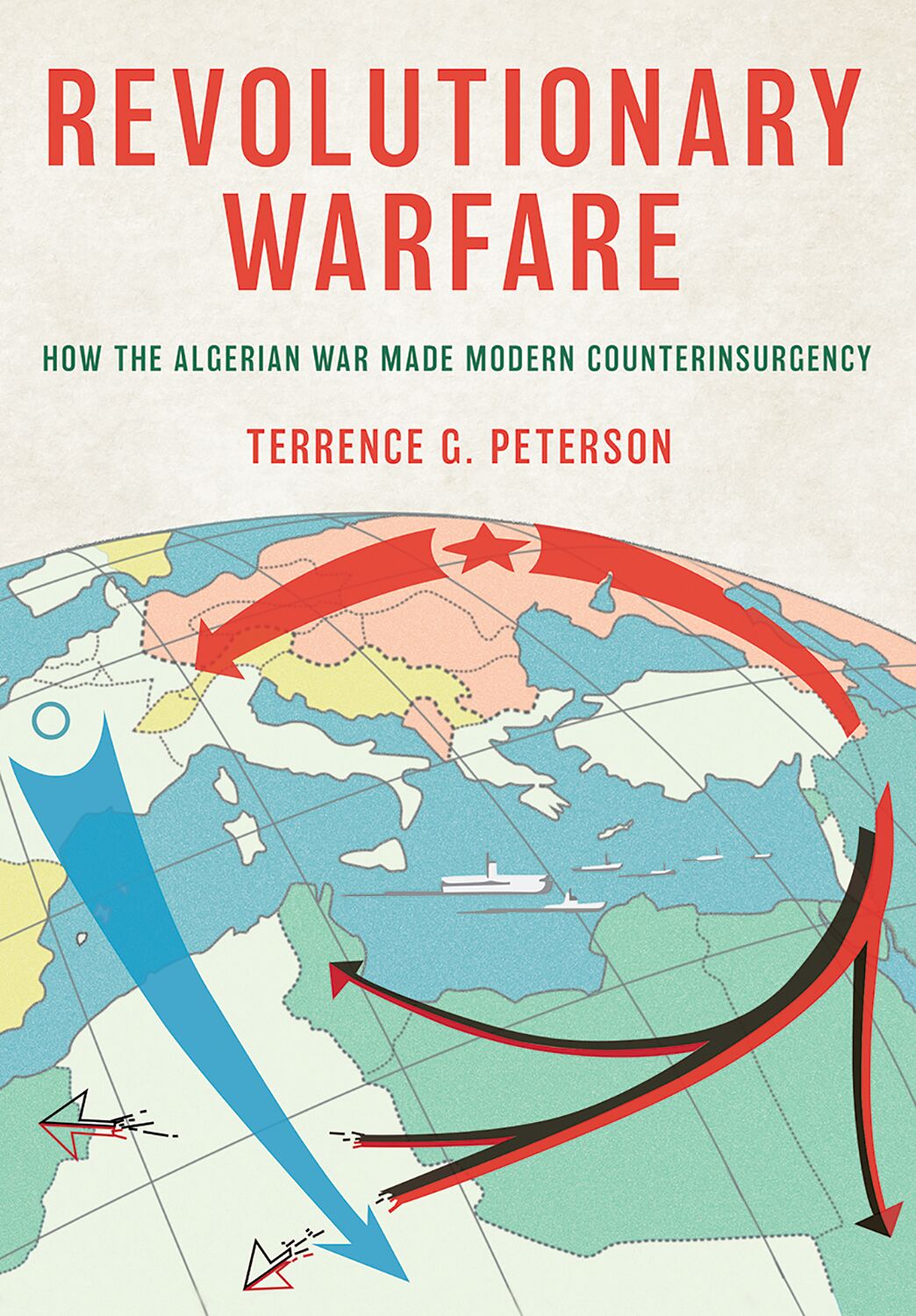
Revolutionary Warfare
Revolutionary Warfare
investigates how efforts to counter a revolution could also
be revolutionary. The Algerian War fractured the French
Empire, destroyed the legitimacy of colonial rule, and helped
launch the Third Worldist movement for the liberation of the Global
South. By tracing how French generals, officers, and civil
officials sought to counter Algerian independence with their own
project of radical social transformation, Terrence G. Peterson
reveals that the conflict also helped to transform the nature of
modern warfare.
The French war effort was never defined solely by repression. As
Peterson details, it also sought to fashion new forms of
surveillance and social control that could capture the loyalty of
Algerians and transform Algerian society. Hygiene and medical aid
efforts, youth sports and education programs, and psychological
warfare campaigns all attempted to remake Algerian social
structures and bind them more closely to the French state. In
tracing the emergence of such programs, Peterson reframes the
French war effort as a project of armed social reform that sought
not to preserve colonial rule unchanged, but to revolutionize it in
order to preserve it against the global challenges of
decolonization.
Revolutionary Warfare demonstrates how French officers'
efforts to transform warfare into an exercise in social engineering
not only shaped how the Algerian War unfolded from its earliest
months, but also helped to forge a paradigm of warfare that
dominated strategic thinking during the Cold War and after:
counterinsurgency.
eBook

The Battle for Algeria
InThe Battle for AlgeriaJennifer Johnson reinterprets one of the most violent wars of decolonization: the Algerian War (1954-1962). Johnson argues that the conflict was about who-France or the National Liberation Front (FLN)-would exercise sovereignty of Algeria. The fight between the two sides was not simply a military affair; it also involved diverse and competing claims about who was positioned to better care for the Algerian people's health and welfare. Johnson focuses on French and Algerian efforts to engage one another off the physical battlefield and highlights the social dimensions of the FLN's winning strategy, which targeted the local and international arenas. Relying on Algerian sources, which make clear the centrality of health and humanitarianism to the nationalists' war effort, Johnson shows how the FLN leadership constructed national health care institutions that provided critical care for the population and functioned as a protostate. Moreover, Johnson demonstrates how the FLN's representatives used postwar rhetoric about rights and national self-determination to legitimize their claims, which led to international recognition of Algerian sovereignty.
By examining the local context of the war as well as its international dimensions, Johnson deprovincializes North Africa and proposes a new way to analyze how newly independent countries and nationalist movements engage with the international order. The Algerian case exposed the hypocrisy of selectively applying universal discourse and provided a blueprint for claim-making that nonstate actors and anticolonial leaders throughout the Third World emulated. Consequently,The Battle for Algeriaexplains the FLN's broad appeal and offers new directions for studying nationalism, decolonization, human rights, public health movements, and concepts of sovereignty.
eBook

La bataille d'Alger
Découvrez enfin tout ce qu'il faut savoir sur la bataille d'Alger en moins d'une heure! Durant l'été 1956, Alger est secoué par une série d'attaques terroristes orchestrées par le FLN visant le centre du pouvoir français en Algérie. Leur revendication est simple: obtenir l'indépendance. Mais la France ne peut accepter de telles attaques. Alors, le 7 janvier, le général Jacques Massu reçoit les pleins pouvoirs pour démanteler l'organisation, n'hésitant pas à utiliser tous les moyens mis à sa disposition. Ce livre vous permettra d'en savoir plus sur:
• Le contexte politique et social de l'époque
• Les acteurs majeurs du conflit
• Le déroulement de la bataille d'Alger et sa chronologie (carte à l'appui)
• Les raisons de la victoire française
• Les répercussions de la bataille Le mot de l'éditeur:
« Dans ce numéro de la collection « 50MINUTES|Grandes Batailles », Xavier De Weirt nous fait découvrir cet épisode particulièrement douloureux de la guerre d'Algérie. Symbole des abus commis par la France pour conserver l'Algérie, l'auteur nous offre le récit d'une lutte pour l'indépendance où tous les moyens paraissent bons pour atteindre l'objectif fixé. » Stéphanie DagrainÀ PROPOS DE LA SÉRIE 50MINUTES | Grandes Batailles
La série « Grandes Batailles » de la collection « 50MINUTES » aborde plus de cinquante conflits qui ont bouleversé notre histoire. Chaque livre a été pensé pour les lecteurs curieux qui veulent tout savoir sur une bataille, tout en allant à l'essentiel, et ce en moins d'une heure. Nos auteurs combinent les faits, les analyses et les nouvelles perspectives pour rendre accessibles des siècles d'histoire.
eBook
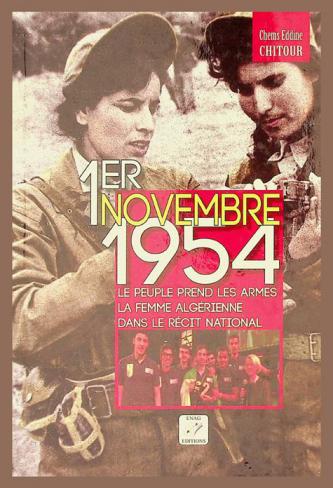

Human Rights in the Shadow of Colonial Violence
Human Rights in the Shadow of Colonial Violence explores the relationship between the human rights movement emerging after 1945 and the increasing violence of decolonization. Based on material previously inaccessible in the archives of the International Committee of the Red Cross and the United Nations Human Rights Commission, this comparative study uses the Mau Mau War (1952-1956) and the Algerian War (1954-1962) to examine the policies of two major imperial powers, Britain and France. Historian Fabian Klose considers the significance of declared states of emergency, counterinsurgency strategy, and the significance of humanitarian international law in both conflicts.Klose's findings from these previously confidential archives reveal the escalating violence and oppressive tactics used by the British and French military during these anticolonial conflicts in North and East Africa, where Western powers that promoted human rights in other areas of the world were opposed to the growing global acceptance of freedom, equality, self-determination, and other postwar ideals. Practices such as collective punishment, torture, and extrajudicial killings did lasting damage to international human rights efforts until the end of decolonization.Clearly argued and meticulously researched, Human Rights in the Shadow of Colonial Violence demonstrates the mutually impacting histories of international human rights and decolonization, expanding our understanding of political violence in human rights discourse.
eBook

The algerian war in French-language comics
The decolonization of Algeria represents a turning point in world history, marking the end of France's colonial empire, the birth of the Algerian republic, and the appearance of the Third World and pan-Arabism.Algeria emerged from colonial domination to negotiate the release of American hostages in Iran during the Carter administration.
eBook