
Catalogue Search | MBRL


Are you sure you want to remove the book from the shelf?

{{itemTitle}}
455
result(s) for
"Algerian War"
Sort by:


Law, Order, and Empire
While much attention has focused on society, culture, and the military during the Algerian War of Independence, Law, Order, and Empire addresses a vital component of the empire that has been overlooked: policing. Samuel Kalman examines a critical component of the construction and maintenance of a racial state by settlers in Algeria from 1870 onward, in which Arabs and Berbers were subjected to an ongoing campaign of symbolic, structural, and physical violence. The French administration encouraged this construct by expropriating resources and territory, exploiting cheap labor, and monopolizing government, all through the use of force.
Kalman provides a comprehensive overview of policing and crime in French Algeria, including the organizational challenges encountered by officers. Unlike the metropolitan variant, imperial policing was never a simple matter of law enforcement but instead engaged in the defense of racial hegemony and empire. Officers and gendarmes waged a constant struggle against escalating banditry, the assault and murder of settlers, and nationalist politics—anticolonial violence that rejected French rule. Thus, policing became synonymous with repression, and its brutal tactics foreshadowed the torture and murder used during the War of Independence. To understand the mechanics of empire, Kalman argues that it was the first line of defense for imperial hegemony.
Law, Order, and Empire outlines not only how failings in policing were responsible for decolonization in Algeria but also how torture, massacres, and quotidian colonial violence—introduced from the very beginning of French policing in Algeria—created state-directed aggression from 1870 onward.
eBook

La Cuisine Pied Noir: wandering in \nostalgia-scape\
The year 1962 marked the end of the colonial occupation of Algeria by France after more than 130 years. In the wake of a bloody war of independence, nearly 700 000 former European settlers left their old homeland under dramatic circumstances. Most of them ended up in the port of Marseille to find a new livelihood in their motherland France. After their exodus from French Algeria, a state which was doomed to failure, the \"Pieds-noirs\" developed a multilayered culture of remembrance. Their specific food culture - La Cuisine Pied Noir - emerged as an essential part of their heritage. An interdisciplinary academic approach to this cuisine allows for a deeper understanding of culinary cultural transfer in the context of colonialism and decolonisation. \"La Cuisine Pied Noir\" highlights the importance of food as a cultural companion and as a guardian of social identity. The drama of the Algerian-French history is still discussed in present-day France. Finally, the archives in both countries are opened to historical studies. This article invites researchers in the field of food culture to participate in a stimulating discussion.
Journal Article

UNHCR and the Algerian war of independence: postcolonial sovereignty and the globalization of the international refugee regime, 1954–63
The Algerian war of independence (1954-62) was crucial to the extension of the modern international refugee regime beyond Europe. It is also the exemplar of how that regime became a site for the establishment of postcolonial sovereignty, globally. Tunisia and Morocco, newly independent, requested UNHCR’s help in assisting hundreds of thousands of Algerian refugees: interacting with the refugee regime allowed them to establish their credentials as independent states while asserting sovereignty over their own territories. In Algeria, the 1951 Refugee Convention applied before the war started, and UNHCR worked there to support ‘old’ refugees. During the war, the Front de Libération Nationale asserted itself as a state-in-waiting by engaging with UNHCR outside Algeria as the agency coordinated a vast relief operation. After the war, as refugees returned to a landscape riven by mass displacement, interacting with the refugee regime helped the new state assert sovereignty over Algeria’s territory, and Algerian bodies.
Journal Article
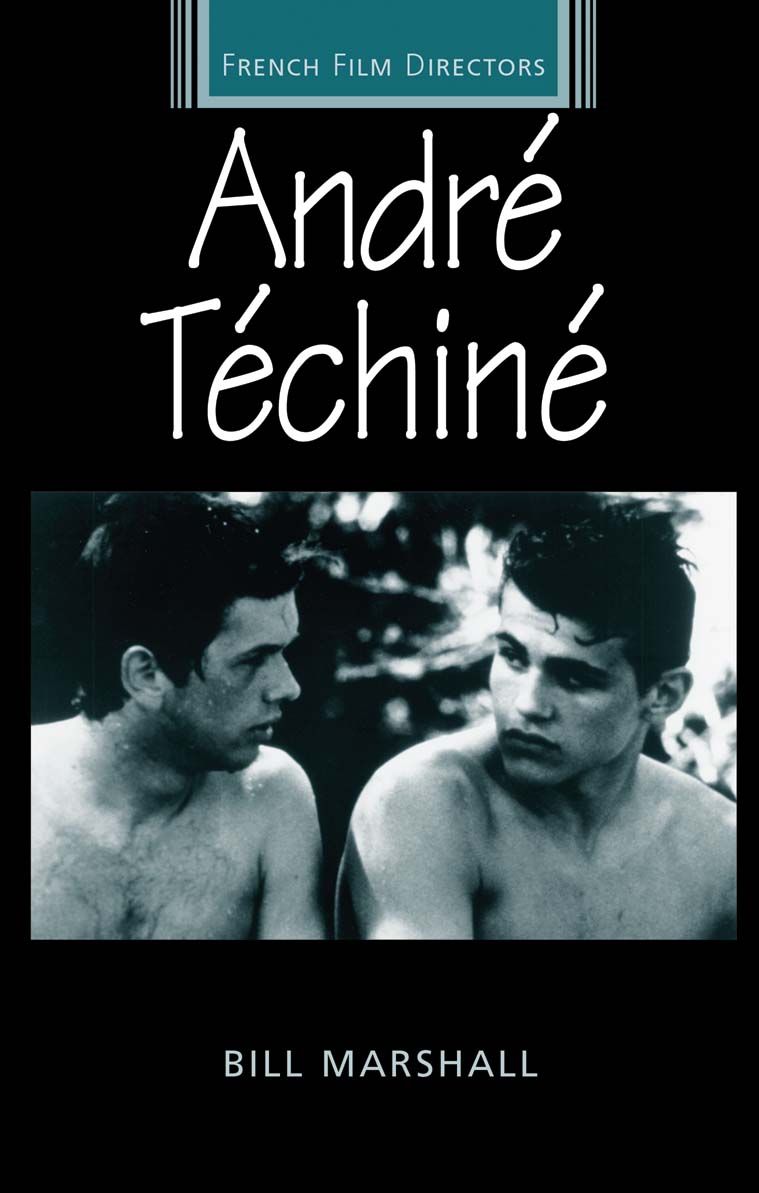
André Téchiné
This is the first full-length monograph in English about one of France's most important contemporary filmmakers, perhaps best known in the English speaking world for his award winning Les Roseaux sauvages/Wild Reeds of 1994. This study locates André Téchiné within historical and cultural contexts that include the Algerian war, May 1968 and contemporary globalisation, and the influence of Roland Barthes, Bertolt Brecht, Ingmar Bergman, William Faulkner and the cinematic French wave. The originality of Téchiné's sixteen feature films lies in his subtle exploration of sexuality and national identity, as he challenges expectations in his depictions of gay relations, the North African dimensions of contemporary French culture, and the centre-periphery relationship between Paris and his native southwest.The book will be of interest to researchers and postgraduates working on French cinema, undergraduates studying Téchiné on their film courses, and all those with a general interest in cinema, contemporary France, and lesbian and gay issues.
eBook

The Algerian Civil War, Reminiscences of the Colonial Enemy
In Algeria, the struggle against the former colonial Power has been a constant source of legitimacy for the regime and the party that embodies it, the National Liberation Front (FLN). In 1990 and 1991, after multiparty rule was set up, the Islamic Salvation Front (FIS) has built its success by representing a radical alternative to the FLN, but it nevertheless incorporates some elements of the language used by the fathers of the revolution. Therefore, Islamist leaders accused Algerian leaders of betraying ideals and asserted the need to return to the authenticity of the revolution. Once political competition in Algeria strays towards armed confrontation, the claims of each camp to embody the political community and their will to discredit the adversary drive them even more to seek out this functional enemy, colonial France.
Journal Article

La récréation des clowns
En pleine guerre d'Algérie, Alger à l'heure de la torture. Pour un gala organisé par l'armée, trois Paras, trois tortionnaires ont monté un spectacle où ils jouent des clowns. Déguisés, grimés, cocasses, ils sont sur scène à répéter une dernière fois avant le lever du rideau. Mais voici qu'un de leurs camarades leur amène un Algérien soupçonné d'avoir déposé une bombe dans un lieu public. Il faut à tout prix le faire parler. On monte sur scène « Gégène », la magnéto. Mais sous l'emprise du spectacle des clowns et des costumes qu'ils n'ont pas le temps de quitter, les professionnels de la torture n'arrivent plus à mener l'interrogatoire de la manière prévue. At the height of the Algerian War, French army units turn to torture in response to the new urban guerrilla tactics of the rebels in the capital, Algiers. But daily life goes on. For a gala evening of entertainment offered to civic leaders and the upper echelons of the French army, three soldiers, specialists in enhanced interrogation, have proposed a series of clown skits. The curtain rises on their dress rehearsal before the evening's performance. Suddenly, the rehearsal is interrupted. An Algerian has been arrested, suspected of having planted a bomb primed to explode later the same evening. With no time to leave the theater or even remove their clown costumes, he must be made to talk. But on stage, in those circumstances, the interrogation takes an unforeseen turn.
eBook

A New Geography of Remembering: Unveiling the Harki Silences in Dalila Kerchouche’s Mon père, ce harki
This article analyses Mon père, ce harki (2003), by Dalila Kerchouche, to shed light on the exile experienced by those harkis who left Algeria for France in the aftermath of the Franco-Algerian war (1954-1962), locating this episode in the context of the complex postcolonial relationship between France and Algeria in recent decades. As it is used today, ‘harki’ refers to those Algerian subjects (and their families) who somehow found themselves on the French side during the conflict. In her book, a literary testimony, Kerchouche revisits the story of her father, a former harki, to conduct her own search for identity within the harki universe. She borrows from familial and collective memories and dialogues with an array of texts that have helped her make sense of and write over the historical silences, which the harkis – constructed as traitors – have had imposed on them by both the French and the Algerian administrations. Throughout her “harkeological quest”, Kerchouche retraces her father’s steps and visits first the camp where she was born and then Algeria itself, the homeland that her family abandoned and from which she was also symbolically exiled. This return draws an alternative map of her family history and, at the same time, equips her with the historical accounts and family memories that she uses to write a counter-narrative to the French hegemonic account of its relationship with Algeria. Read against the backdrop of the work of historians and literary critics, Mon père, ce harki allows for a nuanced understanding of the position of the harkis in post-imperial France.
Journal Article

The Civilizing Mission in the Metropole
France, which has the largest Muslim minority community in Europe, has been in the news in recent years because of perceptions that Muslims have not integrated into French society. The Civilizing Mission in the Metropole explores the roots of these debates through an examination of the history of social welfare programs for Algerian migrants from the end of World War II until Algeria gained independence in 1962. After its colonization in 1830, Algeria fought a bloody war of decolonization against France, as France desperately fought to maintain control over its most prized imperial possession. In the midst of this violence, some 350,000 Algerians settled in France. This study examines the complex and often-contradictory goals of a welfare network that sought to provide services and monitor Algerian migrants' activities. Lyons particularly highlights family settlement and the central place Algerian women held in French efforts to transform the settled community. Lyons questions myths about Algerian immigration history and exposes numerous paradoxes surrounding the fraught relationship between France and Algeria—many of which echo in French debates about Muslims today.
eBook

François Maspero, The Journalist
Abstract François Maspero is best known as the owner of the radical Latin Quarter bookstore La joie de lire and the founder and editor of Éditions Maspero, but he was also a writer, a translator, and a journalist. Maspero published several novels and wrote for media outlets like Le Monde and France Culture. He wrote about his travels throughout Eastern Europe, Israel-Palestine, Algeria, and the Caribbean, and published literature reviews, obituaries, and even his testimony of the events of 17 October 1961. This article is the first comprehensive analysis of his work as a print journalist for Le Monde, notably as a travel writer. While Maspero critiqued journalism in both of his novel-travelogues, Les passagers du Roissy-Express (1990) and Balkans-Transit (1997), this article argues that his journalism was a breeding ground for his novel-writing and vice versa. The intersection between journalism, novel writing, and militancy also allowed him to create a multidirectional activism, which reanimated past militancy to understand contemporary political crises.
Journal Article