
Catalogue Search | MBRL


Are you sure you want to remove the book from the shelf?

{{itemTitle}}
6
result(s) for
"Algonquian Indians -- Treaties -- History -- 19th century"
Sort by:

Seeing Red
Against long odds, the Anishinaabeg resisted removal, retaining
thousands of acres of their homeland in what is now Michigan,
Wisconsin, and Minnesota. Their success rested partly on their
roles as sellers of natural resources and buyers of trade goods,
which made them key players in the political economy of plunder
that drove white settlement and U.S. development in the Old
Northwest. But, as Michael Witgen demonstrates, the credit for
Native persistence rested with the Anishinaabeg themselves.
Outnumbering white settlers well into the nineteenth century, they
leveraged their political savvy to advance a dual citizenship that
enabled mixed-race tribal members to lay claim to a place in U.S.
civil society. Telling the stories of mixed-race traders and
missionaries, tribal leaders and territorial governors, Witgen
challenges our assumptions about the inevitability of U.S.
expansion. Deeply researched and passionately written, Seeing
Red will command attention from readers who are invested in
the enduring issues of equality, equity, and national belonging at
its core.
eBook

A History in Indigenous Voices
A history of Wisconsin's Indigenous past, present, and future--in Native peoples' own words. Treaties made in the 1800s between the United States and the Indigenous nations of what is now Wisconsin have had profound influence on the region's cultural and political landscape.
eBook

Broken Treaties
Broken Treatiesis a comparative assessment of Indian treaty negotiation and implementation focusing on the first decade following the United States-Lakota Treaty of 1868 and Treaty Six between Canada and the Plains Cree (1876). Jill St. Germain argues that the \"broken treaties\" label imposed by nineteenth-century observers and perpetuated in the historical literature has obscured the implementation experience of both Native and non-Native participants and distorted our understanding of the relationships between them. As a result, historians have ignored the role of the Treaty of 1868 as the instrument through which the United States and the Lakotas mediated the cultural divide separating them in the period between 1868 and 1875. In discounting the treaty historians have also failed to appreciate the broader context of U.S. politics, which undermined a treaty solution to the Black Hills crisis in 1876. In Canada, on the other hand, the \"broken treaties\" tradition has obscured the distinctly different understanding of Treaty Six held by Canada and the Plains Cree. The inability of either party to appreciate the other's position fostered the damaging misunderstanding that culminated in the Northwest Rebellion of 1885. In the first critical assessment of the implementation of these treaties,Broken Treatiesrestores Indian treaties to a central position in the investigation of Native-non-Native relations in the United States and Canada.
eBook
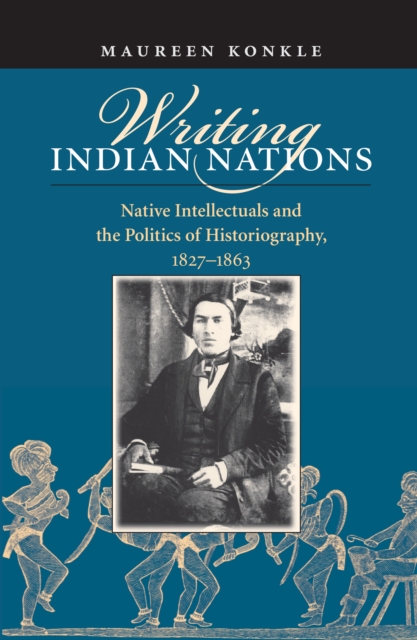
Writing Indian nations : native intellectuals and the politics of historiography, 1827-1863
In the early years of the republic, the United States government negotiated with Indian nations because it could not afford protracted wars politically, militarily, or economically. Maureen Konkle argues that by depending on treaties, which rest on the equal standing of all signatories, Europeans in North America institutionalized a paradox: the very documents through which they sought to dispossess Native peoples in fact conceded Native autonomy.
As the United States used coerced treaties to remove Native peoples from their lands, a group of Cherokee, Pequot, Ojibwe, Tuscarora, and Seneca writers spoke out. With history, polemic, and personal narrative these writers countered widespread misrepresentations about Native peoples' supposedly primitive nature, their inherent inability to form governments, and their impending disappearance. Furthermore, they contended that arguments about racial difference merely justified oppression and dispossession; deriding these arguments as willful attempts to evade the true meanings and implications of the treaties, the writers insisted on recognition of Native peoples' political autonomy and human equality. Konkle demonstrates that these struggles over the meaning of U.S.-Native treaties in the early nineteenth century led to the emergence of the first substantial body of Native writing in English and, as she shows, the effects of the struggle over the political status of Native peoples remain embedded in contemporary scholarship.
eBook

The insistence of the Indian
Exploring literary, political and legal sources, the author argues that the \"Indian question\" was intertwined with the ways in which 19th-century Americans viewed their nation's past and envisioned its destiny. The book shows how the Indians provided a crucial site of reflection upon national identity, and yet, by being denied the natural rights upon which the constitutional principles of the United States rested, they also challenged American convictions of moral ascendancy and national legitimacy. It is from this gap between principles and practice, according to the author, that the nation emerged.
eBook

Old-Time Origins of Modern Sovereignty: State-Building among the Keweenaw Bay Ojibway, 1832-1854
This article examines a brief period of Lake Superior Ojibway history in detail. It describes the territorial dimensions of usufructuary rights and tells how one Ojibway community at Keweenaw Bay, William Jondreau's home, reorganized itself as an Anishnabe state in the 1840s and early 1850s. It also argues that this state-building grew out of Ojibway efforts to defend their rights and resources through an assertion of sovereignty. State-building developed in opposition to federal removal policy. It was guided by the experience of other Indians, especially the Mississaugas and Cherokees, and shaped by the advice of Mississauga Methodist missionaries. More generally, state-building drew upon the Keweenaw Indians' sense that they were, in fact, sovereign people. (Contains 41 notes.)
Journal Article