
Catalogue Search | MBRL


Are you sure you want to remove the book from the shelf?

{{itemTitle}}
6
result(s) for
"Algorithms-Study and teaching"
Sort by:

Deep learning for the earth sciences : a comprehensive approach to remote sensing, climate science and geosciences
DEEP LEARNING FOR THE EARTH SCIENCES Explore this insightful treatment of deep learning in the field of earth sciences, from four leading voices Deep learning is a fundamental technique in modern Artificial Intelligence and is being applied to disciplines across the scientific spectrum; earth science is no exception.
eBook
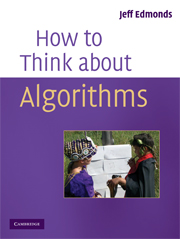
How to Think About Algorithms
This textbook, for second- or third-year students of computer science, presents insights, notations, and analogies to help them describe and think about algorithms like an expert, without grinding through lots of formal proof. Solutions to many problems are provided to let students check their progress, while class-tested PowerPoint slides are on the web for anyone running the course. By looking at both the big picture and easy step-by-step methods for developing algorithms, the author guides students around the common pitfalls. He stresses paradigms such as loop invariants and recursion to unify a huge range of algorithms into a few meta-algorithms. The book fosters a deeper understanding of how and why each algorithm works. These insights are presented in a careful and clear way, helping students to think abstractly and preparing them for creating their own innovative ways to solve problems.
eBook

Toward a new framework for teaching algorithmic literacy
Purpose
Research shows that postsecondary students are largely unaware of the impact of algorithms on their everyday lives. Also, most noncomputer science students are not being taught about algorithms as part of the regular curriculum. This exploratory, qualitative study aims to explore subject-matter experts’ insights and perceptions of the knowledge components, coping behaviors and pedagogical considerations to aid faculty in teaching algorithmic literacy to postsecondary students.
Design/methodology/approach
Eleven semistructured interviews and one focus group were conducted with scholars and teachers of critical algorithm studies and related fields. A content analysis was manually performed on the transcripts using a mixture of deductive and inductive coding. Data analysis was aided by the coding software program Dedoose (2021) to determine frequency totals for occurrences of a code across all participants along with how many times specific participants mentioned a code. Then, findings were organized around the three themes of knowledge components, coping behaviors and pedagogy.
Findings
The findings suggested a set of 10 knowledge components that would contribute to students’ algorithmic literacy along with seven behaviors that students could use to help them better cope with algorithmic systems. A set of five teaching strategies also surfaced to help improve students’ algorithmic literacy.
Originality/value
This study contributes to improved pedagogy surrounding algorithmic literacy and validates existing multi-faceted conceptualizations and measurements of algorithmic literacy.
Journal Article
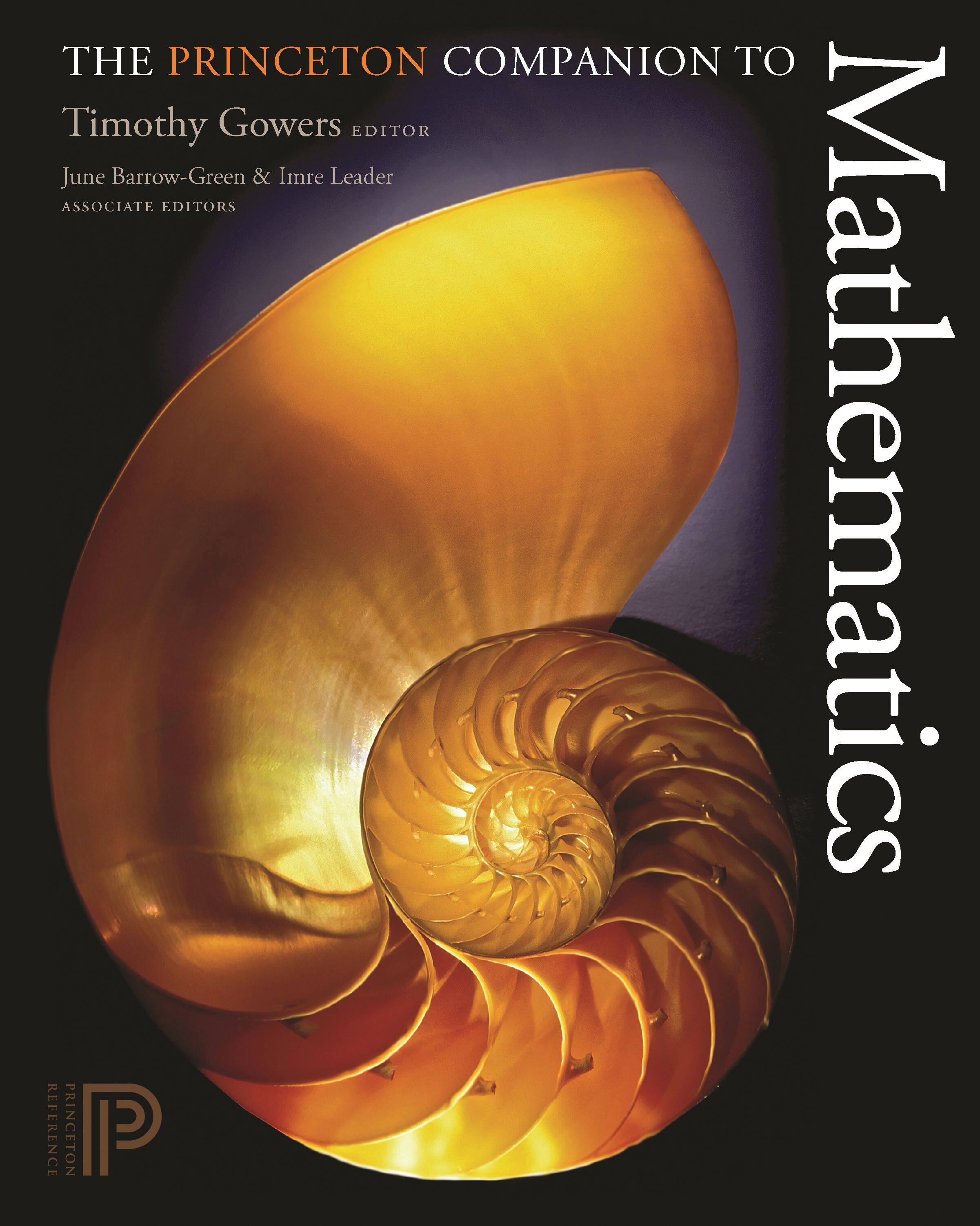
The Princeton Companion to Mathematics
This is a one-of-a-kind reference for anyone with a serious interest in mathematics. Edited by Timothy Gowers, a recipient of the Fields Medal, it presents nearly two hundred entries, written especially for this book by some of the world's leading mathematicians, that introduce basic mathematical tools and vocabulary; trace the development of modern mathematics; explain essential terms and concepts; examine core ideas in major areas of mathematics; describe the achievements of scores of famous mathematicians; explore the impact of mathematics on other disciplines such as biology, finance, and music--and much, much more.
eBook

How Mathematicians Think
To many outsiders, mathematicians appear to think like computers, grimly grinding away with a strict formal logic and moving methodically--even algorithmically--from one black-and-white deduction to another. Yet mathematicians often describe their most important breakthroughs as creative, intuitive responses to ambiguity, contradiction, and paradox. A unique examination of this less-familiar aspect of mathematics,How Mathematicians Thinkreveals that mathematics is a profoundly creative activity and not just a body of formalized rules and results.
Nonlogical qualities, William Byers shows, play an essential role in mathematics. Ambiguities, contradictions, and paradoxes can arise when ideas developed in different contexts come into contact. Uncertainties and conflicts do not impede but rather spur the development of mathematics. Creativity often means bringing apparently incompatible perspectives together as complementary aspects of a new, more subtle theory. The secret of mathematics is not to be found only in its logical structure.
The creative dimensions of mathematical work have great implications for our notions of mathematical and scientific truth, andHow Mathematicians Thinkprovides a novel approach to many fundamental questions. Is mathematics objectively true? Is it discovered or invented? And is there such a thing as a \"final\" scientific theory?
Ultimately,How Mathematicians Thinkshows that the nature of mathematical thinking can teach us a great deal about the human condition itself.
eBook

The Elements of Library Research
This short, practical book introduces students to the important components of the information-seeking process. Unlike guides that describe the research process but do not explain its logic, this book focuses entirely on basic concepts, strategies, tools, and tactics for research--in both electronic and print formats. --from publisher description.
eBook