
Catalogue Search | MBRL


Are you sure you want to remove the book from the shelf?

{{itemTitle}}
53
result(s) for
"Alienation (Social psychology) Fiction."
Sort by:

Owls do cry
First published in New Zealand in 1957, Owls Do Cry , was Janet Frame's second book and the first of her thirteen novels. Now approaching its 60th anniversary, it is securely a landmark in Frame's catalog and indeed a landmark of modernist literature. The novel spans twenty years in the Withers family, tracing Daphne's coming of age into a post-war New Zealand too narrow to know what to make of her. She is deemed mad, institutionalized, and made to undergo a risky lobotomy. Margaret Drabble calls Owls Do Cry \"a song ofsurvival\"--it is Daphne's song of survival but also the author's: Frame was herself misdiagnosed with schizophrenia and scheduled for brain surgery. She was famously saved only when she won New Zealand's premier fiction prize. Frame was among the first major writers of the twentieth century to confront life in mental institutions and Owls Do Cry is important for this perspective. But it is equally valuable for its poetry, its incisive satire, and its acute social observations. A sensitively rendered portrait of childhood and adolescence and a testament to the power of imagination, this early novel is a first-rate example of Frame's powerful, lyric, and original prose.
Book

Disorienting fiction
This book gives an ambitious revisionist account of the nineteenth-century British novel and its role in the complex historical process that ultimately gave rise to modern anthropology's concept of culture and its accredited researcher, the Participant Observer. Buzard reads the great nineteenth-century novels of Charles Dickens, Charlotte Brontë, George Eliot, and others as \"metropolitan autoethnographies\" that began to exercise and test the ethnographic imagination decades in advance of formal modern ethnography--and that did so while focusing on Western European rather than on distant Oriental subjects.
Disorienting Fictionshows how English Victorian novels appropriated and anglicized an autoethnographic mode of fiction developed early in the nineteenth century by the Irish authors of theNational Taleand, most influentially, by Walter Scott. Buzard demonstrates that whereas the fiction of these non-English British subjects devoted itself to describing and defending (but also inventing) the cultural autonomy of peripheral regions, the English novels that followed them worked to imagine limited and mappable versions of English or British culture in reaction against the potential evacuation of cultural distinctiveness threatened by Britain's own commercial and imperial expansion. These latter novels attempted to forestall the self-incurred liabilities of a nation whose unprecedented reach and power tempted it to universalize and export its own customs, to treat them as simply equivalent to a globally applicable civilization. For many Victorian novelists, a nation facing the prospect of being able to go and to exercise its influence just about anywhere in the world also faced the danger of turning itself into a cultural nowhere. The complex autoethnographic work of nineteenth-century British novels was thus a labor to disorient or de-globalize British national imaginings, and novelists mobilized and freighted with new significance some basic elements of prose narrative in their efforts to write British culture into being.
Sure to provoke debate, this book offers a commanding reassessment of a major moment in the history of British literature.
eBook


The impact of interpersonal alienation on excessive Internet fiction reading: Analysis of parasocial relationship as a mediator and relational-interdependent self-construal as a moderator
Internet fiction reading is a proliferating recreational activity in China, for its compelling narratives and immersive experience on portable mobile devices. Based on the uses and gratifications theory, the present study aimed to examine whether interpersonal alienation predicted excessive Internet fiction reading. Specifically, when people do not identify themselves in terms of their relationships with others (low in relational-interdependent self-construal, RISC), the tendency to develop imaginary relationships with media figures (parasocial relationship, PSR), was explored as a mediator between interpersonal alienation and excessive Internet fiction reading. A sample of 627 participants completed an online survey regarding interpersonal alienation, PSR, RISC, and excessive Internet fiction reading. Results showed that interpersonal alienation was positively associated with excessive Internet fiction reading, and PSR partially mediated this association. In addition, the mediating effect of PSR was moderated by RISC. Specifically, the mediating effect was stronger for people with low RISC than those with high RISC. It is among the first studies to identify the determinant of excessive Internet fiction reading from the interpersonal perspective and to provide evidence for the association between interpersonal alienation and excessive Internet fiction reading as well as the underlying mechanisms of such relationship. The current study also advances PSR research into the context of Internet fiction. Limitations and implications are discussed.
Journal Article


The World Is Gone
Exploring the existential implications of the Covid-19 crisis through meditations Part personal memoir, part philosophical reflection and written in the midst of the pandemic in 2021, The World Is Gone employs the Robinson Crusoe fable to launch an existential investigation of the effects of extreme isolation, profound boredom, nightly insomnia.
eBook

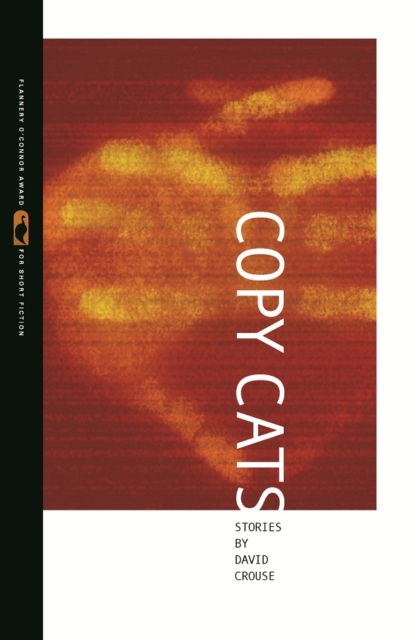
Copy Cats
Featuring seven stories and a novella, Crouse's powerful debut collection depicts people staring down the complicated mysteries of their own identities. His characters are unwilling and often unable to differentiate reality from fantasy. Cursed with what one of them calls \"a pollution of ideas,\" they at war with their own imaginations.
eBook

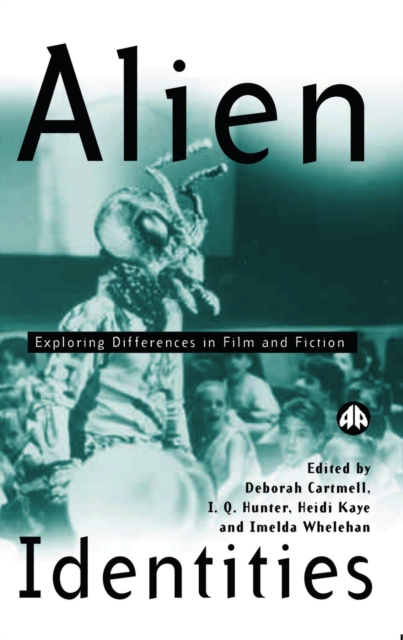
Alien identities : exploring difference in film and fiction
A lively and stimulating look at representations, mutations and adaptations of 'the alien' in literature, film and television. Using notions of the alien and alienation in a broadly defined sense, the contributors cover early science fiction, from the gothic aliens of Dracula and H.G. Wells, to the classic fifties Cold War sci-fi movies, such as War of the Worlds, twentieth-century reworkings of various 'alien' metaphors, such as the Fly movies and the Alien series, and comic variations on the theme such as Mars Attacks. Moving beyond the conventional genre boundaries of the alien, particular essays look, too, at 'race' as an alien condition, and at the use of illness and disease as a metaphor for alienation in modern film and fiction. Alien Identities is a timely, carefully themed and much-needed study of an increasingly popular subject.
eBook