
Catalogue Search | MBRL


Are you sure you want to remove the book from the shelf?

{{itemTitle}}
219
result(s) for
"Alienation (Social psychology) in literature"
Sort by:

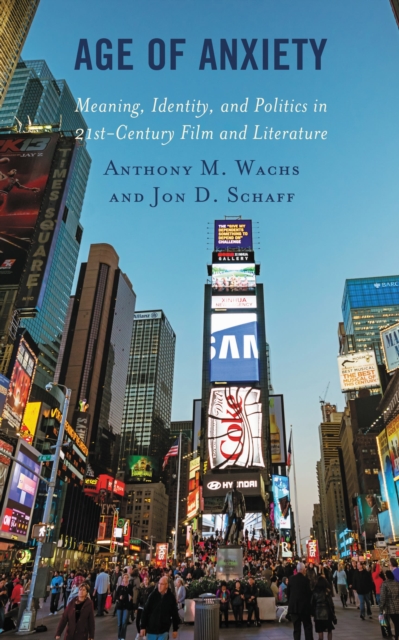
Age of Anxiety
Age of Anxiety: Meaning, Identity, and Politics in 21st Century Film and Literature analyzes literature and films that speak to our age of anxiety resulting from the decline of narratives that provided individuals with a meaningful human life.
eBook

Performance, exile and 'America'
\"This collection of essays investigates dramatic and performative renderings of 'America' as an exilic place, investigating how 'America' and exile are imagined, challenged and theatricalized in the works of various theatre artists in the light of the current political climate in the USA\"--Provided by publisher.
Book

Social Media Use and Social Connectedness in Adolescents: The Positives and the Potential Pitfalls
As social media use is rising among adolescents, the issue of whether this use leads to positive or negative outcomes warrants greater understanding. This article critically reviews the literature related to this important topic. Specifically, we examine how social media use affects social connectedness in terms of three elements of adolescent development: sense of belonging, psychosocial wellbeing, and identity development and processes. Mixed findings are reported regarding the role that social media plays in fostering social connectedness, which suggests that young people may experience both positive and negative psychological outcomes. As a result, this article argues that online tools create a paradox for social connectedness. On one hand, they elevate the ease in which individuals may form and create online groups and communities, but on the other, they can create a source of alienation and ostracism. This article contributes to ongoing discourse in the area of educational and developmental psychology, and has implications for researchers and practitioners working with adolescents.
Journal Article

Alien imaginations : science fiction and tales of transnationalism
\"The figure of the alien is at the heart of science fiction and has helped us to understand and explore interactions with other cultures and the possibilities of life beyond both the modern configuration of the nation-state and the natural order of life on earth. Alien Imaginations brings together canonical and contemporary works in the cinema and literature of science fiction, transnationalism, and globalization in order to examine the role of the alien as well as the realities of migration, labor, and life in the twenty-first century. The essays in this collection discuss films such as District 9, Avatar, and Code 46, as well as novels by H.G. Wells, Philip K. Dick, or Ray Bradbury. As we continue down the road to a global economy and culture, Alien Imaginations offers a critical reflection upon our 'imagined realities' while also turning to speculative fiction and cinema to provide us with examples of resistance, if not a utopian horizon\"-- Provided by publisher.
Book

The Post-Human Society
The Post-Human Society is a rich, unique, path-breaking, belletristic and literary 'crie de coeur' work - a lyrical expose of all the internal infelicities (social, political, aesthetic) of the United States of America. In its vivid contrasting of the mores of competition, avarice, and greed to communitarian, co-respecting and co-operative values, it abounds with colorful, vibrant, breathtaking images and tropes. Utilizing a novel, First Person Narrative, the author Rajani Kanth offers a poignant critique of the rabid, runaway materialism that has been the bane of all modernist, European societies, to date. It is evocative in its approach to the fading genre of the iconic anthropology/sociology classics of the yesteryear. Ultimately, it is a critique of the ruling ethos of our times: Eurocentrism - i.e., selfish and acquisitive materialism, of which the contemporary USA is the trend-setter and the unchallenged gold standard. DR. RAJANI KANTH has an MA in Social Anthropology from the Delhi School of Economics, India, and a PhD in Economics from the New School for Social Research, New York, USA. After serving as Economic Advisor to the UN in New York, he taught as University Professor, and is currently based at Harvard University.
eBook

Environmental Stressors: The Mental Health Impacts of Living near Industrial Activity
A growing literature examines whether the poor, the working class, and people of color are disproportionately likely to live in environmentally hazardous neighborhoods. This literature assumes that environmental characteristics such as industrial pollution and hazardous waste are detrimental to human health, an assumption that has not been well tested. Drawing upon the sociology of mental health and environmental inequality studies, we ask whether industrial activity has an impact on psychological well-being. We link individual-level survey data with data from the U.S. Census and the Toxic Release Inventory and find that residential proximity to industrial activity has a negative impact on mental health. This impact is both direct and mediated by individuals' perceptions of neighborhood disorder and personal powerlessness, and the impact is greater for minorities and the poor than it is for whites and wealthier individuals. These results suggest that public health officials need to take seriously the mental health impacts of living near industrial facilities.
Journal Article

Effect of a training program on the psychological, cultural, and social alienation experienced by foreign students in Jordan
In this study, we examined the effectiveness of an educational training program in reducing psychological, cultural, and social alienation among international students. A total of 73 undergraduate students from diverse nationalities participated in the study. The training program comprised six seminars delivered over three weeks, with two lectures conducted weekly. Topics covered included Jordanian culture and traditions, academic procedures, students' rights and responsibilities, support services, local geography, financial management, and safety. Pre- and post-program assessments utilized validated tools to measure levels of alienation. Findings revealed a significant reduction in social and cultural alienation, underscoring the program's success in fostering social connections and cultural understanding. However, an unexpected increase in psychological alienation was noted, highlighting the need to address psychological challenges more effectively. These results emphasize the importance of comprehensive orientation programs tailored to mitigate all dimensions of alienation, ultimately enhancing the overall well-being of international students.
Journal Article

Unveiling the psychological network of work alienation among nursing interns: A resource conservation perspective and network analysis
Clinical internship is critical for nursing students, but heavy workload and emotional demands increase the risk of work alienation. Traditional linear models fail to capture complex interrelationships among psychological factors.
To apply psychological network analysis to explore the associative structure of work alienation in nursing interns, identifying central and bridge nodes to generate hypothesis‑generating intervention priorities.
A cross-sectional survey was employed. Nursing interns from four tertiary hospitals in the Guanzhong region of Shaanxi Province were recruited via convenience sampling from January to August 2025. Data were collected using the Nurse Work Alienation Scale, Compassion Fatigue Scale, Moral Distress Scale, Ethical Sensitivity Questionnaire for Nursing Students, and NASA Task Load Index. A total of 934 valid responses were obtained. A regularized partial correlation network model was estimated using the EBICglasso method (γ = 0.5). Node strength and bridge strength were calculated, and stability was assessed via bootstrap.
Node strength analysis identified personal responsibility (1.19), burnout (1.18), and failure to maintain patient's best interest (1.13) as the three most central nodes. Bridge strength analysis revealed secondary traumatic stress (STS) as the strongest bridge (0.43, 95% CI [0.31, 0.55]), followed by perceived workload (0.38) and self‑evaluation (0.38). Subgroup network comparisons showed no significant structural differences by gender, age, or education (all p > 0.05). Stability analysis confirmed good robustness for centrality estimates.
Psychological network analysis mapped the associative structure of work alienation, identifying personal responsibility, burnout, and STS as key hub and bridge nodes. These findings offer hypothesis‑generating targets for future interventions (e.g., trauma‑informed care, workload management, self‑efficacy enhancement), pending validation in longitudinal studies.
Journal Article
Imposing Fictions
Imposing Fictionsaims to ameliorate the growing problem of what Martin Heidegger refers to as psychological and cultural homelessness by diagnosing the nature of the latters current manifestations and offering readings of literature that seek to inspire the genuine, and genuinely subversive, alterity required by an authentic mode of being. Specifically, it advocates for the value of subversive literature and its capacity to impose itself on the multitude of cultural and psychological preconceptions that govern the generalized but deeply personal, contemporary self. Subversiveness in this context implies pushing against the grain of identity formation as commonly dictated by the hegemony of technology. It does so both stylistically and thematically by foregrounding the imperative of figurative death in the service of authenticity. With the theoretical frameworks of Martin Heidegger and Alain Badiou as central guideposts, literary texts ranging from genre horror to American and French fiction are examined for their contributions to the legitimization of a metaphoric death drive and a concomitant, ameliorative quality of being that ultimately assumes the form of what some philosophers and fiction writers alike call love.
eBook