
Catalogue Search | MBRL


Are you sure you want to remove the book from the shelf?

{{itemTitle}}
222
result(s) for
"Aliments -- Analyse"
Sort by:
Analytical methods for food and dairy powders
Food and dairy powders are created by dehydrating perishable produce, such as milk, eggs, fruit and meat, in order to extend their shelf life and stabilise them for storage or transport. These powders are in high demand for use as ingredients and as food products in their own right, and are of great economic importance to the food and dairy industry worldwide. Today, the ability to control food and dairy powder quality is a source of key competitive advantage. By varying the dehydration process design, and by controlling the technological and thermodynamic parameters during dehydration, it is possible for manufacturers to engineer the biochemical, microbiological and physical characteristics of the food powder to meet their specific product requirements. This book provides an overview of the existing, adapted or new techniques used to analyse safety and quality in modern food and dairy powders. Based on original research by the authors, the book uses 25 commercial dairy and non-dairy powders to illustrate a range of biochemical and physical methods used to evaluate and characterise powdered food products. Written from a practical perspective, each chapter focuses on a particular analytical technique, outlining the purpose, definition and principle of that method. The authors guide the reader through all of the instruments needed, the safety measures required, and the correct procedures to follow to ensure successful analysis. Instructions on accurate measurement and expression of results are included, and each chapter is richly illustrated with original data and worked examples. Analytical Methods for Food and Dairy Powders is a unique step-by-step handbook, which will be required reading for anyone involved in the development and manufacture of powdered food products. Food and dairy scientists based in industry will find it essential for new product development and improved quality control, while researchers in the laboratory will especially value the new techniques it comprises.
eBook
Food Frying
A wide-ranging exploration of the science and practice of food frying
Frying is one of the world's most popular methods of food preparation. Whether using oils or fats, it is valued for the particular flavors and textures it can bring, and represents a multibillion-dollar sector of the global economy. Food Frying: Chemistry, Biochemistry and Safety explores this important cooking technique in its scientific dimensions, charting the relationships between the chemical reactions produced during frying, the changes in food quality that these engender, and associated digestive and health-related issues.
By outlining these connections, the author provides an aid to a safer, healthier approach to food frying. Topics covered range from culturally specific forms of frying to detailed analyses of the chemical and biochemical processes involved in its practice. Delivering these insights in a practical and easy-to-follow manner, this unique text includes:
* A complete survey of food frying, encompassing cultural, chemical, biochemical, and toxicological concerns
* Guidance on the accurate assessment of health, quality, and safety issues associated with food frying Coverage of the latest technologies and methods involved with frying
* Information on the possible future development of fried foods
Food Frying: Chemistry, Biochemistry and Safety is an invaluable resource for all those who work with fried foods, whether they be food industry professionals, food scientists, or workers in the oil and fat industries.
eBook

Food biochemistry and food processing
The biochemistry of food is the foundation on which the research and development advances in food biotechnology are built. In Food Biochemistry and Food Processing, Second Edition, the editors have brought together more than fifty acclaimed academicians and industry professionals from around the world to create this fully revised and updated edition. This book is an indispensable reference and text on food biochemistry and the ever increasing developments in the biotechnology of food processing. Beginning with sections on the essential principles of food biochemistry, enzymology, and food processing, the book then takes the reader on commodity-by-commodity discussions of biochemistry of raw materials and product processing. Chapters in this second edition have been revised to include safety considerations and the chemical changes induced by processing in the biomolecules of the selected foodstuffs. This edition also includes a new section on health and functional foods, as well as ten new chapters including those on thermally and minimally processed foods, separation technology in food processing, and food allergens. Food Biochemistry and Food Processing, second edition fully develops and explains the biochemical aspects of food processing, and brings together timely and relevant topics in food science and technology in one package. This book is an invaluable reference tool for professional food scientists, researchers and technologists in the food industry, as well as faculty and students in food science, food technology and food engineering programs. The Editor Dr. Benjamin K. Simpson, Department of Food Science and Agricultural Chemistry, McGill University, Quebec, Canada Associate Editors Professor Leo Nollet, Department of Applied Engineering Sciences, Hogeschool Ghent, Belgium Professor Fidel Toldrá, Instituto de Agroquímica y
Tecnología de Alimentos (CSIC), Valencia, Spain Professor Soottawat Benjakul, Department of Food Technology, Prince of Songkla University, Songkhla, Thailand Professor Gopinadhan Paliyath, Department of Plant Agriculture, University of Guelph, Ontario, Canada Dr. Y. H. Hui, Consultant to the Food Industry, West Sacramento, California, USA.
eBook
Extraction of organic analytes from foods
This book is designed as a laboratory manual of methods used for the preparation and extraction of organic chemical compounds from food sources. It offers ideas on how to facilitate progress towards the total automation of the assay, as well as proposing assays for unknowns by comparison with known methods.
Beginning with an introduction to extraction methodology, the book progresses through: Sample preparation, extraction techniques (partition, solvation, distillation, adsorption and diffusion), and applications. Subject indices for the applications are organized by commodity, method, chemical class and analyte, and provide useful examples of references from the literature to illustrate historical development of the techniques. Examples of methods that have been compared, combined or used in collaborative trials, have been correlated and used to form the beginnings of a database that can be expanded and updated to provide a laboratory reference source.
eBook
Food choice, acceptance and consumption
It is critical for the food industry to maintain a current understanding of the factors affecting food choice, acceptance and consumption since these influence all aspects of its activities. This subject has matured in recent years and, for the first time, this book brings together a coherent body of knowledge which draws on the experiences in industrial and academic settings of an international team of authors. Written for food technologists and marketeers, the book is also an essential reference for all those concerned with the economic, social, and psychological aspects of the subject.
eBook
Molecular biological and immunological techniques and applications for food chemists
A guide to using molecular biology and immunological methods for the analysis of food Many of the analytical problems that food chemists face in the lab cannot be solved by chemistry alone, and so analytical chemists are turning to molecular biology and immunology for alternative approaches.
eBook
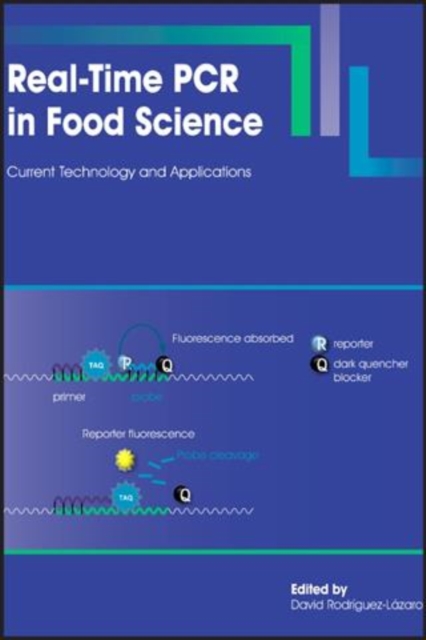
Real-time PCR in food science : current technology and applications
Bacterial detection and control are vital aspects of food microbiology. Real-time PCR is one of the most significant advances in this area, providing rapid, reliable, and quantitative results. In recent years, real-time PCR has become increasingly important to the agricultural and food industries as a valuable alternative to traditional detection methods. The advantages of quantitative real-time PCR include speed, an excellent detection limit, selectivity, specificity, sensitivity, and the potential for automation. Written by experts in the field, this book is an indispensable manual for scientists in the food industry. The first section provides an introduction to real-time PCR, discusses the use of PCR diagnostics in food science, describes the principles and methods of sample preparation, and covers the verification and control of PCR procedures. The second section covers the use of real-time PCR to detect various pathogens including Salmonella, Listeria, E. coli, Campylobacter, Yersinia, Staphylococcus, Clostridium, viruses, and parasites. Also included is a chapter on the standardization of real-time PCR methods in food microbiology. In the final section, the book covers the use of real-time PCR for the analysis of genetically modified organisms, for food allergens, and for identification of animal or plant species. This will be an invaluable book for anyone involved in food microbiology or the detection of foodborne pathogens, and it is a recommended volume for all microbiology laboratories.
eBook
Molecular gastronomy
Hervé This (pronounced \"Teess\") is an internationally renowned chemist, a popular French television personality, a bestselling cookbook author, a longtime collaborator with the famed French chef Pierre Gagnaire, and the only person to hold a doctorate in molecular gastronomy, a cutting-edge field he pioneered. Bringing the instruments and experimental techniques of the laboratory into the kitchen, This uses recent research in the chemistry, physics, and biology of food to challenge traditional ideas about cooking and eating. What he discovers will entertain, instruct, and intrigue cooks, gourmets, and scientists alike.
Molecular Gastronomy, This's first work to appear in English, is filled with practical tips, provocative suggestions, and penetrating insights. This begins by reexamining and debunking a variety of time-honored rules and dictums about cooking and presents new and improved ways of preparing a variety of dishes from quiches and quenelles to steak and hard-boiled eggs. He goes on to discuss the physiology of flavor and explores how the brain perceives tastes, how chewing affects food, and how the tongue reacts to various stimuli. Examining the molecular properties of bread, ham, foie gras, and champagne, the book analyzes what happens as they are baked, cured, cooked, and chilled.
Looking to the future, Herve This imagines new cooking methods and proposes novel dishes. A chocolate mousse without eggs? A flourless chocolate cake baked in the microwave?Molecular Gastronomyexplains how to make them. This also shows us how to cook perfect French fries, why a soufflé rises and falls, how long to cool champagne, when to season a steak, the right way to cook pasta, how the shape of a wine glass affects the taste of wine, why chocolate turns white, and how salt modifies tastes.
eBook
Qualities of food
This book addresses current controversial debates about food quality. What is it that makes people decide that food is of good, or alternatively of dubious, 'quality'? How food is produced, how it is prepared, how it tastes and in what circumstances it is consumed are all dimensions of its quality. Chapters address a number of intriguing questions: how do people make judgements about taste?; how do such judgements come to be shared by groups or people?; what social and organisational processes result in foods being certified as of decent or proper quality?; how has dissatisfaction with the food system been expressed?; what alternatives are thought to be possible? The book shows that there are many different answers to such questions because there are many different attributes of food about which judgements may be made. The complexity and the significance of the evaluations of the foods we eat are analysed from a variety of perspectives, by sociologists, economists, geographers and anthropologists. The first part of the book focuses on theoretical and conceptual issues, the second part considers processes of formal and informal regulation, while the third part examines social and political responses to industrialised food production and mass consumption. Qualities of food will be of interest to researchers and students in all the social science disciplines that are concerned with food, whether marketing, sociology, cultural studies, anthropology, human nutrition or economics.
eBook
Ils ont domestiqué plantes et animaux
Du néolithique au XXIe siècle, sur les cinq continents, de la découverte des premières plantes consommables aux modifications génétiques en laboratoire, cet ouvrage livre l'histoire de l'homme et de sa nourriture.
eBook