
Catalogue Search | MBRL


Are you sure you want to remove the book from the shelf?

{{itemTitle}}
272
result(s) for
"Alps History."
Sort by:

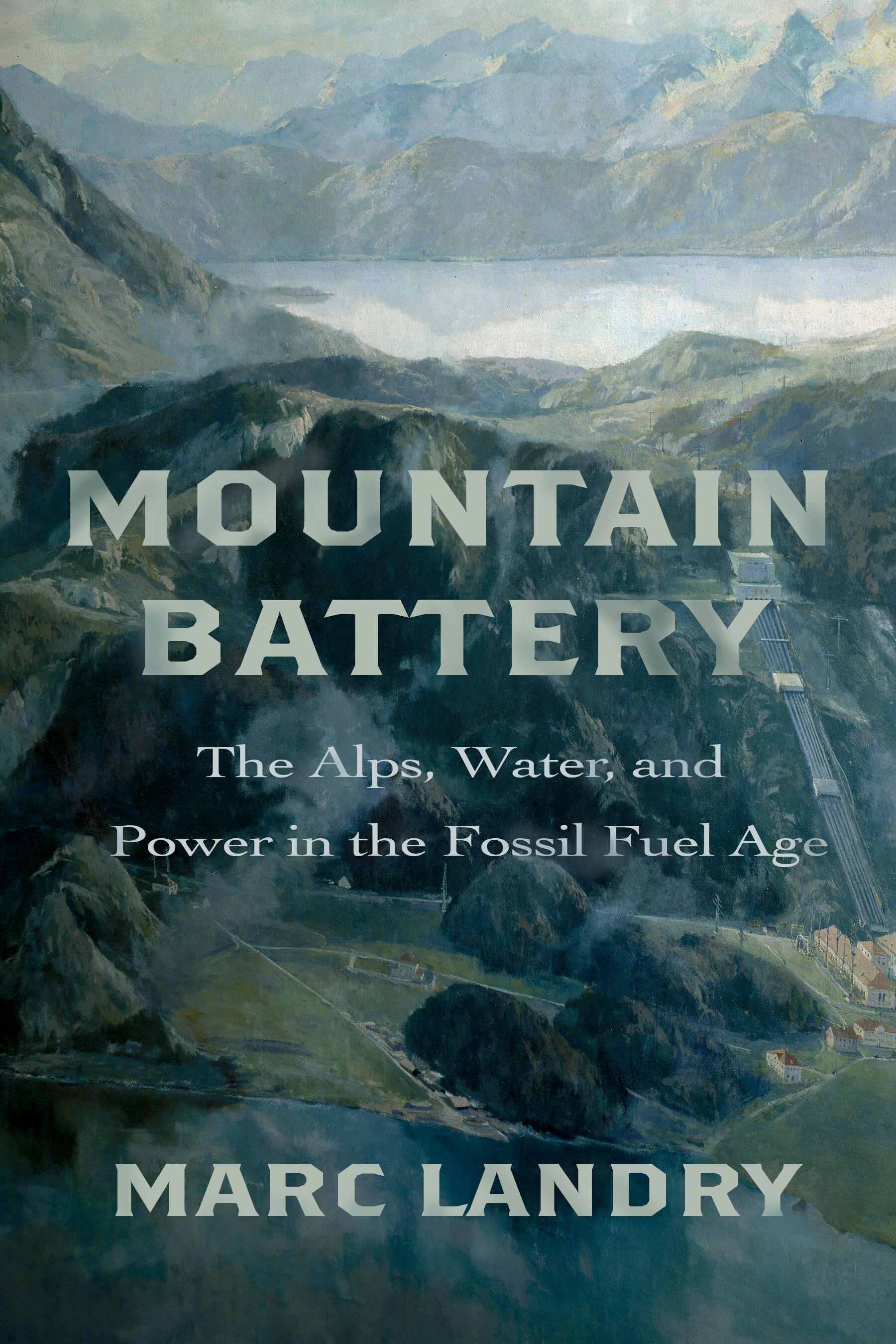
Mountain Battery
By the end of the nineteenth century, Europeans had come to see the Alps as the ideal place to fashion an alternative to the era's dominant energy source: coal. After 1850, Alpine water increasingly became \"white coal\": a power source with the revolutionary economic potential of fossil fuel. In this book, Marc Landry shows how dam-building in the nineteenth and twentieth centuries transformed the Alps into Europe's \"battery\"—an energy landscape designed to store and produce electricity for use throughout the Continent. These stores of energy played an important role in supplying the war economies of west-central Europe in both world wars as demand for munitions and other factory production necessitated access to electrical energy and the conservation of coal.
Through historical research conducted in archives across Europe—especially in Germany, Austria, France, Switzerland, and Italy—Landry shows how and why Europeans thoroughly transformed the Alps in order to generate hydroelectricity, and explores the effects of its attendant economic and military advantages across the turbulent twentieth century. Landry surveys the environmental and energy changes wrought by dam-building, demonstrating that with global warming, melting glaciers, and calls for a green energy transition, the future of white coal is once again in question in twenty-first-century Europe.
eBook

The Alps
Explore the geography, weather, plants, plants and animals, and environment of the the Alps.
Book

History of the Alps, 1500-1900 : environment, development, and society
In the 1700s, Jean-Jacques Rousseau celebrated the Alps as the quintessence of the triumph of nature over the “horrors” of civilization. Now available in English, History of the Alps, 1500-1900: Environment, Development, and Society provides a precise history of one of the greatest mountain range systems in the world. Jon Mathieu’s work disproves a number of commonly held notions about the Alps, positioning them as neither an inversion of lowland society nor a world apart with respect to Europe. Mathieu’s broad historical portrait addresses both the economic and sociopolitical—exploring the relationship between population levels, development, and the Alpine environment, as well as the complex links between agrarian structure, society, and the development of modern civilization. More detailed analysis examines the relationship between various agrarian structures and shifting political configurations, several aspects of family history between the late Middle Ages and the turn of the twentieth century, and exploration of the Savoy, Grisons, and Carinthia regions.
eBook


Origins of the Witches’ Sabbath
While the perception of magic as harmful is age-old, the notion
of witches gathering together in large numbers, overtly worshiping
demons, and receiving instruction in how to work harmful magic as
part of a conspiratorial plot against Christian society was an
innovation of the early fifteenth century. The sources collected in
this book reveal this concept in its formative stages.
The idea that witches were members of organized heretical sects
or part of a vast diabolical conspiracy crystalized most clearly in
a handful of texts written in the 1430s and clustered
geographically around the arc of the western Alps. Michael D.
Bailey presents accessible English translations of the five oldest
surviving texts describing the witches' sabbath and of two witch
trials from the period. These sources, some of which were
previously unavailable in English or available only in incomplete
or out-of-date translations, show how perceptions of witchcraft
shifted from a general belief in harmful magic practiced by
individuals to a conspiratorial and organized threat that led to
the witch hunts that shook northern Europe and went on to influence
conceptions of diabolical witchcraft for centuries to come.
Origins of the Witches' Sabbath makes freshly available
a profoundly important group of texts that are key to understanding
the cultural context of this dark chapter in Europe's history. It
will be especially valuable to those studying the history of
witchcraft, medieval and early modern legal history, religion and
theology, magic, and esotericism.
eBook

Skiing into modernity : a cultural and environmental history
\"Examines the relationship between skiers and the Alpine environment since the late nineteenth century. It argues that skiing and winter tourism modernized the Alps in both material and perceptual terms while the Alpine landscape itself challenged skiers to alter their practices and philosophies of sport, leisure and nature, harmonizing Alpine skiing with modern cultural values and social practices in the twentieth century\"--Provided by publisher.
Book
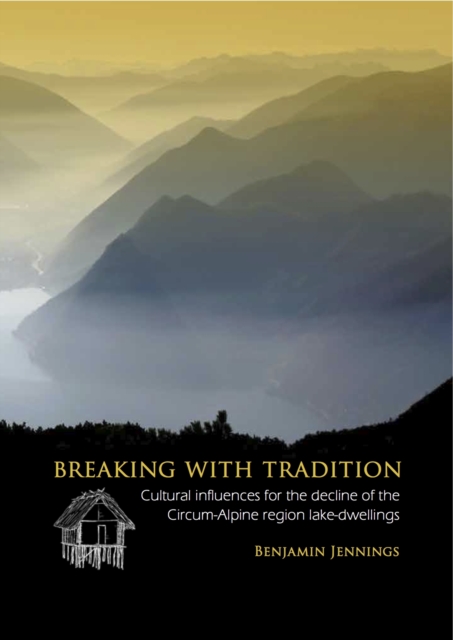
Breaking with Tradition
Over 150 years of research in the Circum-Alpine region have produced a vast amount of data on the lakeshore and wetland settlements found throughout the area. Particularly in the northern region, dendrochronological studies have provided highly accurate sequences of occupation, which have correlated, in turn, to palaeoclimatic reconstructions in the area. The result has been the general conclusion that the lake-dwelling tradition was governed by climatic factors, with communities abandoning the lakeshore during periods of inclement conditions, and returning when the climate was more favourable. Such a cyclical pattern occurred from the 4th millennium BC to 800 BC, at which time the lakeshores were abandoned and never extensively re-occupied. Was this final break with a long-lasting tradition solely the result of climatic fluctuation, or were cultural factors a more decisive influence for the decline of lake-dwelling occupation?Studies of material culture have shown that some of the Late Bronze Age lake-dwellings in the northern Alpine region were significant centres for the production and exchange of bronzework and manufactured products, linking northern Europe to the southern Alpine forelands and beyond. However, during the early Iron Age the former lake-dwelling region does not show such high levels of incorporation to long-distance exchange systems. Combining the evidence of material culture studies with occupation patterns and burial practices, this volume proposes an alternative to the climatically-driven models of lake-dwelling abandonment. This is not to say that climate change did not influence those communities, but that it was only one factor among many. More significantly, it was a combination of social choice to abandon the shore, and subsequent cultural developments that inhibited the full scale reoccupation of the lakes.
eBook

Extreme Eiger : the race to climb the direct route up the north face of the Eiger
The North Face of the Eiger in the Swiss Alps was one of the most dangerous climbs in the mountaineering world, costing the lives of numerous intrepid explorers. In February 1966, two teams - one from Germany, the other a British/American party - decided to try to climb it in a straight line from bottom to top. Astonishingly, neither team knew about the other's attempt until they both arrived at the hotel at the bottom of the Eiger. Suddenly, the race was on. John Harlin led the Anglo/American team and decided the best approach was a swift, lightweight assault on the summit. The Germans, led by Jorg Lehne, had a large team with plenty of equipment, designed to make slow, relentless progress to the top. Watching on, and reporting on events for the Daily Telegraph, was young journalist Peter Gillman - for the Eiger is the most public of mountains, where tourists can watch the life or death dramas from the comfort of the hotel terrace. Now, almost 50 years on, Gillman recalls the tragic events that took place on the Eiger, and assesses how the climb affected those who took part. For some, it would end in death, whereas for mountaineer Chris Bonington it would be the making of his reputation. It was an epic ascent with tragic consequences, redolent of the golden age of adventure.
Book

Peasants, Lords, and State
Peasants, Lords, and State: Comparing Peasant Conditions in Scandinavia and the Eastern Alpine Region, 1000-1750 compares peasant self-determination in relation to manorial and territorial power structures in Scandinavia and the eastern Alpine region between 1000 and 1750.
eBook