
Catalogue Search | MBRL


Are you sure you want to remove the book from the shelf?

{{itemTitle}}
168
result(s) for
"Alps Region History."
Sort by:

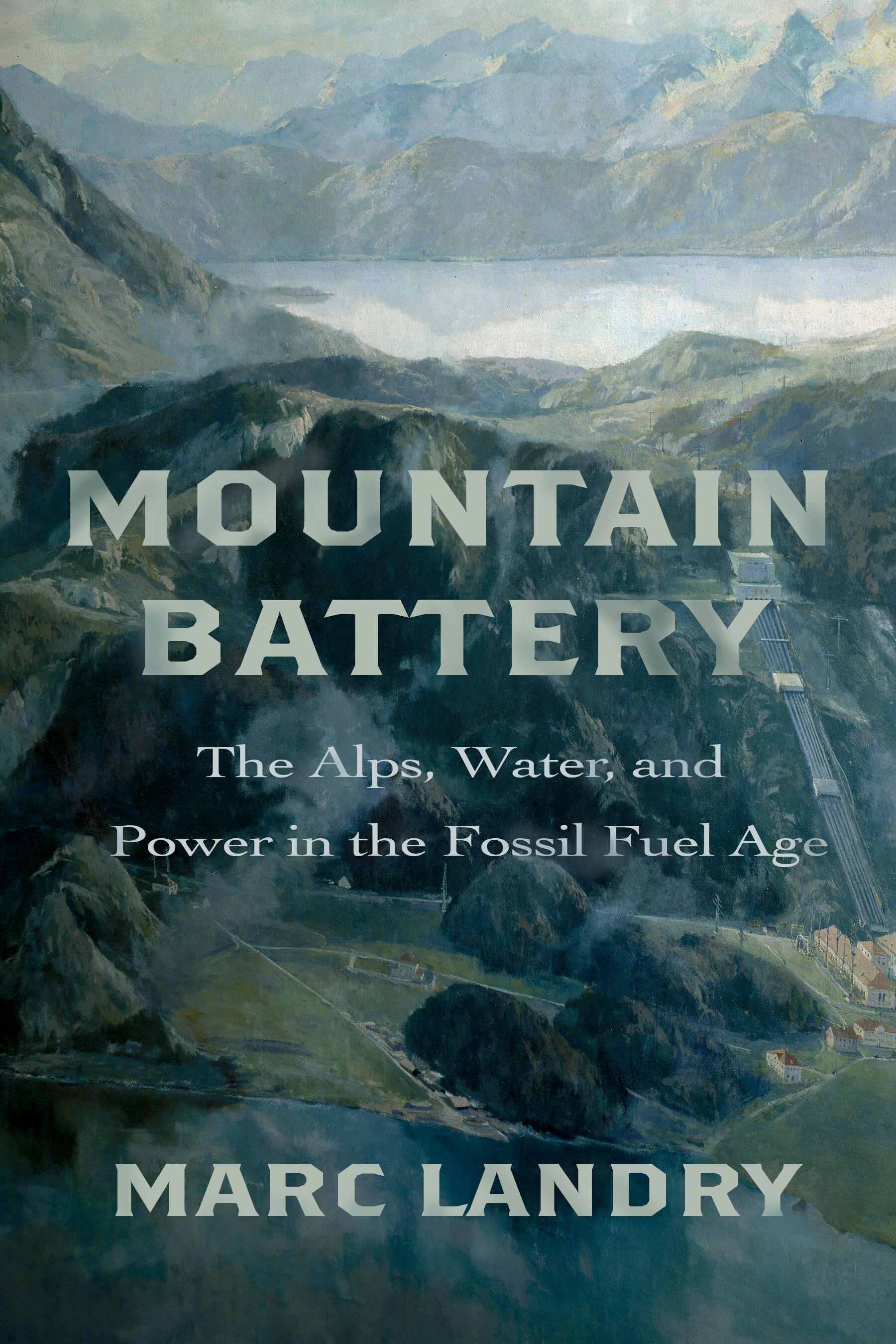
Mountain Battery
By the end of the nineteenth century, Europeans had come to see the Alps as the ideal place to fashion an alternative to the era's dominant energy source: coal. After 1850, Alpine water increasingly became \"white coal\": a power source with the revolutionary economic potential of fossil fuel. In this book, Marc Landry shows how dam-building in the nineteenth and twentieth centuries transformed the Alps into Europe's \"battery\"—an energy landscape designed to store and produce electricity for use throughout the Continent. These stores of energy played an important role in supplying the war economies of west-central Europe in both world wars as demand for munitions and other factory production necessitated access to electrical energy and the conservation of coal. Through historical research conducted in archives across Europe—especially in Germany, Austria, France, Switzerland, and Italy—Landry shows how and why Europeans thoroughly transformed the Alps in order to generate hydroelectricity, and explores the effects of its attendant economic and military advantages across the turbulent twentieth century. Landry surveys the environmental and energy changes wrought by dam-building, demonstrating that with global warming, melting glaciers, and calls for a green energy transition, the future of white coal is once again in question in twenty-first-century Europe.
eBook

Peasants, Lords, and State
Peasants, Lords, and State: Comparing Peasant Conditions in Scandinavia and the Eastern Alpine Region, 1000-1750 compares peasant self-determination in relation to manorial and territorial power structures in Scandinavia and the eastern Alpine region between 1000 and 1750.
eBook

Peasants, Lords, and State
Peasants, Lords and State: Comparing Peasant Conditions in Scandinavia and the Eastern Alpine Region, 1000-1750 challenges the once widespread view, rooted in the historical thinking of the nineteenth century, that Scandinavian and especially Norwegian peasants enjoyed a particular \"peasant freedom\" compared to their Continental counterparts. Markers of this supposed freedom were believed to be peasants' widespread ownership of land, extensive control over land and resources, and comprehensive judicial influence through the institution of the thing. The existence of slaves and unfree people was furthermore considered a marginal phenomenon. The contributors compare Scandinavia with the eastern Alpine region, two regions comprising fertile plains as well as rugged mountainous areas. This offers an opportunity to analyse the effect of topographical factors without neglecting the influence of manorial and territorial power structures over the long time-span of c.1000 to 1750. With contributions by Markus Cerman, Tore Iversen, Michael Mitterauer, John Ragnar Myking, Josef Riedmann, Werner Rösener, Helge Salvesen, and Stefan Sonderegger.
eBook

Oeconomia Alpium I
Der erste Tagungsband zum Handbuch zur Geschichte der Ökonomie des Alpenraums in präindustrieller Zeit schließt die Lücke einer raumübergreifenden Synopse der alpenländischen Wirtschaftsgeschichte.
eBook

Wirtschaftsgeschichte des Alpenraums in vorindustrieller Zeit : Forschungsaufriss, -konzepte und -perspektiven
Der erste Tagungsband zum Handbuch zur Geschichte der Ökonomie des Alpenraums in präindustrieller Zeit schließt die Lücke einer raumübergreifenden Synopse der alpenländischen Wirtschaftsgeschichte. Renommierte Wissenschaftler untersuchen in drei Bänden den Raum und seine Menschen, den Alltag der Alpenbewohner sowie den Handel, Migration und Kommunikation.
eBook

The end of the lake-dwellings in the Circum-Alpine region
After more than 3500 years of occupation in the Neolithic and Bronze Age, the many lake-dwellings around the Circum-Alpine region ‘suddenly’ came to an end. Throughout that period alternating phases of occupation and abandonment illustrate how resilient lacustrine populations were against change: cultural/environmental factors might have forced them to relocate temporarily, but they always returned to the lakes. So why were the lake-dwellings finally abandoned and what exactly happened towards the end of the Late Bronze Age that made the lake-dwellers change their way of life so drastically? The new research presented here draws upon the results of a four-year-long project dedicated to shedding light on this intriguing conundrum. Placing a particular emphasis upon the Bronze Age, a multidisciplinary team of researchers has studied the lake-dwelling phenomenon inside out, leaving no stones unturned, enabling identification of all possible interactive socioeconomic and environmental factors that can be subsequently tested against each other to prove (or disprove) their validity. By refitting the various pieces of the jigsaw a plausible, but also rather unexpected, picture emerges.
eBook

Patterns of genetic variation in European plant species depend on altitude
Aim High mountain regions exhibit a much stronger environmental heterogeneity and a more complex glacial history than lowland regions. In this study, we compared the genetic variation of plant species occurring in different altitudinal zones. We tested the assumption that environmental and historic differences among high mountain regions and lowlands result in different patterns of genetic diversity and differentiation. Location Central Europe and the European Alps. Methods We first compiled a data set on genetic variation of 179 plant species occurring in Central Europe and the European Alps measured by AFLPs from the literature. Then, we compared genetic diversity and differentiation between species occurring in the lowland, montane, subalpine and alpine vegetation zone with the help of linear models. Geographic distance among sampled populations, plant frequency and three plant traits (life span, mating system and pollination mode) were included into the models, to account for their potential effects on level of genetic variation. Results Our analysis revealed different patterns of genetic variation in plant species occurring in the alpine and non‐alpine zone. Genetic differentiation was significantly higher among populations of species from the alpine than subalpine, montane or lowland zone. In contrast, genetic diversity was significantly lower within populations from the alpine zone compared to the other zones. Main conclusions We argue that the observed pattern of genetic variation most likely results from restricted gene flow, both past and present, among spatially and environmentally isolated populations in alpine habitats.
Journal Article

The Little Ice Age signature in a 700-year high-resolution chironomid record of summer temperatures in the Central Eastern Alps
Despite the fact that the Little Ice Age (LIA) is well documented for the European Alps, substantial uncertainties concerning the regional spatio-temporal patterns of temperature changes associated with the LIA still exist, especially for their eastern sector. Here we present a high-resolution (4–10 years) 700-year long mean July air temperature reconstruction based on subfossil chironomid assemblages from a remote lake in the Austrian Eastern Alps to gain further insights into the LIA climatic deterioration in the region. The record provides evidence for a prolonged period of predominantly cooler conditions during AD 1530–1920, broadly equivalent to the climatically defined LIA in Europe. The main LIA phase appears to have consisted of two cold time intervals divided by slightly warmer episodes in the second half of the 1600s. The most severe cooling occurred during the eighteenth century. The LIA temperature minimum about 1.5 °C below the long-term mean recorded in the mid-1780 s coincides with the strongest volcanic signal found in the Greenland ice cores over the past 700 years and may be, at least in part, a manifestation of cooling that followed the long-lasting AD 1783–1784 Laki eruption. A continuous warming trend is evident since ca AD 1890 (1.1 °C in 120 years). The chironomid-inferred temperatures show a clear correlation with the instrumental data and reveal a close agreement with paleotemperature evidence from regional high-elevation tree-ring chronologies. A considerable amount of the variability in the temperature record may be linked to changes in the North Atlantic Oscillation.
Journal Article

Decreasing litter size of marmots over time: a life history response to climate change?
The way that plants and animals respond to climate change varies widely among species, but the biological features underlying their actual response remains largely unknown. Here, from a 20âyear monitoring study, we document a continuous decrease in litter size of the Alpine marmot (Marmota marmota) since 1990. To cope with harsh winters, Alpine marmots hibernate in burrows and their reproductive output should depend more on spring conditions compared to animals that are active yearâround. However, we show that litter size decreased over time because of the general thinning of winter snow cover that has been repeatedly reported to occur in the Alps over the same period, despite a positive effect of an earlier snowmelt in spring. Our results contrast markedly with a recent study on North American yellowâbellied marmots, suggesting that betweenâspecies differences in life histories can lead to opposite responses to climate change, even between closely related species. Our case study therefore demonstrates the idiosyncratic nature of the response to climate change and emphasizes, even for related species with similar ecological niches, that it may be hazardous to extrapolate life history responses to climate change from one species to another.
Journal Article