
Catalogue Search | MBRL


Are you sure you want to remove the book from the shelf?

{{itemTitle}}
62
result(s) for
"Altenheim"
Sort by:

Relationship-Based Care Work, Austerity and Aged Care
Home care and aged care in English-speaking countries around the globe have enthusiastically taken up a model of work known as ‘relationship-based care’ (RBC). Part of the popularity of RBC is because it does not challenge austerity, underfunding, and extensive managerialism. Instead it works within and through them to foster caring connections between patients, staff, and families, and is able to do so because workers are willing to self-sacrifice for clients. Drawing on case study data collected using a ‘rapid ethnography’ methodology in two large Australian aged care organisations, this article explores workers’ experience of work and contributes to Bolton’s typology of emotion management in the relationship-based care endeavour. Our typology includes: (1) austerity-linked sacrifice; (2) official discourse; (3) faux control; and (4) compulsory time philanthropy. The article contributes to debates on care work, relationship-based care, emotional labour, and emotion management and working in the context of austerity and managerialism.
Journal Article

Reform policies and distribution struggles in the eldercare sector in Germany
The poor working conditions of care workers within Germany’s eldercare sector have resulted in a series of reforms. Employing a conceptual framework that combines feminist perspectives on the devaluation of care work, Fraser’s concept of recognition and redistribution, and Honneth’s concept of distribution struggles, this article assesses whether these reforms have increased the social status of this undervalued sector. The findings indicate that these reforms have both positively and negatively impacted the social status of eldercare work – a phenomenon that this article links to the contradictory influence of the state, trade unions and provider associations during distribution struggles.
Journal Article

Pirnilu Nintipungkupayi (Everyone Is a Teacher): Keeping Old People's Spirit Healthy Through Education
In the Ngaanyatjarra Lands of desert Western Australia, older people are being encouraged to participate meaningfully in student education. This initiative is being led by two of the authors of this article, senior Ngaanyatjarra women, both of whom work with the Ngaanyatjarra Lands School with its campuses in eight remote communities spread over hundreds of kilometres. Elderly men and women, some of whom are residents in the Ngaanyatjarra Aged Care home (Ngaanyatjarra Health Service, 2021), are eagerly participating in the planning of bush trips, gathering their traditional resources, seeds, grinding stones, bush resins, recalling stories, songs, and dances—as they prepare for the bush camps with students. During the camps the schoolteachers step back and the elderly lead in what is known as two‐way science. At first glance, this work may look like it is simply focused on the educational needs of students with senior Yarnangu acting in a supporting role. However, this article will demonstrate the continuous connections and responsibilities, laid out in the Tjukurrpa (the Dreaming), between the old and the young, to their ancestral lands. It sets out how according to “Tjukurrpa thinking,” the principal way to provide good care is by helping senior people remain on country with family, pass on their knowledge to younger people, and thus keep strong languages and kurrunpa (people’s spirit) alive.
Journal Article

How financial cutbacks affect the quality of jobs and care for the elderly
Based on case studies in 12 nursing homes in the United Kingdom, the authors illustrate how financial cutbacks affect job quality and the quality of care. The dimensions of job quality that suffered most were those directly related to the ability of workers to provide care: reductions in staffing, longer working hours, and work intensification. Cuts to labor costs eroded the quality of workers’ jobs in all 12 homes but with two differential outcomes: in seven homes, care quality was maintained, and in five homes, it deteriorated. Care quality was maintained in homes where a patient-centered care approach and remaining job quality allowed workers to develop work-arounds to protect residents from spillover effects. Care quality declined in homes where custodial approaches to care and low job quality did not provide workers the time or resources to protect residents or to maintain prior levels of care. A tipping point was reached, leading to a spillover into impoverished care.
Journal Article

Occupational Credentials and Job Qualities of Direct Care Workers: Implications for Labor Shortages
Occupational training and credentialing requirements for direct care workers were in place for consumers’ health and safety, but their effects on job qualities and labor shortages in the direct care industry have been controversial. Using a nationally representative sample of psychiatric, nursing, and home health aides, a series of Average Treatment Effect models were analyzed to examine the effects of occupational credentials on various measures of job qualities. The findings revealed that credential-holding was related to higher annual earnings and increased probability of working full-time, year-round, and having access to employer-provided health insurance and retirement savings plans. The positive effects, however, were modest in size and suggested that, given the current wage and benefit levels for direct care workers, training and credential requirements cannot be the key to resolving job quality and labor shortage issues in the direct care industry. Implications of these findings and alternative ways to address the issues were discussed.
Journal Article
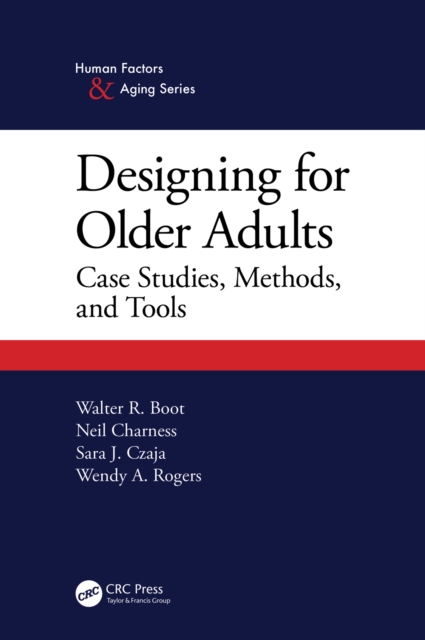
Designing for Older Adults
There are many products, tools, and technologies available that could provide support for older adults. However, their success requires that they are designed with older adults in mind by being aware of, and adhering to, design principles that recognize the needs, abilities, and preferences of diverse groups of older adults. Achieving good design is a process facilitated by seeing principles and guidelines in action. Design success requires understanding how to use the methods and tools available to evaluate initial ideas and prototypes. The goal of this book is to provide illustrative \"case studies\" of designing for older adults based on real design challenges faced by the researchers of the Center for Research and Education on Aging and Technology Enhancement (CREATE) over the past two decades. These case studies exemplify the use of human factors tools and user-centered design principles to understand the needs of older adults, identify where existing designs failed older users, and examine the effectiveness of design changes to better accommodate the abilities and preferences of the large and growing aging population.
Features
Reviews important design considerations for older adults and presents a framework for design
Provides a series of real-world case studies to ground design principles and guidelines
Offers a unique set and broad array of design challenges, from the design of healthcare devices, to computer systems and apps, to transportation systems and robots
Gives an overview of emerging technologies, their potential benefits to older adults, anticipated design considerations, and new and emerging approaches to evaluating design
Covers these topics with designers in mind, providing the most up-to-date recommendations based on the scientific literature but in an accessible, easy-to-understand, non-technical manner
eBook

Understaffing and registered nurses' turnover
Current demographic and occupational changes call for new interventions to promote staff retention, especially in nursing where understaffing promotes turnover by increasing workload and strain. Based on previous research examining recovery at work, we investigated whether well-designed rest breaks can function as a resource that buffers adverse consequences of understaffing in nursing. We used a cross-sectional, multi-method study design and assessed understaffing of registered nurses, their regularity of rest breaks, and their annual turnover behaviour in 80 German geriatric nursing teams. As expected, understaffing positively predicted turnover only in work conditions with irregular rest breaks. Hence, implementing regularly scheduled rest breaks can be considered as an effective intervention for improving retention of nurses even in a situation of understaffing.
Journal Article
Der zukünftige Beschäftigungsbedarf in der ambulanten und stationären Pflege in Sachsen-Anhalt: Modellrechnungen auf Kreisebene bis zum Jahr 2035
\"Der demografische Wandel führt dazu, dass zukünftig mehr ältere und weniger junge Menschen in Sachsen-Anhalt leben werden. Dies hat grundlegende Auswirkungen auf den Arbeitsmarkt in der Pflegebranche, denn mit der zunehmenden Zahl der Älteren steigt die Zahl der Pflegebedürftigen, für deren Versorgung wiederum mehr Beschäftigte benötigt werden. Vor diesem Hintergrund wird die mögliche Entwicklung des Bedarfs an Beschäftigten in der ambulanten und stationären Pflegebranche bis zum Jahr 2035 für Sachsen-Anhalt insgesamt und für die einzelnen Kreise dargestellt. Hierbei unterscheiden die Modellrechnungen zwischen dem verrentungsbedingten Ersatzbedarf und dem nachfragebedingten Erweiterungsbedarf und beinhalten zusätzlich Szenarien zum Renteneintrittsalter und zu Digitalisierungspotenzialen. Mit dem Anstieg der Zahl der Pflegebedürftigen von gut 72.500 in 2019 auf bis zu 84.800 im Jahr 2035 in Sachsen-Anhalt wird die professionelle Pflege weiter an Bedeutung gewinnen, d. h. sowohl die Versorgung durch ambulante Pflegedienste als auch die Unterbringung in stationären Einrichtungen. Die Modellrechnungen zeigen, dass sich der Umfang der benötigten Beschäftigung in der ambulanten Pflegebranche von heute 22.300 Vollzeitäquivalenten auf bis zu 25.300 erhöhen könnte. In der stationären Pflegebranche kann der Umfang je nach zugrunde gelegtem Szenario von heute 17.100 auf bis zu 20.700 Vollzeitäquivalente steigen. Dabei fällt in beiden Bereichen der altersbedingte Ersatzbedarf größer aus als der nachfragebedingte Erweiterungsbedarf. Der Ersatzbedarf betrifft bis zu 37 Prozent des Beschäftigungsvolumens in der ambulanten und bis zu 54 Prozent in der stationären Pflegebranche, während der Erweiterungsbedarf eine Zunahme des Beschäftigungsvolumens von bis zu 14 bzw. 21 Prozent bis zum Jahr 2035 erforderlich macht. Die tatsächliche Entwicklung des Arbeitsmarktes in der Pflegebranche hängt allerdings nicht nur vom Renteneintrittsalter der Beschäftigten oder von Potenzialen der
Paper

Teilhabe an kulturellen Bildungsprozessen im Kontext Kita und Pflegeheim
Im Kontext Kita und Pflegeheim scheinen jeweils grundlegende Probleme zu existieren, was sich u. a. an fehlender gesellschaftlicher Anerkennung für sorgende Berufe in Deutschland zeigt. Dieser Beitrag untersucht auf drei Ebenen Optionen der Teilhabe durch kulturelle Bildungsprozesse am Beispiel der Musik, wobei die Kategorien Alter und Beruf wichtige Elemente der qualitativen Untersuchung ausmachen. Die Daten wurden mittels unterschiedlicher Erhebungsinstrumente generiert und per Datentriangulation ausgewertet. Die Förderung sowohl von Intergenerationenarbeit als auch von horizontaler Mobilität auf den Ebenen der Systeme Bildung und Pflege (Makro), Kita und Pflegeheim (Meso) und Alt und Jung (Mikro) wird als wichtigste Erkenntnis für den wissenschaftlichen Diskurs konstatiert, woraus auch Implikationen für die Praxis abgeleitet werden. It seems that there are underlying problems within the context of daycare facility for children and residential care home for the elderly. A lack of social appreciation for caring professions in Germany is one underlying problem of this context. This article examines the options of cultural processes of education using the example of music, whereas the categories of age and job are two important items of this qualitative study. A trigonometrical survey was conducted using different methods of collecting data. The promotion of inter-generational work as well as the horizontal mobility at the level of the systems of education and nursing (Macro), daycare facility for children and residential care home for the elderly (Meso) and old and young (Micro) is constituted as the most important finding of the scientific discourse which has also significant relevance for the practices of daily life.
Journal Article

Entwurfsatlas Wohnen Im Alter
Quality living in old age is one of the important topics of our time. Intelligent design solutions can push back the limits on housing and care, in favor of a comprehensive trend toward integrated forms of living. A third of the volume provides detailed expert information, a section of examples provides building and living typologies.
eBook