
Catalogue Search | MBRL


Are you sure you want to remove the book from the shelf?

{{itemTitle}}
5,397
result(s) for
"Alternating current"
Sort by:

High performance control of AC drives with MATLAB/Simulink models
A comprehensive guide to understanding AC machines with exhaustive simulation models to practice design and control Nearly seventy percent of the electricity generated worldwide is used by electrical motors.
eBook
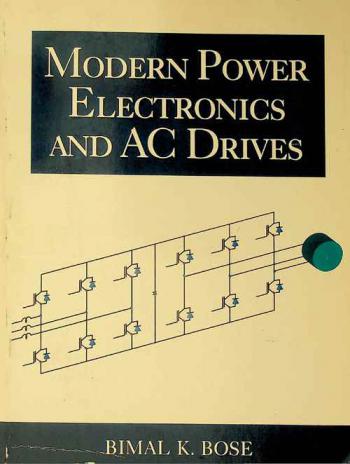
Modern power electronics and AC drives
\"A clear understanding of power electronics and AC drives is crucially important in a wide range of modern systems, from household appliances to automated factories and it requires cross-disciplinary expertise that many engineers lack. Now, in Modern Power Electronics and AC Drives, one of the world's leading experts covers every aspect of the topic, including crucial innovations such as artificial intelligence, advanced estimation, and sensorless control. This book is not only important as an advanced reference but also covers the material for one senior-level and two graduate-level courses.\"--Jacket.
Book

High-voltage output triboelectric nanogenerator with DC/AC optimal combination method
The high-voltage power source is one of the important research directions of triboelectric nanogenerator (TENG). In this paper, a high-voltage output TENG (HVO-TENG) is proposed with direct current/alternating current (DC/AC) optimal combination method for wind energy harvesting. Through the optimal design of a direct current generation unit (DCGU) and an alternating current generation unit (ACGU), the HVO-TENG can produce DC voltage of 21.5 kV and AC voltage of 200 V, simultaneously. The HVO-TENG can continuously illuminate more than 6,000 light emitting diodes (LEDs), which is enough to drive more possible applications of TENG. Besides, this paper explored application experiments on HVO-TENG. Demonstrative experiments indicate that the high-voltage DC output is used for producing ozone, while the AC output can light up ultraviolet (UV) LEDs. The HVO-TENG can increase the ozone concentration (
C
) in an airtight container to 3 parts per million (ppm) after 7 h and continuously light up UV LEDs. All these demonstrations verify that the HVO-TENG has important guiding significance for designing high performance TENG.
Journal Article

Disruption and rescue of interareal theta phase coupling and adaptive behavior
Rescuing executive functions in people with neurological and neuropsychiatric disorders has been a major goal of psychology and neuroscience for decades. Innovative computer-training regimes for executive functions have made tremendous inroads, yet the positive effects of training have not always translated into improved cognitive functioning and often take many days to emerge. In the present study, we asked whether it was possible to immediately change components of executive function by directly manipulating neural activity using a stimulation technology called high-definition transcranial alternating current stimulation (HD-tACS). Twenty minutes of inphase stimulation over medial frontal cortex (MFC) and right lateral prefrontal cortex (lPFC) synchronized theta (∼6 Hz) rhythms between these regions in a frequency and spatially specific manner and rapidly improved adaptive behavior with effects lasting longer than 40 min. In contrast, antiphase stimulation in the same individuals desynchronized MFC-lPFC theta phase coupling and impaired adaptive behavior. Surprisingly, the exogenously driven impairments in performance could be instantly rescued by reversing the phase angle of alternating current. The results suggest executive functions can be rapidly upor down-regulated by modulating theta phase coupling of distant frontal cortical areas and can contribute to the development of tools for potentially normalizing executive dysfunction in patient populations.
Journal Article

Phase‐Specific Dual‐Site Beta Transcranial Alternating Current Stimulation Differentially Influences Functional Connectivity Associated With Motor Inhibition Performance
Inhibitory control relies on coordinated beta‐band activity within a fronto‐basal ganglia network, which implements inhibition via downstream effects on (pre)motor areas. However, the causal role of beta synchrony in motor inhibition remains unclear. In this study, we employed dual‐site transcranial alternating current stimulation (tACS) targeting the right inferior frontal gyrus (rIFG) and left primary motor cortex (lM1) to directly manipulate phase relationships in the beta band and assess their effects on both functional connectivity and motor inhibition. Fifty‐two healthy participants received in‐phase, anti‐phase, and sham stimulation while performing a stop‐signal task. Connectivity between rIFG and lM1 increased following in‐phase stimulation and decreased after anti‐phase stimulation. No significant group‐level effects on stop‐signal task performance were observed. Exploratory Δ‐Δ correlations indicated that individuals with larger connectivity increases during in‐phase stimulation tended to show greater improvements in inhibitory performance, whereas greater connectivity decreases during anti‐phase stimulation were associated with faster go responses. Crucially, ANCOVA analyses revealed significant stimulation‐dependent changes in the slope of the connectivity‐behavior relationship, demonstrating that tACS altered how beta synchrony predicted inhibitory and motor performance despite unchanged mean behavior. These findings suggest that dual‐site beta‐tACS can bidirectionally modulate rIFG‐M1 connectivity in a phase‐dependent manner and selectively alter how beta synchrony predicts stopping and motor execution. This mechanistic insight may inform future research exploring dual‐site beta‐tACS as a tool to probe or potentially normalize inhibitory network dynamics in disorders characterized by impaired inhibition. Beta ds‐tACS modulates functional connectivity depending on phase alignment. In‐phase ds‐tACS enhances connectivity and predicts better inhibitory control. Anti‐phase ds‐tACS reduces connectivity, linked to faster go responses.
Journal Article

Development of intelligent hybrid controller for torque ripple minimization in electric drive system with adaptive flux estimator: An experimental case study
In order to ensure optimal performance of permanent magnet synchronous motors (PMSMs) across many technical applications, it is imperative to minimize torque fluctuations and reduce total harmonic distortion (THD) in stator currents. Hence, this study proposes the utilization of an adaptive flux estimator (AFE) in conjunction with an Intelligent Hybrid Controller (IHC) to mitigate the ripples and total harmonic distortion (THD). The IHC system is constructed by integrating PI and fuzzy logic controllers (FLC) in a cascade configuration, alongside a new switching unit that facilitates automatic switching between the two controllers during various operations of the PMSM. AFE estimates accurate flux which is required to achieve ripple free high dynamic performance of the PMSM drive by using a limiter to fix the flux at reference flux value of the drive. The proposed controller with AFE has achieved its originality through the refinement of membership functions located at the center of the universe of discourse (UOD) and the enhancement of the switching function. These improvements have resulted in increased sensitivity in the proximity to the reference speed. The Fuzzy Logic Controller (FLC) demonstrates superior performance when operating in a transient state, whereas the Proportional-Integral (PI) controller of the proposed system exhibits satisfactory performance under steady-state situations. The efficacy of AFE with IHC is substantiated by the simulation and experimental analysis reported in this study. A significant reduction in both total harmonics distortion (THD) and torque ripples are found.
Journal Article

Investigating the Fuel Cell Performance Tradeoffs of Thick Catalyst Layers
Platinum group metal‐free (PGM‐free) catalysts are showing increasing performance and durability and are considered as viable candidates for replacing precious metal‐based catalysts for the oxygen reduction reaction (ORR) in fuel cells. Due to the low intrinsic activity and low active site density, large quantities of the PGM‐free catalysts are needed to obtain high performance. Consequently, the resulting high catalyst loadings induce several interesting and opposing phenomena, namely, lower ORR kinetic losses due to an increase in the number of active sites and much higher mass and charge transport losses. In this work, Fourier‐transformed alternating current voltammetry (FTacV) and electrochemical impedance spectroscopy (EIS) measurements are employed to systematically deconvolute the gains and losses to the activity due to the high loading of PGM‐free catalysts and relate the underlying processes to the observed fuel cell performance. EIS is analyzed via extraction of the distribution of relaxation times, obtaining a model‐free analysis of the physical processes in the cell. Combined with FTacV measurements, the obtained catalyst loading optimum from a mechanistic point of view is explained. The combined use of advanced alternating current techniques for the analysis of operating fuel cells is an important step toward the rational design of the catalyst layer. Understanding the impact of platinum group metal‐free oxygen reduction reaction catalyst layer thickness on fuel cells performance requires a combination of catalyst performance indicators and mass transport indicators, done in this work with combination of Fourier‐transformed alternating current voltammetry and distribution of relaxation times, showing the optimal catalyst loading for a Pajarito powder catalyst.
Journal Article

Analgesic Effects of Interferential Current Therapy: A Narrative Review
Background and Objectives: Transcutaneous electrical stimulation of low- and medium-frequency currents is commonly used in pain management. Interferential current (IFC) therapy, a medium frequency alternating current therapy that reportedly reduces skin impedance, can reach deeper tissues. IFC therapy can provide several different treatment possibilities by adjusting its parameters (carrier frequency, amplitudemodulated frequency, sweep frequency, sweep mode or swing pattern, type of application (bipolar or quadripolar), time of application and intensity). The objective of this review article is to discuss the literature findings on the analgesic efficacy of IFC therapy. Conclusions: According to the literature, IFC therapy shows significant analgesic effects in patients with neck pain, low back pain, knee osteoarthritis and post-operative knee pain. Most of the IFC parameters seem not to influence its analgesic effects. We encourage further studies to investigate the mechanism of action of IFC therapy.
Journal Article

The effects of amplitude modulated transcranial alternating current stimulation on working memory of college students
Recent studies suggest that amplitude-modulated transcranial alternating current stimulation (AM-tACS) may enhance cognitive functions, but its mechanisms and optimal application remain unclear.
Thirty-three healthy university students were randomly assigned to Sham, tACS (40 Hz, 1 mA, bilateral prefrontal cortex), or AM-tACS (200 Hz carrier frequency) groups, in AM-tACS, the baseband modulation frequency was individualized based on the pre-task phase-locking value (PLV) derived from occipitofrontal EEG. Working memory (WM) was assessed via a delayed-match-to-sample task (accuracy and sensitivity index d').
Compared to Sham, the tACS group showed significant WM accuracy improvement (
< 0.05). AM-tACS exhibited a smaller but statistically significant enhancement in d' (
< 0.05). EEG analysis revealed no PLV increase between stimulated regions, but a trend toward heightened frontal-occipital functional connectivity.
Amplitude-modulated transcranial alternating current stimulation effectively enhances WM in college students, though physiological mechanisms require further investigation with multimodal approaches. The compatibility of AM-tACS with real-time EEG monitoring highlights its potential for closed-loop neuromodulation systems, where stimulation parameters could be dynamically adjusted based on neural feedback.
Journal Article