
Catalogue Search | MBRL


Are you sure you want to remove the book from the shelf?

{{itemTitle}}
446
result(s) for
"Ambition Fiction"
Sort by:

I am Henry Finch
This is a book about Henry Finch who strives for greatness, gets it all a bit wrong, then makes it right again in a very surprising way -- truly becoming great. -- From publisher.
Book

Tales of Yusuf Tadros
Tales of Yusuf Tadrus is set in the Egyptian Delta town of Tanta, and tells the story of a young Coptic artist from a humble background. It provides an intimate glimpse into Egyptian Christian life, and carefully tells of the struggles faced by an artist who seeks to remain true to his calling. Written with sensitivity and honesty, it addresses an array of social issues in Egypt's rapidly changing landscape, from fundamentalism to emigration.
eBook

Vengeful
Magneto and Professor X. Superman and Lex Luthor. Victor Vale and Eli Ever. Sydney and Serena Clarke. Great partnerships, now soured on the vine. But Marcella Riggins needs no one. Flush from her brush with death, she's finally gained the control she's always sought, and will use her new-found power to bring the city of Merit to its knees. She'll do whatever it takes, collecting her own sidekicks and leveraging the two most infamous EOs, Victor Vale and Eli Ever, against each other. With Marcella's rise, new enmities create opportunity -- and the stage of Merit City will once again be set for a final, terrible reckoning.
BOOK
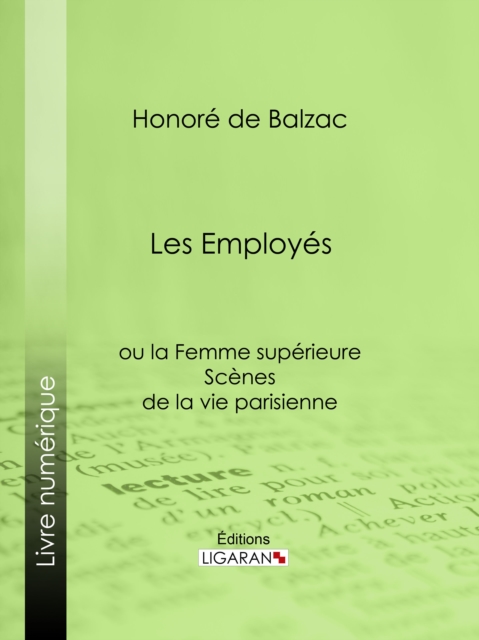
Les Employés
Extrait : \"A Paris, ou les hommes d'etude et de pensee ont quelques analogies en vivant dans le meme milieu, vous avez du rencontrer plusieurs figures semblables a celles de monsieur Rabourdin, que ce recit prend au moment ou il est Chef de Bureau a l'un des plus importants Ministeres...\"A PROPOS DES EDITIONS LIGARANLes editions LIGARAN proposent des versions numeriques de qualite de grands livres de la litterature classique mais egalement des livres rares en partenariat avec la BNF. Beaucoup de soins sont apportes a ces versions ebook pour eviter les fautes que l'on trouve trop souvent dans des versions numeriques de ces textes. LIGARAN propose des grands classiques dans les domaines suivants : * Livres rares* Livres libertins* Livres d'Histoire* Poesies* Premiere guerre mondiale* Jeunesse* Policier
eBook
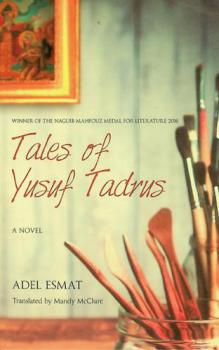
Tales of Yusuf Tadrus : a novel
Born into a working-class Coptic family in the provincial town of Tanta, in Egypt's lush Nile Delta, Yusuf Tadrus is fascinated from a young age by light and shadow, spending his time drawing, making toys out of discarded objects he finds in the alley, and dreaming of becoming an artist and stepping into a broader world. As he grows into adulthood, he hones his talent, but his ambitions are checked: by the responsibilities of family, marriage, and work; by his own lack of self-confidence, his ambivalence, and at times his recklessness; and by society's expectations and prejudices. Adel Esmat provides an intimate glimpse into Egyptian Christian life and, with sensitivity and honesty, tells of the struggles faced by an artist who seeks to remain true to his calling.
Book

Material ambitions : self-help and Victorian literature
Intertwining the methodologies of disability studies and ecocriticism, Material Ambitions persuasively unmasks the longstanding myth that ambitious individualism can overcome disadvantageous systematic and structural conditions.
eBook

Broadway baby : a novel
\"As a little girl growing up in Boston, Miriam Bluestein fantasized about a life lived on stage, specifically in a musical. Get married, have a family--sure, maybe she'd do those things, too, but first and foremost there was her career. As a woman, she is both tormented and consoled by those dreams in her day-to-day existence with her family, including a short-tempered husband, a cranky mother, and three demanding children, one of whom, Ethan, shows real talent for the stage. It is through Ethan that Miriam strives to realize her dreams. As she pushes him to make the most of his talent, the rest of her life gradually comes undone, with her husband becoming increasingly frustrated and her other two children--Sam, a mass of quirks and idiosyncrasies, and Julie, hostile and bitter--withdrawing into their own worlds. Still Miriam dreams, praying for that big finale, which, when it comes, is nothing that she ever could have imagined.\"--from publisher's description.
Book

Distant Country, Paradise, Wilderness, or Mysterious World: The Changing Image of the South Sea (Nan’yō) Islands in Japanese Science Fiction
For Japan, “Nan’yō” is a geographical concept as well as a historical and cultural one. Taking the mid-Meiji period, post-World War I and II periods, and the beginning of the 21st century as its nodes, this paper examines various texts and compares the historical background of the South Sea Islands as imagined in Japanese science fiction, with a focus on both literature and films. The works of the four periods, through a distant view, close view, reconstruction and retrospection of the South Sea Islands, respectively, portray “Nan’yō” as a distant country for ambitious expansion; an earthly paradise of colonial ideals; a dangerous and exotic foreign land; and a mysterious world overrun with primitive civilization, with the aborigines are portrayed as ignorant and backward, and sometimes even being cast as unfamiliar and potentially threatening Others. Unlike the typical (anti-)utopian narrative, the Japanese “Nan’yō fantasy” is based on the political discourse model of civilization-backwardness, in which the differing attitudes towards the natural environment and primitive tribes reflect Japan’s ambivalence in defining its self-positioning within the cultural crossroads of the East and the West. This portrayal of Nan’yō is a product of the close interconnection between the mass media and the spirit of the times: a reflection of personal ideals and national destiny, as well as a collective vision interacting with social reality.
Journal Article


Political Speech in Fantastical Worlds
This article concerns the relationship of politics to speculative and fantastical fiction. Surveying work on aesthetics, media analysis, and science fiction (SF) in the discipline, it also seeks to disjoint some common understandings of how politics is found in cultural artifacts by showing that much IR analysis of SF has opted for a reductionist reliance on analogical readings. To do so, the article first sets out the status of the SF genre, and related fields such as fantasy. The case is here presented with greater ambition than is usually the case, paying particular attention to utopia, and arguing for a view of SF as part hinterland of political theory. In the second part, the underlying rationale for pop cultural analysis is revisited, and some standard motifs in the study of SF recapitulated, the better to revise critical common sense. Having expanded the field of inquiry, a third section demonstrates the limits of analogical analysis as currently practiced. The article then elaborates and defends a new distinction between programmatic and expressive sensibilities in SF to revive the case for a more ambivalent and open reading of SF. Having mapped the current limits of pop-cultural IR, and offered a somewhat different cartography, a final section draws out some implications for methods and future discussion.
Journal Article