
Catalogue Search | MBRL


Are you sure you want to remove the book from the shelf?

{{itemTitle}}
41
result(s) for
"America -- Discovery and exploration -- British"
Sort by:

Spanish Documents concerning English Voyages to the Caribbean 1527-1568
In English translation. For further documents, see Second Series 71, 99 and 111. This is a new print-on-demand hardback edition of the volume first published in 1929. Owing to technical constraints it has not been possible to reproduce the \"Portion of a map by Diego Homem showing Central America and the West Indies, 1568\" which appeared in the first edition of the work.
eBook

The wide wide sea : the final, fateful voyage of Captain James Cook
\"From New York Times bestselling author Hampton Sides, an epic account of the most momentous voyage of the Age of Exploration, which culminated in Captain James Cook's death in Hawaii, and left a complex and controversial legacy still debated to this day On July 12th, 1776, Captain James Cook, already lionized as the greatest explorer in British history, set off on his third voyage in his ship the HMS Resolution. Two-and-a-half years later, on a beach on the island of Hawaii, Cook was killed in a conflict with native Hawaiians. How did Cook, who was unique among captains for his respect for Indigenous peoples and cultures, come to that fatal moment? Hampton Sides' bravura account of Cook's last journey both wrestles with Cook's legacy and provides a thrilling narrative of the titanic efforts and continual danger that characterized exploration in the 1700s. Cook was renowned for his peerless seamanship, his humane leadership, and his dedication to science -the famed naturalist Joseph Banks accompanied him on his first voyage, and Cook has been called one of the most important figures of the Age of Enlightenment. He was also deeply interested in the native people he encountered. In fact, his stated mission was to return a Tahitian man, Mai, who had become the toast of London, to his home islands. On previous expeditions, Cook mapped huge swaths of the Pacific, including the east coast of Australia, and initiated first European contact with numerous peoples. He treated his crew well, and endeavored to learn about the societies he encountered with curiosity and without judgment. Yet something was different on this last voyage. Cook became mercurial, resorting to the lash to enforce discipline, and led his two vessels into danger time and again. Uncharacteristically, he ordered violent retaliation for perceived theft on the part of native peoples. This may have had something to do with his secret orders, which were to chart and claim lands before Britain's imperial rivals could, and to discover the fabled Northwest Passage. Whatever Cook's intentions, his scientific efforts were the sharp edge of the colonial sword, and the ultimate effects of first contact were catastrophic for Indigenous people around the world. The tensions between Cook's overt and covert missions came to a head on the shores of Hawaii. His first landing there was harmonious, but when Cook returned after mapping the coast of the Pacific Northwest and Alaska, his exploitative treatment of the Hawaiians led to the fatal encounter. At once a ferociously-paced story of adventure on the high seas and a searching examination of the complexities and consequences of the Age of Exploration, THE WIDE WIDE SEA is a major work from one of our finest narrative nonfiction writers\"-- Provided by publisher.
Book

The Many Landfalls of John Cabot
On 24 June 1497 John Cabot landed somewhere on the eastern seaboard of what is now Canada, yet even today, five hundred years later, no one knows precisely where. Once an issue in diplomatic negotiations over title to a continent, Cabot's landfall has also been the subject, especially in centennial years, of competing attempts to appropriate the meaning of the event.
Beginning with the historical context of Cabot's journey, Pope traces the various landfall theories which have placed his landing in locations from the Strait of Belle Isle to Cape Breton. The very uncertainty of our knowledge, he argues, has allowed nationalists in both Newfoundland and Canada to shape the debate about Cabot's itinerary and to stake claims to the landfall that amount to the invention of differing national traditions. As well, Pope concludes, the invented tradition of 'discovery' has allowed Europeans and their descendants to overlook the fact that their possession of North America is based on appropriation from Aboriginal peoples.
Well-illustrated with period maps, engravings, and stamps, The Many Landfalls of John Cabot will appeal to readers interested in early European transatlantic voyages, in the nature of the anniversaries that have celebrated Cabot's landing, and in the question of how national pasts are constructed, often from ambiguous sources.
eBook


The Elusive West and the Contest for Empire, 1713-1763
A truly continental history in both its geographic and political
scope, The Elusive West and the Contest for Empire,
1713-1763 investigates eighteenth-century diplomacy involving
North America and links geographic ignorance about the American
West to Europeans' grand geopolitical designs. Breaking from
scholars' traditional focus on the Atlantic world, Paul W. Mapp
demonstrates the centrality of hitherto understudied western
regions to early American history and shows that a Pacific focus is
crucial to understanding the causes, course, and consequences of
the Seven Years' War.
eBook


Explore with Henry Hudson
Readers learn about the travels of English explorer and sea navigator Henry Hudson.
Book
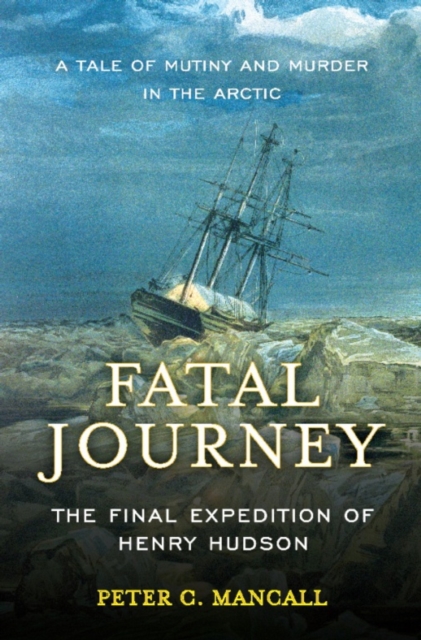
Fatal Journey
The English explorer Henry Hudson devoted his life to the search for a water route through America, becoming the first European to navigate the Hudson River in the process. InFatal Journey, acclaimed historian and biographer Peter C. Mancall narrates Hudson's final expedition.In the winter of 1610, after navigating dangerous fields of icebergs near the northern tip of Labrador, Hudson's small ship became trapped in winter ice. Provisions grew scarce and tensions mounted amongst the crew. Within months, the men mutinied, forcing Hudson, his teenage son, and seven other men into a skiff, which they left floating in the Hudson Bay.A story of exploration, desperation, and icebound tragedy,Fatal Journeyvividly chronicles the undoing of the great explorer, not by an angry ocean, but at the hands of his own men.
eBook