
Catalogue Search | MBRL


Are you sure you want to remove the book from the shelf?

{{itemTitle}}
4,570
result(s) for
"American Jewish culture"
Sort by:

Jewish Mad Men
It is easy to dismiss advertising as simply the background chatter of modern life, often annoying, sometimes hilarious, and ultimately meaningless. But Kerri P. Steinberg argues that a careful study of the history of advertising can reveal a wealth of insight into a culture. InJewish Mad Men, Steinberg looks specifically at how advertising helped shape the evolution of American Jewish life and culture over the past one hundred years.
Drawing on case studies of famous advertising campaigns-from Levy's Rye Bread (\"You don't have to be Jewish to love Levy's\") to Hebrew National hot dogs (\"We answer to a higher authority\")-Steinberg examines advertisements from the late nineteenth-century in New York, the center of advertising in the United States, to trace changes in Jewish life there and across the entire country. She looks at ads aimed at the immigrant population, at suburbanites in midcentury, and at hipster and post-denominational Jews today.
In addition to discussing campaigns for everything from Manischewitz wine to matzoh,Jewish Mad Menalso portrays the legendary Jewish figures in advertising-like Albert Lasker and Bill Bernbach-and lesser known \"Mad Men\" like Joseph Jacobs, whose pioneering agency created the brilliantly successful Maxwell House Coffee Haggadah. Throughout, Steinberg uses the lens of advertising to illuminate the Jewish trajectory from outsider to insider, and the related arc of immigration, acculturation, upward mobility, and suburbanization.
Anchored in the illustrations, photographs, jingles, and taglines of advertising,Jewish Mad Menfeatures a dozen color advertisements and many black-and-white images. Lively and insightful, this book offers a unique look at both advertising and Jewish life in the United States.
eBook

Boundaries, Margins, and Norms: The Intellectual Stakes in the Study of American Jewish Culture(s)
This paper lays out two research approaches to the study of American Jewry in order to examine the intellectual foundations of each approach. In the contrast between research focused on behavior and boundaries and research focused on subjectivity and sentiment, two different understandings of identity and culture are evident. The latter approach developed out of an interest in Jewish practices that can be traced to Marshall Sklare, Herbert Gans, and Charles Liebman. Equally important to this work is the \"decentering\" of social science categories that emerged in the 1970s. As important as this rethinking of Jewish life has been for its greater focus on gender and sexuality as part of a dynamic view of identity and culture, it raises other issues. What is the place of boundaries in the study of American Jewish life, and what are the most effective ways to study the reproduction of Judaism and Jewishness across generations?
Journal Article

A Serious Man and The Red Book
The film A Serious Man depicts the tribulations of a middle-age Jewish man living a \"collective\" life in 1967 Midwestern America during the countercultural revolution occurring at that time. The author uses examples from C. G. Jung's inner turmoil as depicted in The Red Book to amplify the inner-world workings of the film's main character, especially the interplay of the absurd and the profound. The author also illustrates the potential for the same interplay in the audience who watches the film. The protagonist takes hard won steps toward emotional growth as he increasingly faces the human condition.
Journal Article

The Jewishness of American Culture
\"The Temple of Culture: Assimilation and Anti-Semitism in Literary Anglo-America\" by Jonathan Freedman and \"In Search of American Jewish Culture\" by Stephen J. Whitfield are reviewed.
Book Review

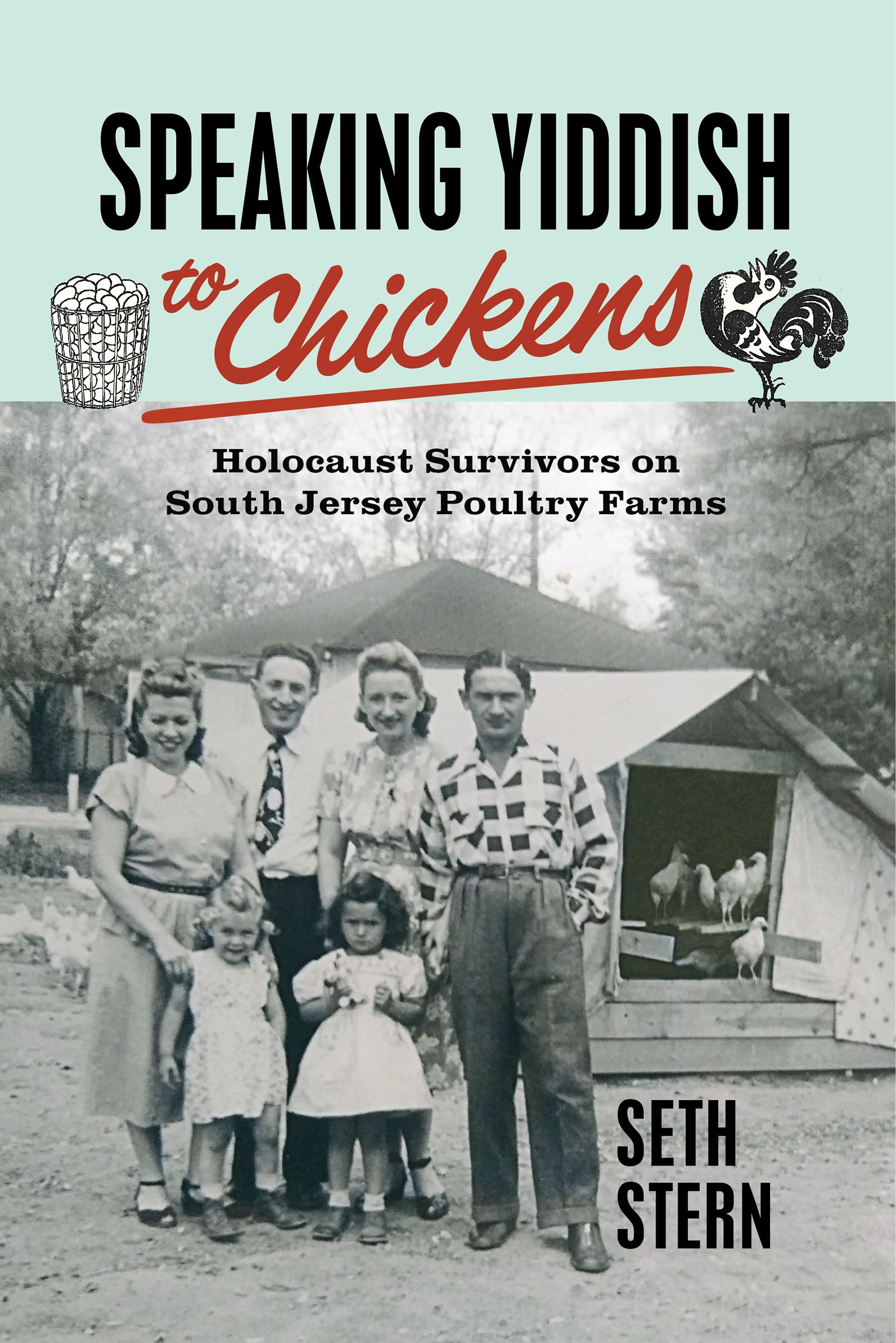
Speaking Yiddish to Chickens
Most of the roughly 140,000 Holocaust survivors who came to the
United States in the first decade after World War II settled in big
cities such as New York. But a few thousand chose an alternative
way of life on American farms. More of these accidental farmers
wound up raising chickens in southern New Jersey than anywhere
else. Speaking Yiddish to Chickens is the first book to
chronicle this little-known chapter in American Jewish history when
these mostly Eastern European refugees - including the author's
grandparents - found an unlikely refuge and gateway to new lives in
the US on poultry farms. They gravitated to a section of south
Jersey anchored by Vineland, a small rural city where previous
waves of Jewish immigrants had built a rich network of cultural and
religious institutions. This book relies on interviews with dozens
of these refugee farmers and their children, as well as oral
histories and archival records to tell how they learned to farm
while coping with unimaginable grief. They built small synagogues
within walking distance of their farms and hosted Yiddish cultural
events more frequently found on the Lower East Side than perhaps
anywhere else in rural America at the time. Like refugees today,
they embraced their new American identities and enriched the
community where they settled, working hard in unfamiliar jobs for
often meager returns. Within a decade, falling egg prices and the
rise of industrial-scale agriculture in the South would drive
almost all of these novice poultry farmers out of business, many
into bankruptcy. Some hated every minute here; others would
remember their time on south Jersey farms as their best years in
America. They enjoyed a quieter way of life and more space for
themselves and their children than in the crowded New York City
apartments where so many displaced persons settled. This is their
remarkable story of loss, renewal, and perseverance in the most
unexpected of settings. Author Facebook page
(https://www.facebook.com/YiddishtoChickens)
eBook
