
Catalogue Search | MBRL


Are you sure you want to remove the book from the shelf?

{{itemTitle}}
7,298
result(s) for
"American Jews"
Sort by:
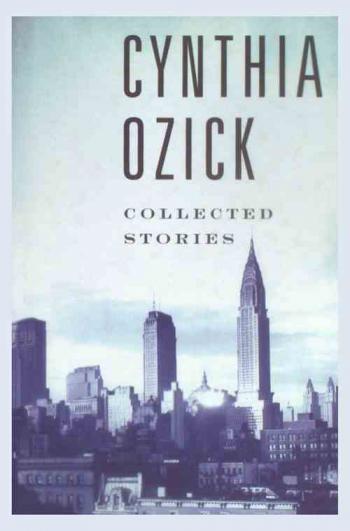
Collected stories
It is the stories upon which Cynthia Ozick's literary reputation rests. She writes about bitterness, cruelty and compulsion with brutal acuity and tenderness. She has created a timeless collection in which Greek mythology, superstition and the religious and cultural experience of the Jewish diaspora in America collide. The Pagan Rabbi is seduced by a tree sprite after seeing his daughter rescued from drowning by a water sprite. Such ecstasy is not permitted to mortals and so the scholar must die. He hangs himself with his prayer shawl as he watches the strangely beautiful nymph decay. In Envy, a Yiddish poet who watches the success of a contemporary, becomes very like a character in an I.B. Singer story entrapped by his anguish and haunted by the memory of a child. In the Doctor's Wife, the most gentle of the stories, a poor doctor not unlike Chekhov endures family life in which he is adored by his three sisters and oppressed by his family obligations. In these stories, we see Ozick defining herself and her literary territory. The stories may be read purely as evocations of Jewish experience, where time seems to have by-passed these characters. In the Butterfly and the Traffic Light, Jerusalem is seen upon a hill as only it can be in legend, and America is said not to have cities scarred by battles. This is a dazzling collection of short stories by an internationally celebrated novelist.

How Many Jews of Color Are There? Recognizing Jewish Diversity: Science and Controversy
First, this paper contends that, in 2013, the best estimate of the percentage of Jews who are Jews of Color (JoC) was about 6%, and in 2020, it was about 8%. We rely on two sources to support this conclusion: national Jewish population studies and local Jewish community studies. This paper also presents evidence that members of some groups (Hispanic Jews in particular) may not consider themselves to be “of color,” and Black, Hispanic, Asian, and “other” Jews differ from one another in significant ways. Treating these different groups under one umbrella may not lead to the best policy decisions. Second, we published a short piece on Jews of Color in the 2019 American Jewish Year Book to bring attention to the increasing diversity of American Jews. This was followed by a column in eJewishPhilanthropy. A controversy ensued upon publication of this column. In this paper, we respond to some of these charges and talk about the lessons we learned from this experience.
Journal Article


Beyond the Secular-Religion Divide: Judaism and the New Secularity
In his 2018 survey of twenty-first-century American Judaism entitled The New American Judaism: How Jews Practice their Judaism Today, Jack Wertheimer references a 2015 Pew Research study that presupposes the secular-religion binary as the analytical metric for its determination that both the American public and American Jews are becoming less religious. Nonetheless, Wertheimer’s use of this analytical frame prohibits him from making sense of many details of the twenty-first-century American Jewish life that he seeks to describe. Indeed, any survey of the contemporary American Jewish scene is remiss if it does not discuss the rise of orthodox Jewish feminism, current trends towards substantial denominational change, and/or the emergence of a “post-ethnic” Judaism. Even so, recent historical-ethnographic accounts have outpaced analytical challenges to the secular-religion binary. Contemporary historians and ethnographers find themselves forced to choose between an analytically deficient model and a default rejection of analytical tools altogether. Arguably, the roots of the current impasse are derived from the influence of what scholars refer to as the secularization thesis. Therefore, to overcome this impasse, ethnographers and historians of American Judaism need access to a more refined categorical lens. In this essay, I argue that they may find the analytical support they need by turning away from the secularization thesis and turning toward far more complex accounts of the relationship between Judaism and modernity provided by the canon of modern Jewish thought. Such a turn yields an analytical category we may refer to as the “new secularity” which, when applied to studies in Jewish life in America (and potentially elsewhere) sheds light on communal realities that the secular-religious account misses.
Journal Article

Keeping the mystery alive : Jewish mysticism in Latin American cultural production
\"This book delves into creative renditions of key aspects of Jewish Mysticism in Latin American literature, film, and art from the perspective of literary and cultural studies. The overarching question is whether the authors presented question, or reproduce literally, traditional renditions of the Jewish mysticism, and how this aspect of their literature and visual art relates to the Latin American canon to which they belong\"-- Provided by publisher.
BOOK
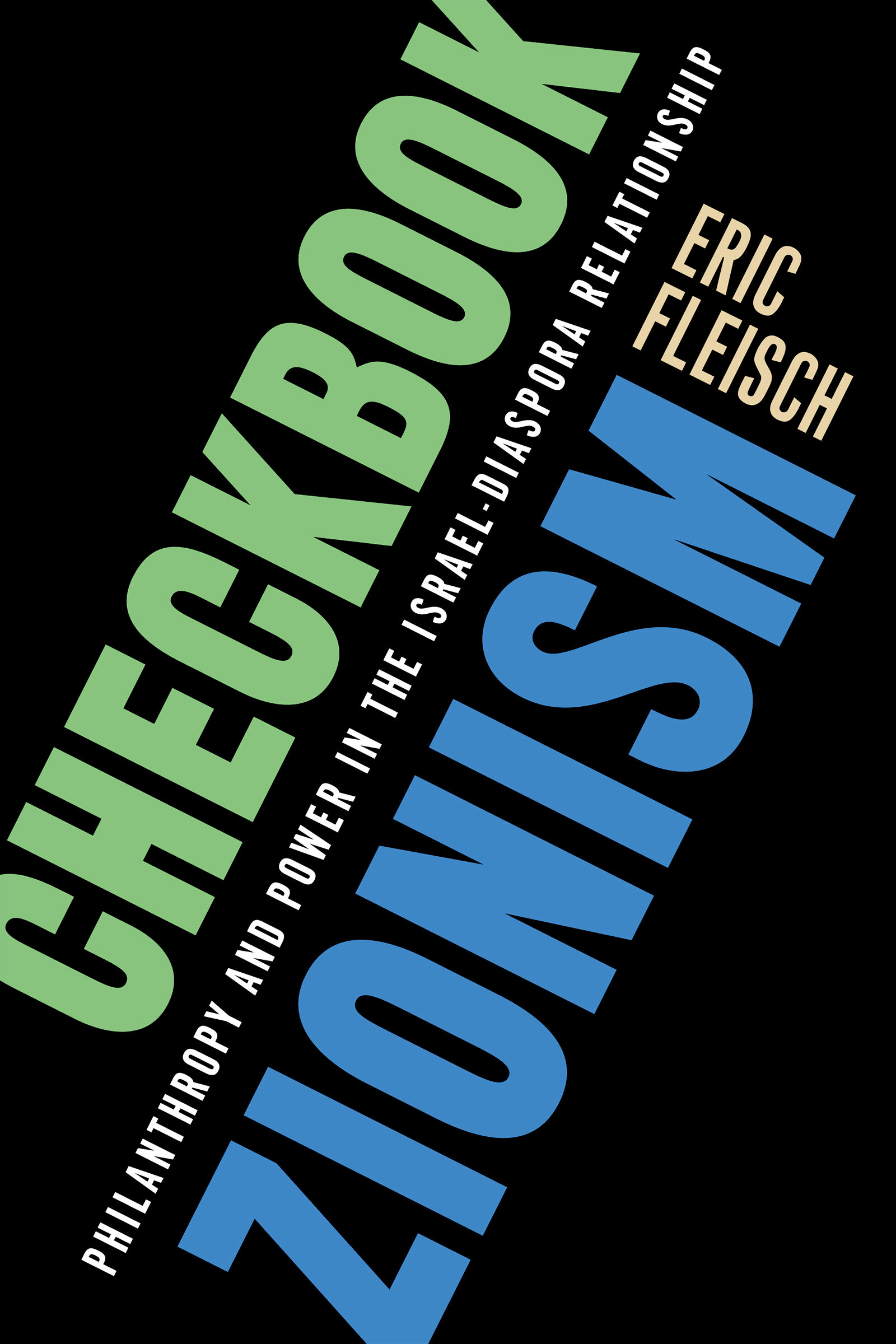
Checkbook Zionism
American Jews donate approximately $2.5 billion to Israel each year. Behind all that money and influence lies a power-sharing dynamic that has left an indelible mark on the relationship between Israeli and American Jews and on the direction of Israeli society to this day. Checkbook Zionism investigates how both parties have managed their interests, emotions, and attitudes about the important yet at times tense collaboration between them. By delving into the history of American Jews’ philanthropic giving to Israelis, Fleisch assesses the core nature of power sharing between both sides of the Jewish diaspora to the United States through in-depth contemporary case studies of the relationship between sixteen non-governmental organizations and their American Jewish donors. Field observation, document analysis, and interviews with leaders, activists, and select donors alike serve a critical role here, as Fleisch assesses whether these contemporary philanthropic associations repeat classic dynamics of power-sharing or whether they represent a marked departure from the Checkbook Zionism of old. The result is a new paradigm for evaluating power sharing that can be applied to future considerations of development in the Israel-Diaspora relationship.
eBook

Kosher Chinese : living, teaching, and eating with China's other billion
An irreverent account of the author's experiences as a Jewish-American Peace Corps volunteer serving in rural China describes his observations about the lives of China's interior populations and their complex relationships with local traditions and the rapid changes of modernization.
Book

Ethno-Religious Engagement, Minority Experiences, and Strengthening American Jewish Identity
Despite the complexity of and threats to American Jewish identity, little is known regarding how it is strengthened in adulthood. The purpose of this quantitative descriptive study was to understand the types of activities and minority experiences that strengthen Jewish identity and how this may differ from those with higher religious and cultural identification. Participants included 546 Jewish adults from 39 states who completed a survey covering topics related to Jewish activities, minority experiences, belongingness, continuity, Jewish identity, and demographics. Results indicated that regardless of cultural or religious identification, there were many similarly endorsed activities and minority experiences, even negative ones, that strengthen Jewish identity among adults. Implications for multicultural counseling competency when working with American Jews and ethno-religious identity are discussed.
Journal Article

Norman Podhoretz : a biography
\"This is the first biography of the Jewish-American intellectual Norman Podhoretz, longtime editor of the influential magazine Commentary. As both an editor and a writer, he spearheaded the countercultural revolution of the 1960s and--after he \"broke ranks\"--the neoconservative response. For years he defined what was at stake in the struggle against communism; recently he has nerved America for a new struggle against jihadist Islam; always he has given substance to debates over the function of religion, ethics, and the arts in our society. The turning point of his life occurred, at the age of forty near a farmhouse in upstate New York, in a mystic clarification. It compelled him to \"unlearn\" much that he had earlier been taught to value, and it also made him enemies. Revealing the private as well as the public man, Thomas L. Jeffers chronicles a heroically coherent life\"--Provided by publisher.
Book
Immigration Motivation, Determination, and Success of US Immigrants in Israel: A Mediation Model
Immigration entails many challenges for families, particularly for children. The study was designed to assess pre- and post-immigration measures that contribute to successful and adaptive immigration of families. Participants included 122 recent Jewish US immigrant families to Israel. Measures included predictor indices of immigration motivation, outcome measures of perceived immigration success, and post-immigration process factors including immigration determination and parental social integration. Immigration motivation driven by religious factors was found to be positively associated with immigration determination, perceived immigration success, and parental social integration. Furthermore, the relationship between pre-immigration religious motivation factors and immigration success was found to be mediated by immigration determination. Results highlight the process by which religious immigration motivation positively impacts immigration success for families. Findings have both research and applied implications in the identification of clear immigration difficulty risk factors and the development of guidelines for families, schools, and agencies working on maximizing immigration success.
Journal Article